How to Build a Simple Natural Skincare Routine for Beginners

The good news is that an effective skincare routine does not have to be complicated.
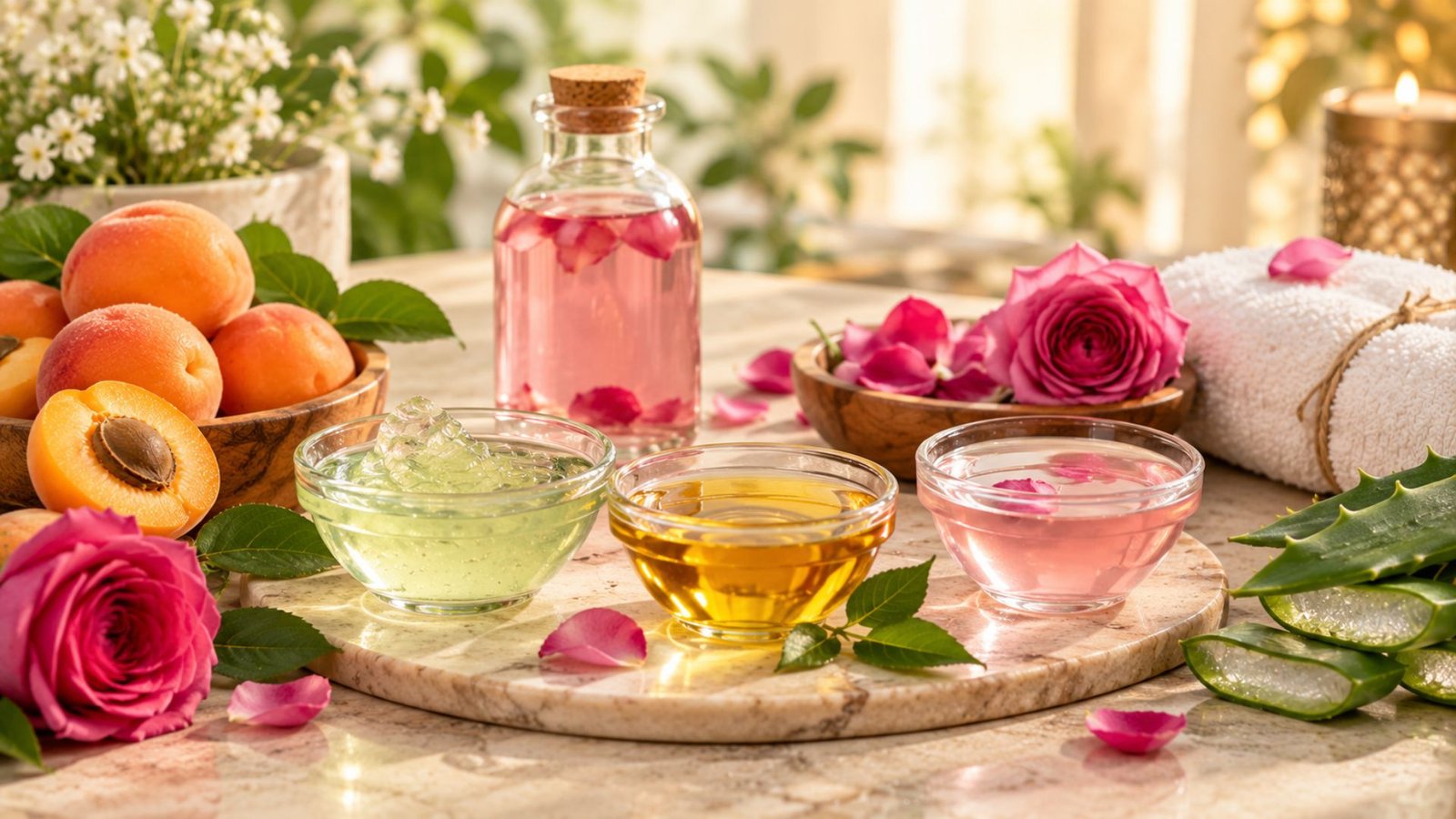
If you prefer natural, botanical, or plant-based natural skincare routine, you can build a simple routine around a few well-chosen products. Ingredients such as rose water, aloe vera, apricot oil, and plant-based moisturizers can be incorporated according to your skin’s needs.
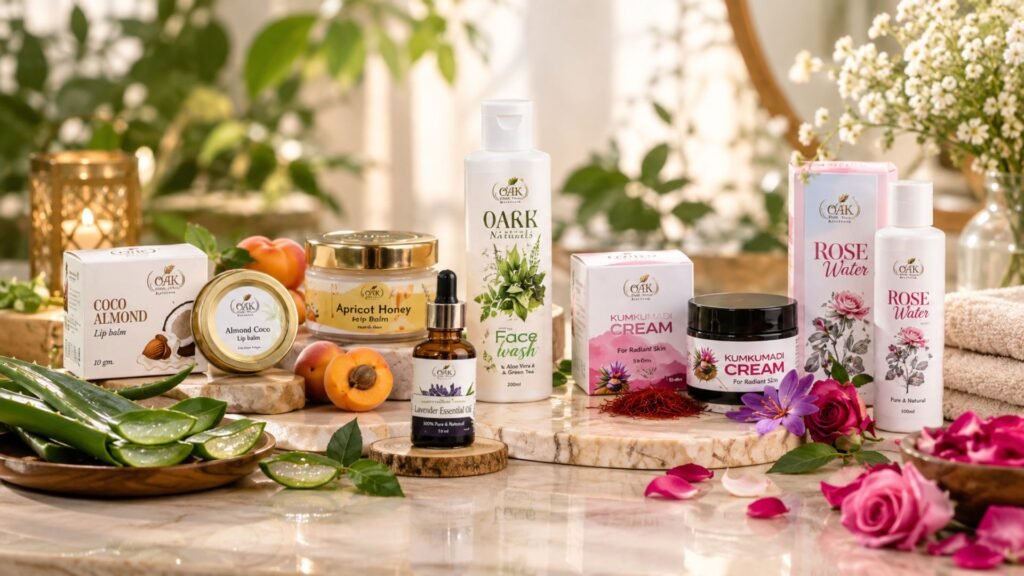
Oak Tree Naturals offers nature-inspired personal-care options that can fit into a straightforward daily routine. But before adding any product to your shelf, it is important to understand your skin type, introduce products gradually, and choose products based on their ingredients and intended use.
In this beginner’s guide, we will explain how to build a simple natural skincare routine, what order to use your products in, how to choose ingredients, and which common mistakes beginners should avoid.
Table of Contents
What Is a Natural Skincare Routine?
A natural skincare routine generally focuses on products containing plant-based, botanical, mineral, or naturally derived ingredients.
However, the term “natural” does not have one universal meaning across every skincare product or brand. A product’s ingredient list and formulation provide more useful information than the marketing label alone.
A simple natural skincare routine may include:
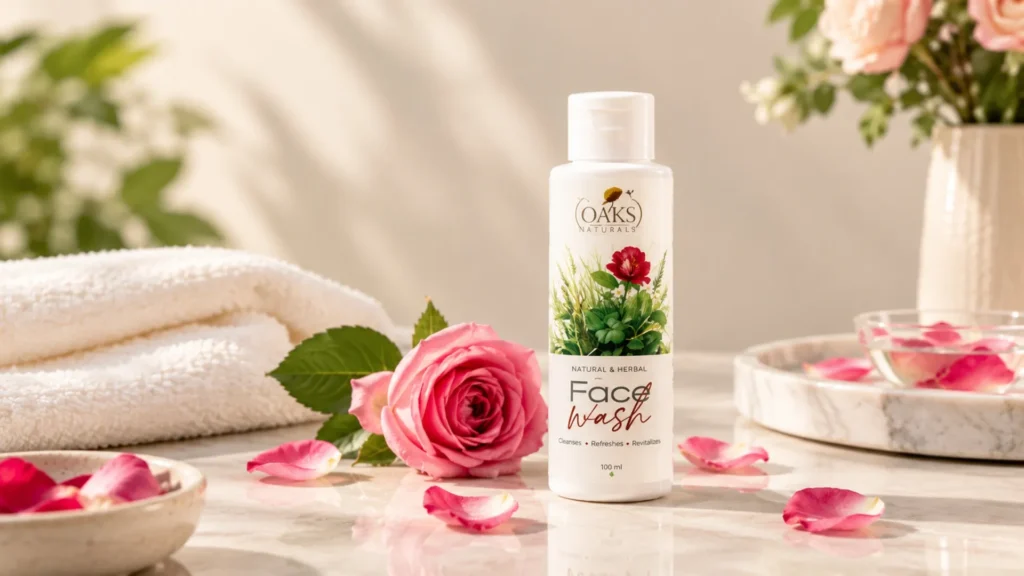
- A gentle cleanser
- Rose water or another refreshing step
- A suitable moisturizer
- A facial or body oil, if needed
- Sunscreen during the daytime
You do not need to use all of these products.
The goal is to create a routine that addresses your actual skincare needs without unnecessary complexity.
Why Should Beginners Keep Their Skincare Routine Simple?
When you are new to skincare, adding too many products at once can create several problems.
You may not know which product is working, which one is causing irritation, or whether a particular ingredient is even necessary.
A simpler routine makes it easier to:
- Understand what your skin needs
- Identify products that suit you
- Reduce unnecessary product layering
- Maintain consistency
- Monitor changes in your skin
- Avoid overwhelming your skin with multiple new ingredients
Beginner Skincare Routine at a Glance
| Routine Step | Product Type | Main Purpose | Priority |
| 1 | Cleanser | Removes daily buildup | Essential |
| 2 | Rose Water | Refreshing skincare step | Optional |
| 3 | Moisturizer | Helps maintain skin moisture | Essential |
| 4 | Facial Oil | Adds an emollient layer | Optional |
| 5 | Sunscreen | Helps protect from UV exposure | Essential during daytime |
This is enough for most beginners to understand the basic structure of a skincare routine.
Step 1: Understand Your Skin Type
Before choosing products, spend some time understanding your skin.
Common skin types include:
- Dry
- Oily
- Combination
- Normal
- Sensitive or easily reactive
Skin type can change with weather, age, environment, hormones, and other factors, so do not feel that you have to fit perfectly into one category.
Simple Skin-Type Guide
| Skin Type | Common Characteristics | What to Look For |
| Dry | Tightness, rough or flaky feel | Gentle, moisturizing products |
| Oily | Excess shine, especially around the T-zone | Lightweight formulations |
| Combination | Oily and dry areas | Balanced, targeted routine |
| Normal | Generally comfortable and balanced | Simple maintenance |
| Sensitive | Easily irritated or reactive | Gentle, uncomplicated products |
Understanding your skin type helps you make more informed choices instead of simply following skincare trends.
Step 2: Start With a Gentle Cleanser
Cleansing is the foundation of most skincare routines.
A cleanser helps remove sweat, excess oil, dirt, sunscreen, makeup, and other daily buildup from the skin.
For beginners, a gentle cleanser is usually a better starting point than a highly aggressive cleansing product.
How to Cleanse Properly
- Wet your face with comfortable-temperature water.
- Apply a small amount of cleanser.
- Gently massage it over your face.
- Rinse thoroughly.
- Pat your skin dry.
Avoid excessive scrubbing. Clean skin does not need to feel extremely tight or “squeaky” after washing.
If your skin feels uncomfortable or excessively dry after cleansing, consider whether your cleanser is too harsh or whether you are cleansing too frequently.
Step 3: Add Organic Rose Water
Rose water can be a simple optional step for beginners who enjoy botanical skincare.
Oak Tree Naturals Organic Rose Water can be used after cleansing as a refreshing facial mist or applied with a clean cotton pad.
How to Use Rose Water
After cleansing:
Cleanser → Rose Water → Moisturizer
Lightly mist rose water over clean skin and allow it to settle before moving to the next step.
You can also use it during the day as a refreshing facial mist, depending on the product’s intended use.
Why Add Rose Water?
Rose water can provide:
- A refreshing feel
- A lightweight skincare step
- A pleasant floral aroma
- A simple addition to a minimalist routine
It should not be considered a replacement for moisturizer or sunscreen.
Step 4: Use a Moisturizer
Moisturizer is one of the most important steps in a basic skincare routine.
Its role is to help maintain skin moisture and support a comfortable skin barrier.
Choose your moisturizer based on your skin type rather than simply choosing the richest or most expensive option.
Moisturizer Guide
| Skin Type | Moisturizer Preference |
| Dry | Richer, nourishing moisturizer |
| Oily | Lightweight lotion or gel |
| Combination | Lightweight balanced moisturizer |
| Normal | Comfortable everyday moisturizer |
| Sensitive | Simple, gentle formulation |
If you are already using a suitable moisturizer, you do not necessarily need to replace it simply because you are introducing a natural skincare product.
Step 5: Add Apricot Oil If Your Skin Needs Extra Conditioning
Facial oils are optional.
If your skin feels dry or you enjoy using plant oils, Oak Tree Naturals Apricot Oil can be incorporated into your routine as an emollient step.
Apricot oil can help soften the feel of dry skin and can be particularly useful on areas that need additional conditioning.
How to Use Apricot Oil on the Face
Start with just a few drops.
After applying your moisturizer, gently press a small amount of apricot oil onto your skin.
A simple nighttime routine could look like:
Cleanser → Rose Water → Moisturizer → Apricot Oil
You can also use apricot oil on selected dry areas instead of applying it across your entire face.
Why Start With a Small Amount?
Facial oils can feel heavy when over-applied.
Starting with a small quantity allows you to understand how your skin responds without unnecessarily making your routine greasy.
Step 6: Never Skip Daytime Sunscreen
Natural skincare does not mean you should skip sun protection.
Sunscreen is one of the most important daytime skincare steps, particularly when you spend time outdoors.
A simple morning routine can be:
Cleanser → Rose Water → Moisturizer → Sunscreen
Rose water, apricot oil, and other botanical ingredients should not be treated as substitutes for a properly formulated sunscreen.
Choose a broad-spectrum sunscreen appropriate for your skin and follow its application instructions.
Morning vs. Night Skincare Routine
Beginners often make the mistake of trying to create two extremely complicated routines.
You can keep both routines simple.
Morning Routine
| Step | What to Use |
| 1 | Gentle cleanser |
| 2 | Rose water, optional |
| 3 | Moisturizer |
| 4 | Broad-spectrum sunscreen |
Night Routine
| Step | What to Use |
| 1 | Gentle cleanser |
| 2 | Rose water, optional |
| 3 | Moisturizer |
| 4 | Apricot oil, optional |
The optional steps can be removed if your skin does not need them.
How to Choose Natural Skincare Ingredients
Natural skincare involves much more than simply looking for the word “natural” on a label.
When choosing a product, consider:
Ingredient Transparency
Look for a clearly provided ingredient list.
You should be able to understand what you are purchasing rather than relying entirely on marketing language.
Product Purpose
Choose products based on what you want them to do.
For example:
- Rose water → refreshing skincare step
- Apricot oil → emollient and conditioning
- Moisturizer → hydration and moisture support
- Sunscreen → UV protection
Skin Compatibility
An ingredient can be natural and still not suit your skin.
Always consider your own skin type and sensitivity.
Brand Transparency
Look for information about the manufacturer, product usage, storage, and other relevant details.
These are useful trust signals when evaluating personal-care products.
What Should Beginners Look for in a Skincare Brand?
Good skincare content should help consumers make informed decisions rather than simply pushing products.
When evaluating a natural skincare brand, look for:
| E-E-A-T Signal | What to Look For |
| Experience | Practical, clear usage instructions |
| Expertise | Accurate ingredient information |
| Authoritativeness | Transparent brand and product information |
| Trustworthiness | Clear labeling, directions, precautions, and contact information |
Be cautious of products making dramatic claims such as guaranteeing flawless skin, permanently removing wrinkles, or curing complex skin conditions with one ingredient.
Responsible skincare advice recognizes that individual results vary.
How to Introduce New Skincare Products
One of the best habits for beginners is to introduce new products gradually.
Instead of purchasing five new products and starting them on the same day, introduce one product at a time.
This makes it easier to identify what your skin likes or dislikes.
Beginner Product Introduction Plan
| Period | Focus |
| Week 1 | Cleanser + moisturizer + sunscreen |
| Week 2 | Add rose water if desired |
| Week 3 | Add facial oil if needed |
| Afterwards | Adjust according to skin response |
This is only a general framework. You do not need to add products simply because a schedule suggests them.
What About Exfoliation?
Exfoliation can be useful for some people, but beginners do not necessarily need to start with it.
If you decide to introduce an exfoliating product, start slowly and avoid combining several strong exfoliating ingredients at the same time.
Over-exfoliation can leave skin feeling dry, irritated, or uncomfortable.
A beginner’s routine should prioritize consistency and skin comfort over having numerous active ingredients.
Natural Skincare Routine for Dry Skin
If your skin frequently feels dry or tight, focus on moisture and gentle care.
Suggested Routine
Morning:
Cleanser → Rose Water → Moisturizer → Sunscreen
Night:
Cleanser → Rose Water → Moisturizer → Apricot Oil
You can also use apricot oil on particularly dry areas of the body.
Natural Skincare Routine for Oily Skin
Oily skin still needs hydration.
Choose lightweight products and avoid applying excessive amounts of facial oil.
Suggested Routine
Morning:
Cleanser → Rose Water → Lightweight Moisturizer → Sunscreen
Night:
Cleanser → Rose Water → Lightweight Moisturizer
If you want to try apricot oil, begin with a very small amount and consider applying it only to dry areas.
Natural Skincare Routine for Combination Skin
Combination skin requires balance.
Instead of applying the same amount of every product across your entire face, adjust your routine based on how different areas feel.
For example, you may use a lightweight moisturizer across your face and apply a small amount of apricot oil only to areas that feel dry.
Natural Skincare Routine for Sensitive Skin
Sensitive skin benefits from simplicity.
Avoid introducing multiple botanical extracts, fragrances, exfoliants, and active ingredients simultaneously.
Before using a new product regularly, perform a patch test and observe how your skin responds.
If you experience persistent irritation, burning, swelling, or significant redness, discontinue use and seek professional advice where appropriate.
Common Beginner Skincare Mistakes
1. Using Too Many Products
More products do not automatically mean better skincare.
2. Scrubbing the Skin Too Hard
Aggressive physical exfoliation can leave the skin feeling irritated.
3. Skipping Moisturizer Because of Oily Skin
Oily skin can still become dehydrated. Choose an appropriate lightweight moisturizer instead.
4. Treating Natural Ingredients as Completely Risk-Free
Natural ingredients can still cause allergies or irritation.
5. Skipping Sunscreen
Botanical oils and rose water cannot replace sunscreen.
6. Changing Products Too Frequently
Give your routine time to settle and introduce new products gradually.
7. Expecting Overnight Results
Healthy-looking skin is usually the result of consistent care rather than a single product or application.
How to Keep Your Skincare Routine Consistent
The best routine is one that you will actually follow.
Keep your most important products somewhere convenient and establish a routine around habits you already have.
For example:
Morning: After brushing your teeth → cleanse → moisturize → sunscreen.
Night: Before bed → cleanse → moisturize → optional facial oil.
Consistency becomes much easier when skincare is attached to an existing daily habit.
Simple Natural Skincare Routine Checklist
Use this checklist if you are starting from scratch:
- Identify your skin type and concerns
- Choose a gentle cleanser
- Select a suitable moisturizer
- Add sunscreen for daytime
- Consider rose water as an optional refreshing step
- Consider apricot oil if your skin needs additional conditioning
- Patch test new products
- Introduce products gradually
- Avoid unnecessary product layering
- Pay attention to how your skin responds
Final Thoughts
Building a natural skincare routine does not need to be complicated.
Start with the essentials: gentle cleansing, appropriate moisturization, and daytime sun protection. From there, you can add products such as rose water or apricot oil according to your individual preferences and skin needs.
Oak Tree Naturals products such as Organic Rose Water and Apricot Oil can fit naturally into a simple routine, providing convenient botanical options for refreshing and conditioning your skin.
The most important principle is to choose products thoughtfully, introduce them gradually, and focus on consistency rather than chasing every new skincare trend.
Natural skincare is not about using as many botanical ingredients as possible. It is about creating a routine that is simple, practical, transparent, and appropriate for your skin.
Frequently Asked Questions
1. What is the best natural skincare routine for beginners?
A simple beginner routine can include a gentle cleanser, moisturizer, and sunscreen. Rose water and facial oil can be added as optional steps depending on your skin’s needs.
2. How many products should a beginner use?
You do not need many products. Start with the basics and introduce additional products one at a time.
3. Can I use rose water every day?
Many people use rose water once or twice daily as a refreshing skincare step. Follow the product’s directions and discontinue use if irritation occurs.
4. Can beginners use apricot oil on their face?
Yes, apricot oil can be incorporated into a beginner skincare routine. Start with a few drops and consider using it at night or on areas that feel dry.
5. Should I use rose water before or after moisturizer?
Rose water is generally used before moisturizer. A simple order is cleanser → rose water → moisturizer.
6. Should I use apricot oil before or after moisturizer?
Apricot oil can commonly be used after moisturizer as an emollient finishing step. Start with a small amount and adjust according to your skin.
7. Is natural skincare safe for sensitive skin?
Natural products are not automatically suitable for sensitive skin. Botanical ingredients can still cause irritation or allergic reactions, so patch testing is recommended.
8. Do I need sunscreen if I use natural skincare products?
Yes. Natural skincare products do not replace sunscreen. Use a suitable broad-spectrum sunscreen during daytime sun exposure.
9. How long does it take to see skincare results?
Results vary depending on the product, skin concern, and individual. Consistent use of suitable products is generally more useful than expecting immediate changes.
10. Can I use natural and conventional skincare products together?
Yes. You can combine botanical products with conventional skincare products. Choose each product based on its purpose, formulation, and suitability for your skin.