
Kumkumadi Cream for Pigmentation & Uneven Skin Tone

Pigmentation and uneven skin tone are common skincare concerns, but they can also be surprisingly difficult to manage. Dark spots may appear after acne, prolonged sun exposure, hormonal changes, or skin irritation, and they do not always disappear quickly.
That is why many people look for skincare that does more than moisturise. A thoughtfully formulated face cream can become part of a consistent routine focused on nourishing the skin while improving the appearance of uneven-looking tone.
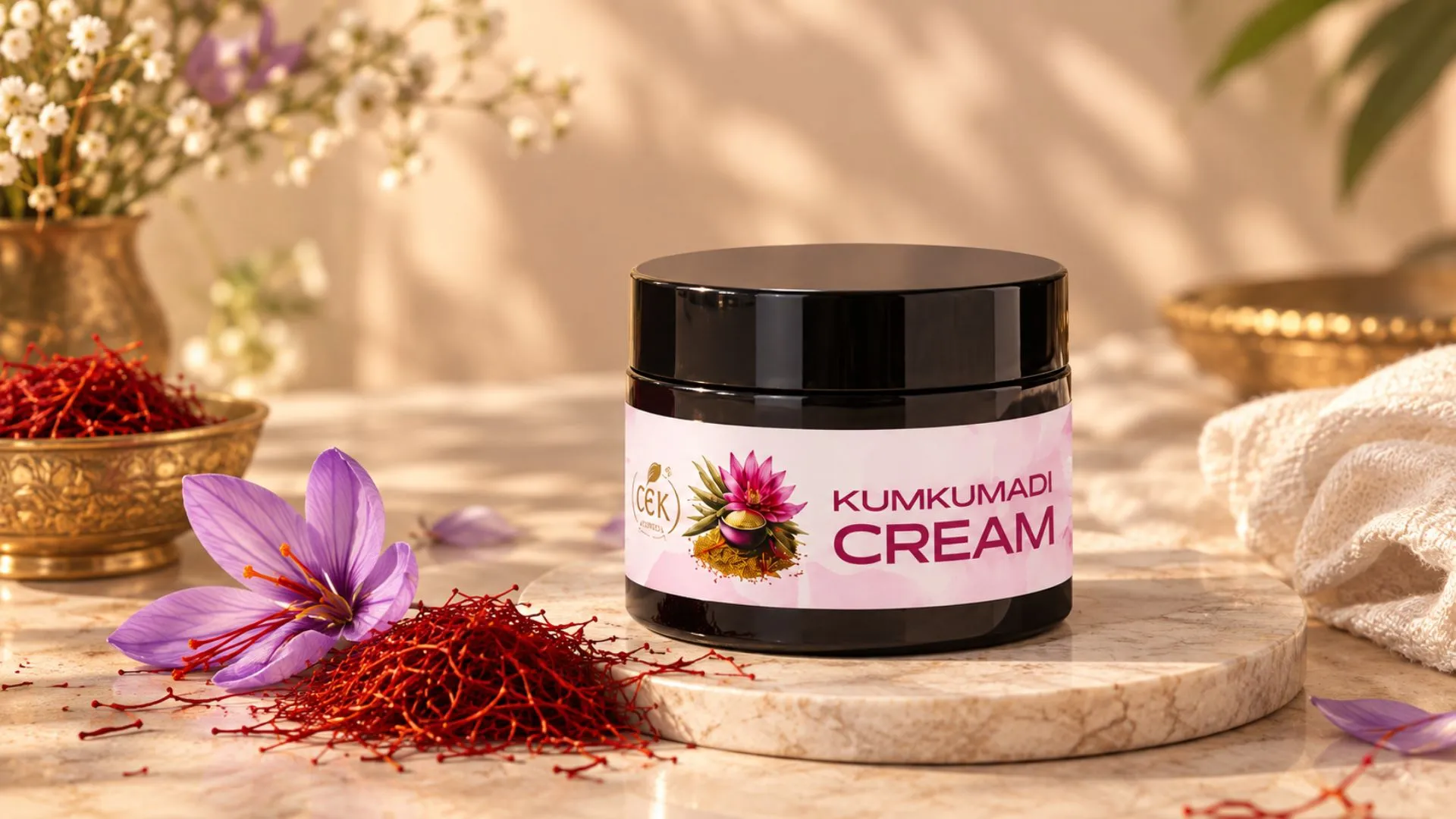
Kumkumadi cream for pigmentation is one option that has attracted attention because Kumkumadi-inspired skincare is traditionally associated with saffron and botanical ingredients. Oaktree Naturals’ Kumkumadi Cream is currently described as a lightweight cream formulated with natural ingredients that helps reduce the appearance of dark spots, even skin tone, deeply nourish the skin, and leave it feeling soft, smooth, and glowing.
But there is an important distinction: skincare should not promise to permanently “cure” pigmentation. Pigmentation has different causes, and the right approach depends on what is causing it.
So, how can Kumkumadi cream fit into a sensible skincare routine?
Table of Contents
What Causes Pigmentation and Uneven Skin Tone?
Before choosing a product, it helps to understand why the skin may look uneven in the first place.
Hyperpigmentation refers to areas of skin becoming darker than the surrounding skin because of increased or altered melanin production. There isn’t just one type of pigmentation.
Some common examples include:
- Post-inflammatory hyperpigmentation: Dark marks that remain after acne, irritation, injury, or inflammation.
- Sun-related pigmentation: Repeated exposure to ultraviolet radiation can contribute to dark spots and uneven pigmentation.
- Melasma: A pigmentation condition that commonly appears as darker patches on areas such as the cheeks, forehead and upper lip.
- Age spots or lentigines: Localised darker spots that can develop over time, often on sun-exposed areas.
DermNet notes that pigmentation disorders have several different causes, including melasma, post-inflammatory hyperpigmentation, solar lentigines and medication-related pigmentation.
This matters because a cream that supports the appearance of a more even complexion is not necessarily a medical treatment for the underlying cause.
How Can Kumkumadi Cream for Pigmentation Fit Into Your Routine?
Kumkumadi-inspired skincare has its roots in traditional Ayurvedic beauty practices. Modern products inspired by this tradition are generally formulated as cosmetic skincare rather than medical treatments.
Oaktree Naturals describes its Kumkumadi Cream as a facial cream intended to help reduce the appearance of dark spots, even the appearance of skin tone, nourish the skin, and leave it soft, smooth, and radiant.
This makes the product relevant for someone whose goal is better-looking, more even and nourished skin, rather than expecting an overnight transformation.
A realistic skincare approach looks at several things together:
- Consistent skincare
- Adequate moisturisation
- Sun protection
- Avoiding unnecessary irritation
- Giving the skin enough time to respond
Pigmentation rarely develops overnight, so expecting it to disappear after one or two applications can lead to disappointment.
What Makes a Good Pigmentation-Focused Skincare Routine?
The cream itself is only one part of the routine.
1. Start with gentle cleansing
Use a cleanser appropriate for your skin type and avoid aggressively scrubbing areas with pigmentation.
Excessive friction can irritate the skin, and irritation can sometimes make post-inflammatory pigmentation more noticeable.
2. Apply your moisturising cream consistently
A product such as Kumkumadi Cream can be incorporated after cleansing according to the product’s directions.
The goal should be consistent care rather than applying a large quantity occasionally.
A simple routine is often easier to maintain:
Cleanse → Kumkumadi Cream → Sunscreen in the morning
At night:
Cleanse → Kumkumadi Cream
Always follow the instructions provided on your specific product packaging.
3. Don’t skip sunscreen
This is one of the most important parts of managing the appearance of pigmentation.
The American Academy of Dermatology recommends broad-spectrum sunscreen with SPF 30 or higher as part of protecting skin from the sun. Sun exposure can also worsen dark spots and pigmentation.
DermNet similarly notes that daily broad-spectrum SPF 50+ protection is important for pigmentation affecting exposed areas.
In other words, using a pigmentation-focused cream while regularly leaving your skin unprotected from the sun can work against your overall skincare goals.
Kumkumadi Cream vs. Quick-Fix Pigmentation Products
When shopping for pigmentation skincare, it is easy to become attracted to products promising extremely fast results.
But a good skincare routine should not depend on dramatic promises.
Consider the difference:
Quick-Fix Approach Consistent Skincare Approach
Focuses on instant results Focuses on gradual improvement
May encourage excessive product use Uses products consistently
Can overlook the cause of pigmentation Considers possible triggers
May ignore sun protection Makes sun protection part of the routine
Often relies on dramatic claims Sets realistic expectations
The appearance of pigmentation can change slowly. The American Academy of Dermatology notes that some dark spots may take months to fade, depending on their depth and cause.
That is why patience matters.
Why Sun Protection Matters for Uneven Skin Tone
If your main concern is uneven skin tone, sunscreen should not be treated as an optional extra.
Ultraviolet radiation can contribute to pigmentation, while visible light can also worsen certain pigmentation conditions, particularly melasma. The American Academy of Dermatology recommends broad-spectrum SPF 30+ sunscreen and notes that tinted sunscreens containing iron oxide can provide additional protection against visible light.
A practical daytime routine can therefore look like:
Morning
- Gentle cleanser
- Kumkumadi Cream
- Broad-spectrum sunscreen SPF 30 or higher
- Reapply sunscreen as directed, particularly when spending time outdoors
Evening
- Cleanse
- Kumkumadi Cream
- Allow your skin to rest overnight
The exact routine can be adjusted according to your skin type and the rest of your skincare products.
Who May Consider Kumkumadi Cream?
A Kumkumadi-based cream may be worth considering if your skincare goals include:
- Improving the appearance of uneven skin tone
- Caring for the appearance of dark spots
- Maintaining soft and nourished skin
- Supporting a more radiant-looking complexion
- Adding a botanical-inspired cream to a daily skincare routine
Oaktree Naturals currently lists its Kumkumadi Cream as a 50 g facial-care product and states that it is suitable for daily use and all skin types.
However, “suitable for all skin types” does not mean every individual will have exactly the same experience. Skin can respond differently to botanical ingredients, fragrances, and cosmetic formulations.
If you have particularly sensitive skin, introduce any new facial product gradually.
How to Use Kumkumadi Cream on Your Face
If your product packaging does not specify a different method, a simple approach is:
Step 1: Clean your face
Remove dirt, excess oil, sunscreen, and makeup with a gentle cleanser.
Step 2: Pat your skin dry
Avoid vigorous rubbing, especially if your skin is sensitive or prone to pigmentation after irritation.
Step 3: Apply a suitable amount of cream
Take a small amount and spread it gently across the face.
Step 4: Massage lightly
Use gentle movements rather than aggressive rubbing.
Step 5: Follow with sunscreen during the day
If you’re using the cream in the morning, sunscreen should be the final step of your skincare routine.
Step 6: Stay consistent
Skincare works best as a routine rather than an occasional treatment.
Can Kumkumadi Cream Completely Remove Pigmentation?
This is where realistic expectations are important.
No cosmetic cream should be presented as a guaranteed cure for pigmentation.
Pigmentation can have many causes, and different conditions require different approaches. For example, melasma may require professional assessment and a treatment plan, while post-inflammatory pigmentation may gradually fade after the original inflammation has settled.
The American Academy of Dermatology recommends seeing a dermatologist when pigmentation persists or when the underlying cause needs to be identified.
A Kumkumadi cream can instead be viewed as part of a broader cosmetic skincare routine aimed at nourishing the skin and improving the appearance of uneven tone and dark spots.
That distinction is important—and more useful than promising instant fairness or overnight results.
What About Saffron and Traditional Kumkumadi Skincare?
Saffron is traditionally associated with Kumkumadi formulations and Ayurvedic skincare.
There is also scientific interest in botanical ingredients used in skincare. For example, research reviews have investigated topical applications of turmeric and curcumin for various skin-related purposes, although the available clinical evidence varies and findings from studies of an individual ingredient should not automatically be applied to every finished cosmetic formulation.
This is an important point when reading skincare claims:
Evidence about an ingredient is not automatically evidence that every product containing that ingredient will produce the same result.
The final formulation, concentration, stability, application method, and individual skin response all matter.
Common Mistakes When Trying to Improve Pigmentation
Using too many active products
Combining multiple strong products at once can make it difficult to know what is helping—and can increase the chance of irritation.
Scrubbing dark spots aggressively
Pigmentation isn’t dirt that can be scrubbed away. Excessive physical exfoliation can irritate the skin.
Skipping sunscreen
This is one of the most common mistakes. Sun protection is a key part of pigmentation care.
Expecting overnight results
Skin needs time. Dark spots may take months to become less noticeable depending on their cause and depth.
Continuing a product that causes irritation
If a skincare product repeatedly burns, stings, or causes irritation, stop using it and reassess your routine. The AAD specifically recommends gentle skincare for people dealing with melasma and warns that irritation can worsen dark spots.
A Simple Routine for More Even-Looking Skin
If you want to keep your routine uncomplicated, try this framework:
Time Routine
Morning Cleanser → Kumkumadi Cream → Broad-spectrum sunscreen
During the day Reapply sunscreen when needed
Evening Cleanser → Kumkumadi Cream
Weekly Keep exfoliation gentle and avoid over-treating pigmentation
The goal isn’t to use the maximum number of products.
The goal is to build a routine that your skin can tolerate and that you can actually maintain.
When Should You See a Dermatologist?
Not every dark spot is simply a cosmetic concern.
Consider professional advice if:
- Pigmentation appears suddenly or changes rapidly
- A spot changes in size, shape, or colour
- Pigmentation is persistent or extensive
- You experience itching, pain, bleeding or other unusual symptoms
- You suspect melasma or another skin condition
- Your pigmentation is not improving despite a consistent routine
- A product causes significant irritation
A dermatologist can determine whether you’re dealing with ordinary post-inflammatory pigmentation, melasma, another pigmentation disorder, or something that needs specific treatment.
Why Consistency Matters More Than a “Miracle” Product
There is no single skincare product that can address every cause of pigmentation.
What tends to make more sense is a complete routine:
Gentle cleansing + appropriate moisturisation + pigmentation-conscious skincare + daily sun protection + patience.
Kumkumadi cream can have a place within that routine for people who want a botanical-inspired facial moisturiser focused on the appearance of dark spots and uneven-looking skin tone.
Oaktree Naturals currently positions its Kumkumadi Cream around dark-spot appearance, even-looking skin tone, nourishment and a soft, smooth, radiant finish.
The most realistic goal isn’t to change your natural skin colour. It’s to care for your skin and help it look healthy, nourished, and more even over time.

FAQ
Is Kumkumadi cream good for pigmentation?
Kumkumadi cream can be used as part of a skincare routine focused on the appearance of dark spots and uneven skin tone. Oaktree Naturals describes its Kumkumadi Cream as helping reduce the appearance of dark spots and even skin tone.
Can Kumkumadi cream remove dark spots completely?
No cosmetic cream can guarantee complete removal of every type of pigmentation. Dark spots have different causes and may take time to fade. Persistent pigmentation may require professional assessment.
Can I use Kumkumadi cream every day?
Oaktree Naturals describes its Kumkumadi Cream as suitable for daily use. Follow the directions on the product packaging and discontinue use if significant irritation occurs.
Should I use sunscreen with Kumkumadi cream?
Yes. Sunscreen is particularly important when pigmentation or uneven skin tone is a concern. Dermatologists recommend broad-spectrum SPF 30 or higher, while certain pigmentation conditions may benefit from tinted sunscreen containing iron oxide.
How long does pigmentation take to fade?
It depends on the cause and depth of pigmentation. Some dark spots can take several months to become less noticeable, while deeper pigmentation may take considerably longer.
Can I use Kumkumadi cream if I have sensitive skin?
You should check the complete ingredient list and patch-test new skincare before applying it regularly to your face. If a product causes persistent burning, stinging, or irritation, stop using it.
Is Kumkumadi cream the same as Kumkumadi oil?
No. They are different product formats. Kumkumadi oil is an oil-based formulation, while Kumkumadi cream is a cream formulation. Oaktree Naturals lists both as separate facial-care products.