Dark Spots Removal Cream for Naturally Radiant-Looking Skin


Dark spots can make your skin tone appear uneven even when your overall skin is healthy. dark spots may appear after acne, irritation, sun exposure, or hormonal changes, and some can take considerable time to fade.
This is why choosing a dark spot removal cream is not simply about finding the strongest product available. A better approach is to understand what may be causing the spots, protect your skin from further pigmentation, and choose skincare that supports a consistent routine.
A cream can help improve the appearance of dark spots and contribute to a more even-looking complexion, but it should not be treated as a guaranteed cure for every type of pigmentation. Different pigmentation concerns have different causes, and some require professional dermatological care.
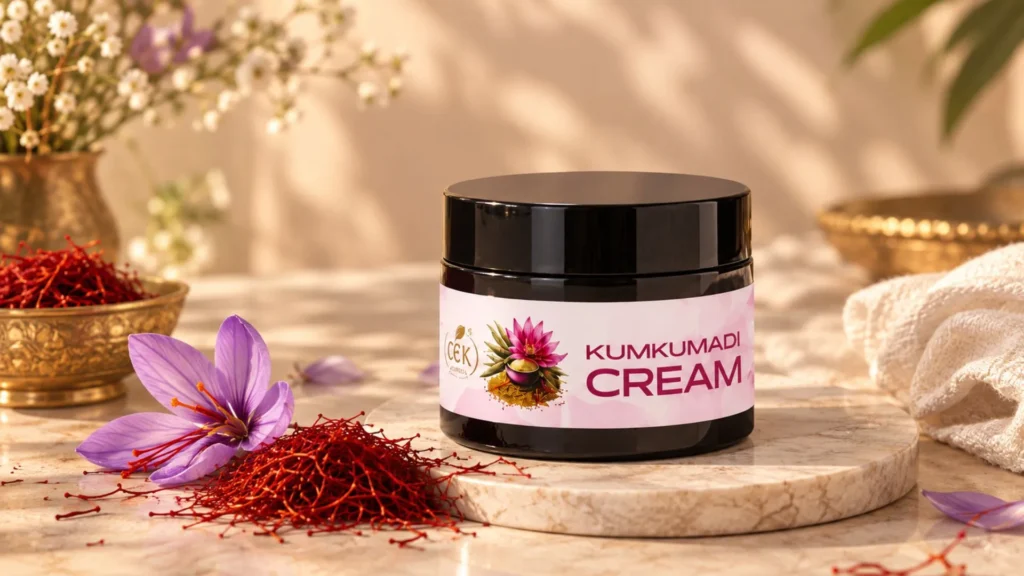
For people looking for a gentler, botanical-inspired approach to everyday skincare, Kumkumadi-based facial care is one option to consider. The aim is not to change your natural skin colour, but to care for your skin so it looks nourished, healthy, and naturally radiant.
Table of Contents
What Are Dark Spots?
Dark spots, often referred to as hyperpigmentation, are areas of skin that appear darker than the surrounding skin.
Melanin is the pigment responsible for much of the colour of our skin when melanin production or distribution increases in certain areas, darker patches or spots can become visible.
There isn’t just one type of dark spot.
Common causes include:
- Marks left behind after acne or inflammation
- Repeated sun exposure
- Melasma
- Age-related pigmentation
- Skin irritation or injury
- Certain medications or underlying skin conditions
DermNet notes that localised pigmentation can have several causes, including post-inflammatory pigmentation, melasma, lentigines and other skin conditions.
That is why the phrase “dark spot removal” can be misleading if interpreted literally. A cosmetic cream may support the appearance of a more even complexion, but the right treatment depends on the cause.
Why Do Dark Spots Take Time to Fade?
One of the biggest skincare mistakes is expecting pigmentation to disappear in a few days.
The skin needs time to naturally shed pigmented cells, while the underlying trigger also needs to be controlled.
According to the American Academy of Dermatology, a dark spot that is only a few shades darker than a person’s natural skin colour may take 6 to 12 months to fade naturally. Deeper pigmentation can take even longer.
This doesn’t mean you have to wait.
A consistent routine can help address some of the factors that contribute to pigmentation while supporting the skin’s overall appearance.
Think of it as:
Protect → Nourish → Maintain → Be Consistent
rather than:
Apply one product → Expect overnight results
How Can a Dark Spot Removal Cream Fit Into Your Skincare Routine?
A dark spot-focused cream can be one part of a broader skincare routine.
The most sensible approach is to combine your chosen skincare product with habits that help prevent new pigmentation.
A simple routine can look like this:
Morning
- Gentle cleanser
- Dark spot-focused moisturiser or cream
- Broad-spectrum sunscreen
Evening
- Gentle cleanser
- Dark spot-focused cream
- Allow your skin to rest overnight
The exact products you use should depend on your skin type and the rest of your routine.
The important part is consistency.
Why Sun Protection Is Essential for Dark Spots
If you’re trying to improve the appearance of pigmentation, sunscreen is not an optional step.
Sun exposure can contribute to pigmentation and make existing dark spots more noticeable. Dermatologists recommend broad-spectrum sunscreen with SPF 30 or higher as part of effective sun protection.
For people concerned about pigmentation, the American Academy of Dermatology also discusses the value of tinted sunscreens containing iron oxide, because visible light can contribute to hyperpigmentation, particularly in darker skin tones.
A practical daytime routine is therefore:
Cleanse → Moisturise → Sunscreen
And if you’re outdoors for extended periods, sunscreen needs to be reapplied according to its directions.
This simple step can make a significant difference to a pigmentation-focused skincare routine.
What to Look for in a Dark Spot Removal Cream
When choosing a cream, don’t judge it only by how aggressively it promises to remove pigmentation.
Instead, consider the overall formulation and what you actually want from the product.
Look for:
- A formulation appropriate for your skin type
- Ingredients you know your skin tolerates
- Moisturising properties
- A texture you can comfortably use consistently
- Clear product directions
- Transparent ingredient information
- A realistic approach to pigmentation
If your skin is sensitive, simplicity can be especially valuable.
The American Academy of Dermatology recommends gentle skincare for people dealing with melasma and notes that products that burn or sting can irritate the skin and potentially make them more noticeable.
Kumkumadi Cream as Part of a Radiance-Focused Routine
Kumkumadi-inspired skincare is traditionally associated with Ayurvedic beauty practices and botanical ingredients.
A recent exploratory study on Kumkumadi Taila, a traditional Ayurvedic facial oil, reported short-term changes in measured facial melanin, erythema, and hydration parameters in a small 15-day study of 30 adults. However, it was a single-arm exploratory study of the oil—not evidence that every Kumkumadi cream will produce the same results, nor evidence that such products can medically treat every pigmentation disorder.
That distinction is important.
When choosing a modern Kumkumadi cream, it is more accurate to think about its role in cosmetic skincare:
- Supporting nourished-looking skin
- Helping skin look more even
- Supporting a radiant-looking complexion
- Providing everyday moisturisation
- Complementing a broader pigmentation-conscious routine
Rather than promising that it will permanently eliminate pigmentation.
Dark Spots vs. Uneven Skin Tone
The terms dark spots and uneven skin tone are often used together, but they aren’t the same.
Dark spots
These are specific areas that appear darker than the surrounding skin.
For example, you may notice a brown mark left behind after an acne breakout.
Uneven skin tone
This is broader. It can refer to differences in pigmentation across different areas of the face, including patches of darker or lighter-looking skin.
A skincare routine focused on naturally radiant-looking skin can therefore have a broader goal than simply targeting individual spots.
The aim is to help the skin look:
More balanced + nourished + smooth + naturally radiant
without trying to alter your natural complexion.
How to Use a Dark Spot Cream Correctly
Using more product does not necessarily mean better results.
A simple application method is usually enough.
Step 1: Cleanse
Wash your face with a gentle cleanser suitable for your skin type.
Step 2: Dry gently
Pat your skin dry instead of rubbing it aggressively.
Step 3: Apply the cream
Use an appropriate amount and spread it evenly over the face according to the product’s directions.
Step 4: Massage gently
Use light movements rather than vigorous rubbing.
Step 5: Apply sunscreen in the morning
During the day, finish your routine with broad-spectrum sunscreen.
Step 6: Stay consistent
Give your routine time.
Changing products every few days makes it difficult to understand how your skin responds.
Can a Dark Spot Removal Cream Remove Every Dark Spot?
No.
This is one of the most important things to understand before purchasing pigmentation skincare.
Dark spots can have very different causes. A mark left after acne isn’t necessarily the same as melasma, a sun spot or another pigmentation disorder.
DermNet lists several possible causes of localised hyperpigmentation, including post-inflammatory pigmentation, melasma and lentigines.
Therefore, a cosmetic cream should not be marketed as a universal treatment for pigmentation.
A more realistic expectation is that the right skincare routine may help improve the appearance of uneven tone and dark spots over time, depending on the cause and the individual’s skin.
What About Acne Marks?
Acne can leave behind dark marks even after the original breakout has disappeared.
These marks are often an example of post-inflammatory hyperpigmentation.
The temptation is to scrub or aggressively exfoliate the area, but that can irritate the skin further.
A better approach is to:
- Avoid picking or squeezing acne.
- Keep the routine gentle.
- Protect the skin from sunlight.
- Use suitable skincare consistently.
- Address active acne if it continues to cause new marks.
The AAD specifically notes that treating the underlying cause of it and using gentle skincare are important parts of managing hyperpigmentation.
Common Mistakes People Make When Treating Dark Spots
1. Expecting overnight results
Pigmentation often takes time to change. Some spots can take months to fade.
2. Skipping sunscreen
Sun exposure can contribute to the persistence and worsening of pigmentation.
3. Scrubbing too aggressively
Dark spots aren’t surface dirt. Excessive rubbing can irritate the skin.
4. Using too many products at once
Adding multiple active products simultaneously can increase irritation and make it difficult to identify what your skin actually tolerates.
5. Chasing “fairness”
Pigmentation care should be about supporting a healthy, even-looking complexion—not changing your natural skin colour.
6. Ignoring irritation
If a product consistently burns or stings, don’t assume that stronger irritation means it is working.
The AAD specifically advises choosing gentle skincare and avoiding products that irritate the skin.
A Simple Routine for Naturally Radiant-Looking Skin
You don’t need a complicated 10-step routine.
A straightforward routine can be more sustainable.
Morning Evening
Gentle cleanser Gentle cleanser
Dark spot-focused cream Dark spot-focused cream
Broad-spectrum SPF 30+ sunscreen Moisturise if needed
Reapply sunscreen when appropriate Let skin rest overnight
If your skin is particularly sensitive, introduce new products gradually.
And remember that sunscreen is not simply an anti-tanning product. It is an important part of protecting against UV-related pigmentation and other sun-related skin damage.
How to Choose a Product Without Falling for Exaggerated Claims
The skincare market is full of phrases such as:
- “Instant fairness”
- “100% pigmentation removal”
- “Permanent dark spot removal”
- “Results overnight”
These claims should make you cautious.
A trustworthy product description should explain what the product is designed to do without promising impossible results.
Instead of looking for a miracle cream, consider:
What is the product?
What ingredients does it contain?
How should it be used?
Is it suitable for my skin?
Does the brand provide transparent information?
Can I use it consistently?
These questions are much more useful when choosing a dark spot-focused skincare product.
When Should You See a Dermatologist?
Not every dark spot should automatically be treated with cosmetic skincare.
You should consider professional advice if:
- A spot changes quickly
- A mark changes in shape or colour
- Pigmentation appears suddenly without an obvious reason
- You experience itching, pain or bleeding
- Pigmentation is extensive or persistent
- You suspect melasma
- Your skin repeatedly becomes irritated
- Your pigmentation isn’t improving despite consistent skincare
Some pigmentation conditions require specific treatments, and a dermatologist can determine what is actually causing the change in skin colour.
This is particularly important because different forms of pigmentation can look similar but require different approaches.
The Real Goal: Healthy, Naturally Radiant-Looking Skin
The best routine isn’t necessarily the one with the most products.
It’s the one you can use consistently without unnecessarily irritating your skin.
A sensible approach combines:
Gentle skincare
A suitable dark spot-focused cream
Daily sun protection
Patience
Attention to the underlying cause
A product such as a Kumkumadi-based cream can fit naturally into this approach for people who want botanical-inspired facial care and a more nourished, radiant-looking complexion.
The goal isn’t to erase your natural skin tone.
It is to help your skin look healthy, cared for, balanced, and naturally radiant.
And when it comes to pigmentation, realistic expectations are just as important as the product you choose.
FAQ — People Also Ask
What is the best cream for dark spots?
The best option depends on the cause of the pigmentation, your skin type, and the ingredients in the formulation. A dark spot-focused cream can be part of a routine, but sunscreen and identifying the underlying cause are also important.
Can dark spots disappear naturally?
Some can fade naturally over time. The AAD notes that relatively superficial dark spots may take around 6–12 months to fade, while deeper pigmentation can take much longer.
Does sunscreen help with dark spots?
Yes. Dermatologists recommend sunscreen as an important part of preventing and managing dark spots. Broad-spectrum SPF 30+ is recommended, and tinted sunscreen containing iron oxide can provide additional protection against visible light.
Can I use a dark spot cream every day?
It depends on the specific product and its directions. If the formulation is intended for daily use, follow the manufacturer’s instructions. Stop using a product if it causes persistent irritation.
Does Kumkumadi cream make skin fair?
The goal of responsible skincare should not be to change your natural skin colour. Kumkumadi-based skincare can instead be positioned around nourishment, an even-looking complexion, and naturally radiant-looking skin.
How long should I use a dark spot cream?
Give your routine time rather than expecting immediate changes. Pigmentation can take months to fade, depending on its cause and depth.
Can I use a dark spot cream without sunscreen?
You can apply a cream without sunscreen, but if pigmentation is your concern, leaving your skin unprotected from sunlight can work against your goal. Sun protection is a key part of pigmentation care.