Cream for Sensitive Skin: Choosing a Gentle Kumkumadi Cream


Sensitive skin often needs a simpler skincare routine, not a longer one. If your skin tends to feel uncomfortable after trying new products, becomes dry or tight easily, or reacts to certain cosmetic ingredients, choosing a cream for sensitive skin requires more thought than simply picking a product labelled “natural” or “herbal.”
A face cream should support your everyday skincare routine without unnecessarily irritating the skin. At the same time, people with sensitive skin may still want to address concerns such as dryness, uneven-looking skin tone, and the appearance of dark spots.
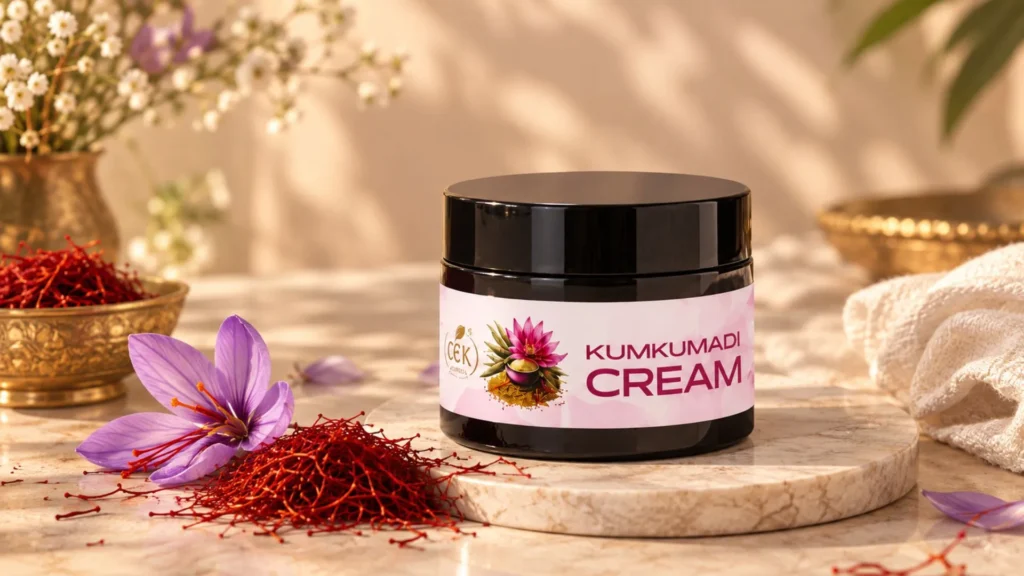
This is where a product such as Oaktree Naturals Kumkumadi Cream can be considered as part of a carefully built routine. Oaktree currently describes its Kumkumadi Cream as a lightweight cream designed to help reduce the appearance of dark spots, even skin tone, nourish the skin, and leave it feeling soft, smooth, and radiant. The brand also lists it as suitable for daily use and all skin types.
However, “suitable for all skin types” should not be interpreted as a guarantee that every person with sensitive skin will tolerate the product. Sensitive skin can react differently from person to person, which is why introducing any new skincare product gradually is a sensible approach.
What Does Sensitive Skin Actually Mean?
“Sensitive skin” is commonly used to describe skin that reacts easily to skincare products, environmental factors, or changes in routine.
Someone with sensitive skin may experience:
- Stinging or burning after applying a product
- Redness
- Itching
- Dryness or tightness
- Flaking
- Discomfort after cleansing
- Reactions to fragrances or particular cosmetic ingredients
Sensitive skin is not necessarily the same thing as an allergy or a medical skin condition. Irritant contact dermatitis and allergic contact dermatitis are different reactions, and conditions such as eczema and rosacea can also cause increased sensitivity.
DermNet notes that sensitive skin and irritation can involve different mechanisms and that individual sensitivity to cosmetic ingredients varies considerably.
That means there is no single ingredient or product category that is automatically perfect for everyone with sensitive skin.
What Should You Look for in a Cream for Sensitive Skin?
When choosing a cream for sensitive skin, focus less on marketing claims and more on how the product fits your individual skin and routine.
1. A comfortable texture
A face cream should feel comfortable after application. If a product consistently leaves your skin feeling tight, excessively greasy, itchy, or uncomfortable, it may not be the right choice for you.
A lightweight moisturising cream can be useful for people who dislike heavy textures, while drier skin may prefer a richer formula.
2. A straightforward skincare routine
Sensitive skin generally benefits from avoiding unnecessary experimentation.
Instead of introducing several new products at once, consider a basic routine:
- Gentle cleanser
- Moisturising cream
- Sunscreen during the day
If you want to introduce a targeted product, add it one at a time. This makes it easier to identify what your skin tolerates.
3. Careful attention to ingredients
“Natural” does not automatically mean “non-irritating.”
Botanical ingredients, essential oils, fragrances, and preservatives can cause reactions in some people. DermNet notes that fragrances are an important source of cosmetic contact reactions, while preservatives and other cosmetic ingredients can also cause allergic or irritant reactions.
So, if you already know that your skin reacts to a particular ingredient, check the product’s complete ingredient information before using it.
4. A product that suits your specific concern
Sensitive skin does not mean you have to ignore other skincare concerns.
For example, someone may have sensitive skin alongside:
- Dryness
- Uneven-looking skin tone
- The appearance of dark spots
- Dull-looking skin
- Rough texture
The best routine addresses these concerns without overwhelming the skin with multiple active products.
Is Kumkumadi Cream Suitable for Sensitive Skin?
This is an important distinction: Kumkumadi cream can be considered by someone with sensitive skin, but that does not mean every Kumkumadi cream will work for every sensitive-skin user.
Oaktree Naturals currently lists its Oak Tree Kumkumadi Cream 50 g under facial care and describes it as suitable for daily use and all skin types. The product is positioned around reducing the appearance of dark spots, helping even the appearance of skin tone, nourishing the skin and leaving it soft, smooth and radiant.
For someone with sensitive skin, the more useful question is therefore:
“Does this particular cream work comfortably with my skin?”
rather than simply:
“Is Kumkumadi cream good for sensitive skin?”
Individual tolerance matters.
If your skin has previously reacted to botanical products, fragrance, or specific cosmetic ingredients, check the ingredient list carefully and consider a patch test before applying the cream broadly.
The American Academy of Dermatology recommends testing new skincare products before adding them to a routine. Its guidance suggests applying the product to a small test area twice daily for 7–10 days and watching for redness, itching, or swelling.
Why Patch Testing Matters for Sensitive Skin
Patch testing a cosmetic product at home is a simple precaution that can help you identify whether your skin reacts negatively before applying the product over your entire face.
The American Academy of Dermatology recommends:
- Choose a small area where the product will not be repeatedly washed or rubbed away.
- Apply the product in the amount you would normally use.
- Repeat according to the recommended testing routine.
- Watch for redness, itching, swelling, or other irritation.
- Stop using the product if a reaction develops.
The AAD recommends testing over 7–10 days for new skincare products.
This is particularly useful when trying a new cream for sensitive skin, because a product that feels fine on someone else’s skin may not feel the same on yours.
If you experience a strong or persistent reaction, professional dermatological advice is more appropriate than repeatedly testing different products yourself.
How to Use a Cream for Sensitive Skin Without Overcomplicating Your Routine
A simple routine is often easier to manage than layering many products.
Morning routine
Step 1: Cleanse gently
Use a cleanser that your skin already tolerates. Avoid unnecessarily harsh cleansing if it leaves your skin feeling tight.
Step 2: Apply your moisturising cream
If you have patch-tested the Kumkumadi Cream and it feels comfortable on your skin, apply an appropriate amount according to the product directions.
Step 3: Finish with sunscreen
Sunscreen is particularly relevant if uneven tone or dark spots are among your concerns. Sun exposure can contribute to pigmentation, so protecting the skin during the day is an important part of a pigmentation-focused routine.
Evening routine
At night, keep things simple:
- Cleanse.
- Apply your chosen cream.
- Avoid adding several new active products at the same time.
This approach makes it easier to understand what your skin likes and what it does not.
Can a Sensitive-Skin Cream Help With Dark Spots?
A moisturising cream can be part of a routine aimed at improving the appearance of uneven-looking skin, but it is important not to treat cosmetic skincare as a guaranteed solution for pigmentation.
Dark spots can have different causes, including inflammation following acne, sun exposure and conditions such as melasma. The appropriate approach depends on the cause.
The American Academy of Dermatology notes that some dark spots can take months to fade, and sun protection plays an important role in preventing existing pigmentation from becoming more noticeable.
Oaktree positions its Kumkumadi Cream as helping reduce the appearance of dark spots and even skin tone.
That makes it more accurate to describe the product as a cosmetic skincare option for improving the appearance of uneven-looking skin, rather than promising that it will remove every type of pigmentation.
A useful rule
If pigmentation is your main concern, think about your routine as a whole:
Gentle skincare + suitable moisturisation + consistent sun protection + patience
rather than expecting one cream to do everything.
Kumkumadi Cream vs. a Basic Moisturiser
These products can serve different purposes.
Feature Basic Moisturiser Kumkumadi Cream
Main role Hydration and moisturisation Moisturisation plus targeted cosmetic skincare positioning
Suitable for daily routines Generally yes Oaktree lists its cream for daily use.
Uneven-looking skin tone Depends on formula Oaktree specifically positions it around even-looking skin tone.
Dark-spot positioning Depends on ingredients Oaktree says it helps reduce the appearance of dark spots.
Sensitive skin Depends on formulation and individual tolerance Oaktree lists it for all skin types, but individual tolerance still matters.
The key takeaway is that the label “Kumkumadi” should not be the only factor in choosing a cream. The complete formulation, your known sensitivities, and how your skin responds are all relevant.
Common Mistakes People With Sensitive Skin Make
Sometimes the problem is not one particular cream. It is the way several products are being used together.
Using too many products at once
Adding a cleanser, serum, exfoliant, face oil, mask, and new cream simultaneously makes it difficult to determine what caused irritation.
Assuming natural means risk-free.
Plant-derived and botanical ingredients can still cause irritation or allergic reactions in some people. DermNet specifically notes that botanical ingredients can be involved in cosmetic reactions.
Scrubbing the skin aggressively
Rough physical exfoliation can make already-irritated skin feel worse.
Skipping sunscreen
If uneven tone and dark spots are concerns, leaving the skin unprotected from the sun can work against the rest of your routine.
Continuing after a reaction
Burning, significant redness, swelling, or persistent itching should not be treated as proof that a product is “working.”
If a product causes a reaction, stop using it. AAD guidance also recommends seeking dermatological help when a reaction is severe or does not settle.
How to Choose the Right Cream for Your Sensitive Skin
Before buying a new face cream, use this quick checklist:
✔ Check the ingredient list
Especially if you already know which ingredients trigger your skin.
✔ Consider the formulation
Choose a texture that works with your skin type and routine.
✔ Avoid unnecessary product overload
Introduce one new product at a time.
✔ Patch test first
This is especially sensible when trying a new leave-on product.
✔ Pay attention to your skin’s response
Comfort matters more than marketing claims.
✔ Don’t confuse cosmetic care with medical treatment
Persistent rashes, severe irritation, or unexplained pigmentation may need professional evaluation.
Where Does Oaktree Naturals Kumkumadi Cream Fit?
Oaktree Naturals positions its Kumkumadi Cream as a daily facial-care product containing natural ingredients, with benefits focused on the appearance of dark spots, an even-looking skin tone, nourishment, and a soft, smooth, radiant-looking finish. The brand currently lists the 50 g product as suitable for all skin types.
For someone searching for a cream for sensitive skin, the product can therefore be considered as one option rather than a universal solution.
The safest approach is straightforward: understand your skin, check the product information, patch test a new product, and introduce it gradually.
If your skin already has a history of reactions, don’t choose a product solely because it says “natural,” “herbal,” or “for all skin types.” Your own tolerance is the more useful guide.

FAQ Section
Is Kumkumadi cream good for sensitive skin?
Oaktree Naturals lists its Kumkumadi Cream as suitable for all skin types. However, sensitive skin can react differently to individual ingredients, so patch testing a new product before regular facial use is advisable.
What is the best cream for sensitive skin?
There is no single cream that is best for everyone with sensitive skin. Look for a formulation your skin tolerates, check ingredients that you know cause reactions, and introduce new products gradually.
Can sensitive skin use Kumkumadi cream every day?
Oaktree lists its Kumkumadi Cream as suitable for daily use. If your skin is sensitive, start cautiously and follow a patch test before incorporating it into your routine.
Can Kumkumadi cream help with dark spots?
Oaktree Naturals states that its Kumkumadi Cream helps reduce the appearance of dark spots and supports a more even-looking skin tone. Results can vary, and pigmentation has many possible causes.
Should I patch test a cream before using it on my face?
Yes. The American Academy of Dermatology recommends testing new skincare products on a small area before applying them more widely.
Does natural skincare mean it cannot irritate sensitive skin?
No. Natural or botanical ingredients can still cause irritation or allergic reactions in some people: individual tolerance and the complete formulation matter.
What should I avoid if I have sensitive skin?
Avoid ingredients you already know trigger your skin, unnecessary product layering, and aggressive exfoliation. If you have a diagnosed allergy, follow your dermatologist’s advice regarding ingredients to avoid.