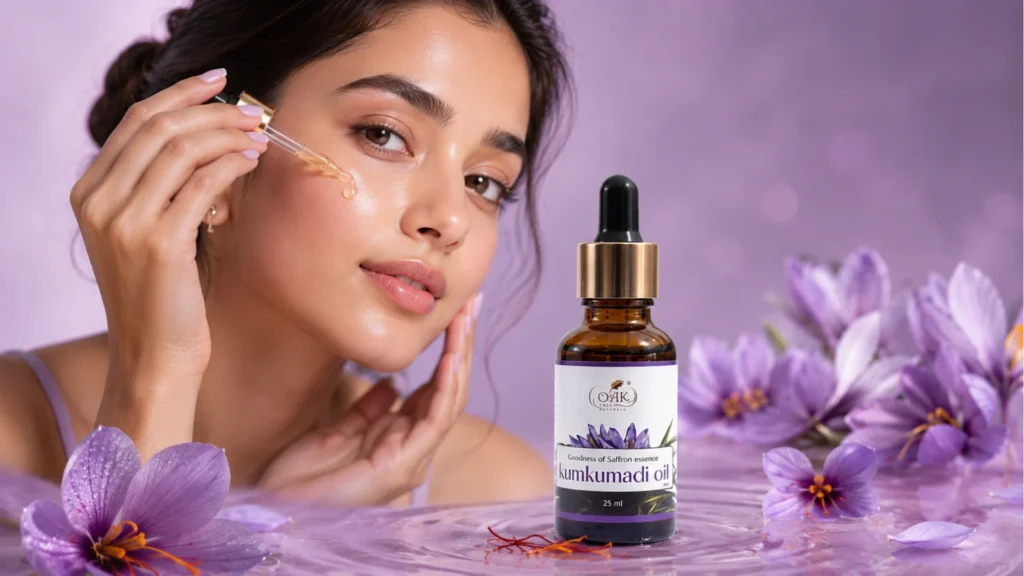
Kumkumadi Oil for Pigmentation: The Complete Guide to Benefits, Application & Results Timeline


Kumkumadi oil is frequently celebrated as Ayurveda’s premier solution for hyperpigmentation and dullness. However, many users are left wondering how to integrate it effectively into their routines and what results to expect. This guide provides a comprehensive overview of the correct application methods, substantiated benefits, and a realistic week-by-week timeline for achieving visible results.
Table of Contents
Key Takeaways
- Kumkumadi oil is a traditional Ayurvedic facial oil formulated with saffron, sandalwood, and other herbs known for skin-brightening properties.
- Consistent nightly application is generally recommended for visible improvement in pigmentation and skin tone.
- Early changes such as improved glow and hydration are typically reported within 2–4 weeks, while noticeable pigmentation reduction usually takes 8–12 weeks or longer.
- Results vary based on skin type, severity of pigmentation, and consistency of use.
- Kumkumadi oil works best as part of a broader skincare routine that includes daily sunscreen, since sun exposure can worsen pigmentation.
- Choosing an authentic, well-formulated product and patch testing before full use reduces the risk of irritation.
- Kumkumadi oil can complement, but does not replace, dermatologist-recommended treatments for severe or persistent pigmentation.
What Is Kumkumadi Oil and What’s In It?
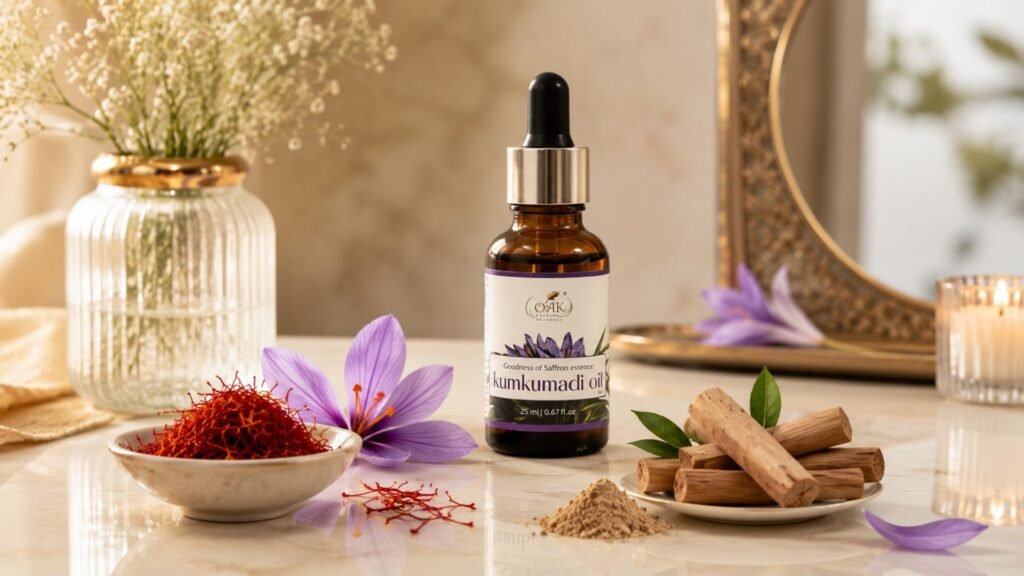
Kumkumadi oil is a traditional Ayurvedic facial oil made with saffron, sandalwood, and herbal extracts, traditionally used to brighten skin tone and reduce the appearance of dark spots. The formulation dates back to classical Ayurvedic texts, where it was prized as a facial tailam, or medicated oil, for skin radiance.
First, saffron (kumkuma) forms the namesake ingredient and is prized for its color and skin-brightening reputation. Second, sandalwood contributes a calming, cooling quality that supports even-toned skin. Third, manjistha and licorice are commonly included for their traditional association with clarity and tone. These botanicals are typically suspended in a nourishing base oil, such as sesame or almond oil, that helps carry the active herbal compounds into the skin.
For a deeper look at the star ingredient, see our guide on saffron skincare benefits explained.
Why Does Kumkumadi Oil Matter for Pigmentation?
Kumkumadi oil matters for pigmentation because it was traditionally formulated specifically to address uneven tone, dark spots, and dullness — the same concerns many people search for today. Ayurvedic practice historically distinguished between general dryness oils and this targeted brightening blend, positioning it as a specialty product rather than an all-purpose moisturizer.
That said, it’s worth understanding what you’re actually dealing with. Not all discoloration behaves the same way, and it helps to know the difference between hyperpigmentation and melasma before setting expectations, since melasma tends to be more hormonally driven and stubborn.
How Does Kumkumadi Oil Help With Pigmentation?
Kumkumadi oil addresses pigmentation through a synergistic blend of botanical compounds designed to promote an even skin tone. While not a clinical treatment, its herbal actives support surface-level renewal and deep hydration, which collectively diminish the appearance of dark spots over time.
For context, many readers compare this approach with more conventional options. If you’re weighing your choices, our piece on vitamin C serum vs natural oils for dark spots breaks down how these categories differ in mechanism and speed of results.
How Do You Apply Kumkumadi Oil for Best Results?
For optimal results, it should be applied to a clean face, warmed between the palms, and massaged into the skin during your evening routine. Proper sequencing is essential: applying the oil to slightly damp skin enhances absorption and ensures an even distribution of its active ingredients.
Step-by-step application:
- Cleanse your face thoroughly and pat it dry.
- Warm 3–4 drops of oil between your palms.
- Massage gently in upward, circular motions for 1–2 minutes.
- Follow with a lightweight moisturizer if your skin needs extra hydration.
For a fuller sequence, check our night skincare routine steps, and consider pairing application with a gua sha facial massage technique to boost circulation.
How Often Should You Use Kumkumadi Oil?
Nightly use is the most commonly recommended frequency for visible improvement over time. However, those with sensitive or acne-prone skin should start slower, using it 2–3 times weekly and increasing gradually as skin adjusts.
Can Kumkumadi Oil Be Used With Other Skincare Products?
Yes, This oil can be layered with other actives, though timing matters. Many users apply this oil at night and reserve stronger actives like vitamin C or retinol for the morning, or alternate nights, to minimize irritation risk.
How Long Does Kumkumadi Oil Take to Reduce Pigmentation?
Visible improvements in skin glow typically appear within 2 to 4 weeks of consistent use, while noticeable reduction in pigmentation generally takes 8 to 12 weeks or longer. Pigmentation results from this oil vary by individual, depending on skin type, severity of dark spots, and consistency of application.
| Timeframe | What to Expect |
| 2 weeks | Improved hydration, subtle glow |
| 4–6 weeks | Softer texture, early tone evening |
| 8–12 weeks | Noticeable pigmentation reduction (for many users) |
| 3+ months | Continued gradual improvement with consistency |
Is Kumkumadi Oil Safe for All Skin Types?
It is generally considered safe for most skin types, but as an oil-based product, it isn’t automatically right for every skin. Those with active acne or highly reactive skin should introduce it cautiously and always patch test a new skincare product on the inner arm 24–48 hours before facial use.
How Do You Choose an Authentic Kumkumadi Oil?
Choosing an authentic oil starts with checking the ingredient list for real saffron and sandalwood rather than synthetic fragrance listed near the top. Reputable Ayurvedic brands typically disclose their saffron sourcing and avoid heavy artificial scenting, which is often a sign of dilution.
If dryness beyond pigmentation is also a concern, our best face oils for dry skin guide covers complementary options.
What’s Next — Building a Routine Around It
Daily sunscreen use is recommended alongside Kumkumadi oil, since unprotected sun exposure can counteract efforts to reduce pigmentation. Building consistency matters more than any single product, so pairing this oil with a daily sunscreen routine for pigmentation-prone skin and a broader Ayurvedic skincare routine gives it the best chance to work.
Can it replace dermatological treatment for dark spots? Not for severe or persistent cases. If pigmentation is worsening, spreading, or resistant to consistent care, review the signs you should see a dermatologist for pigmentation and consider a professional evaluation alongside your routine.
Conclusion
While it is not an overnight solution, it serves as a powerful component of a dedicated pigmentation-focused regimen. By maintaining consistency over an 8–12 week period and prioritizing sun protection, you can achieve a more radiant and even complexion through the proven principles of Ayurvedic care.
Written by Oaktree Naturals Editorial Team — writers focused on Ayurvedic skincare education and ingredient transparency.
Reviewed by [Reviewer Name], Skincare Formulation Specialist with expertise in traditional and modern skincare ingredients.
Disclaimer: This article was initially drafted using AI assistance. However, the content has undergone thorough revisions, editing, and fact-checking by human editors and subject matter experts to ensure accuracy.