Apricot Oil for Hair: Can It Help Dry and Dull Hair?

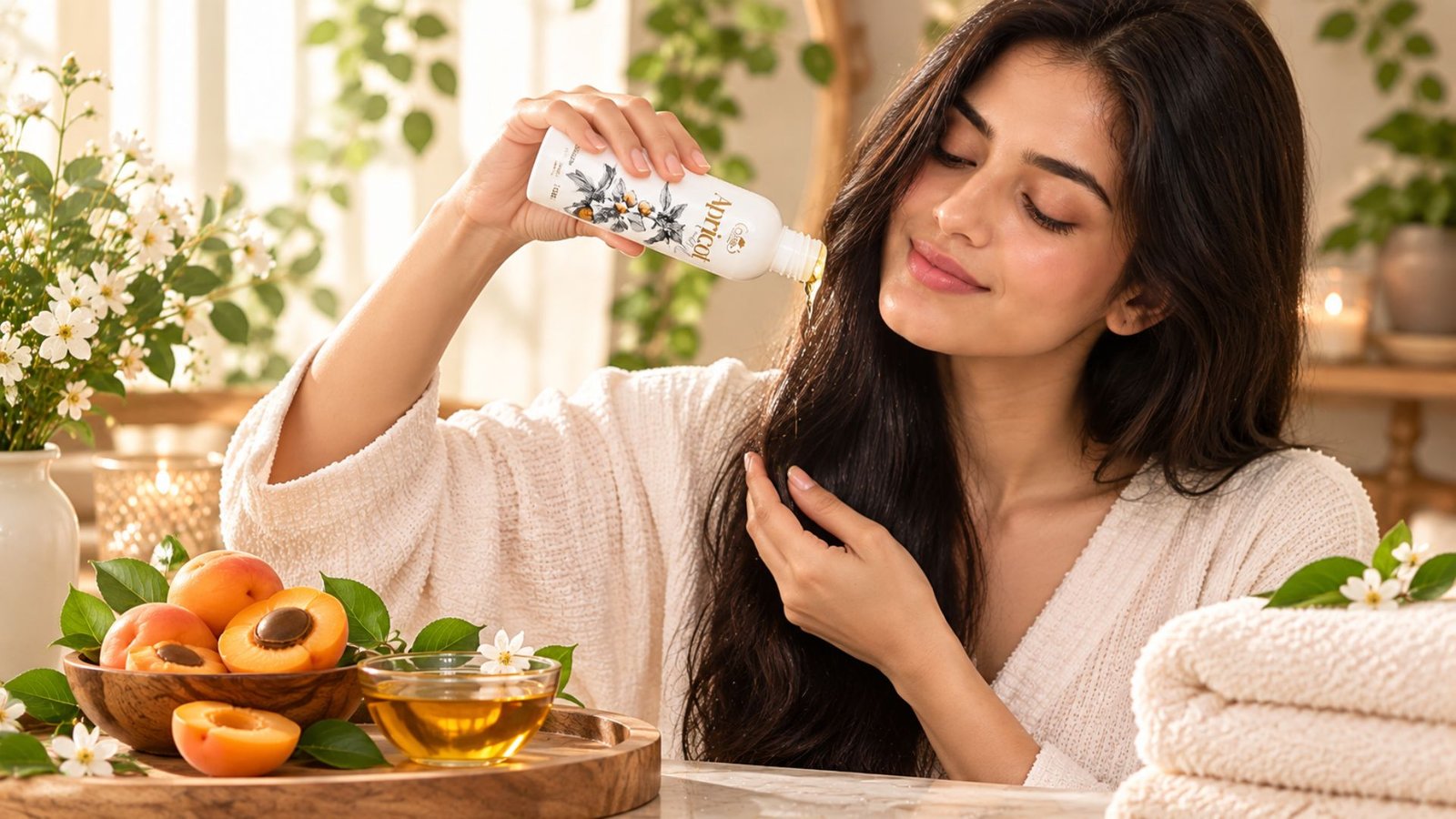
Apricot Oil for Hair: Dry, rough, and dull-looking hair can make even a carefully planned hair-care routine feel incomplete. Frequent washing, heat styling, environmental exposure, and lack of moisture can all affect how hair feels and looks. While there are many hair-care products available, plant-based oils remain a popular choice for people who prefer simple and nourishing hair-care routines.
Apricot oil is one such natural oil that can be used as part of a regular hair-care routine. Known for its lightweight, smooth texture, apricot oil can help condition the hair and make dry strands feel softer and more manageable.
Oak Tree Naturals Apricot Oil offers a simple way to incorporate this botanical oil into your hair-care ritual. It can be used as a pre-shampoo treatment, scalp massage oil, or as a small amount of oil on dry hair ends.
But can apricot oil actually help dry and dull hair? How should you apply it? Can it be used on the scalp? And how often should you oil your hair?
Let’s explore the practical ways apricot oil can fit into a hair-care routine.
Table of Contents
What Is Apricot Oil?
Apricot oil is a plant-based oil obtained from apricot kernels. It is commonly used in cosmetic and personal-care products because of its smooth texture and emollient properties.
When used on hair, an oil such as apricot oil can coat the surface of the strands, helping them feel smoother and more conditioned. This can make dry or rough hair feel softer and easier to manage.
Apricot oil contains naturally occurring fatty acids and other compounds associated with plant oils. The exact composition can vary depending on sourcing and processing.
Apricot Oil for Hair at a Glance
| Hair-Care Need | How Apricot Oil May Help | Best Application |
| Dry-feeling hair | Helps condition and soften strands | Pre-shampoo treatment |
| Rough texture | Adds a smoother feel | Mid-lengths and ends |
| Dull-looking hair | Can improve the appearance of conditioned hair | Small amount after washing |
| Dry scalp | Provides an emollient layer | Gentle scalp massage |
| Frizzy hair | Helps make strands feel smoother | Small amount on ends |
| Hair maintenance | Adds a nourishing oiling step | Weekly routine |
It is important to remember that cosmetic oils primarily improve the feel and appearance of hair. They should not be considered a guaranteed treatment for hair loss or medical scalp conditions.
Benefits of Apricot Oil for Hair
1. Helps Condition Dry Hair
Dry hair often feels rough because it lacks the smooth, conditioned feel associated with well-moisturized strands.
Apricot oil can be used as a conditioning oil before shampooing. Applying a small amount to the lengths of your hair allows the oil to coat the strands and can leave them feeling softer after washing.
This can be particularly useful for hair that frequently feels dry after shampooing.
2. Helps Improve Hair’s Softness
One of the easiest ways to judge whether a hair oil works well for you is how your hair feels after use.
Apricot oil has a relatively lightweight texture, making it suitable for people who prefer an oil that does not feel excessively heavy.
When applied in moderation, it can help dry hair feel smoother and more manageable.
3. Helps Tame the Look of Frizz
Frizz can become more noticeable when the hair surface feels rough or lacks conditioning.
A small amount of apricot oil applied to the mid-lengths and ends can help smooth the appearance of individual strands.
However, using too much oil can make hair look greasy rather than naturally conditioned. Start with a small quantity and add more only if necessary.
4. Helps Add a Healthy-Looking Finish
Dull-looking hair does not always mean damaged hair. Sometimes, the hair simply lacks the smooth surface that reflects light evenly.
A lightweight layer of oil can make hair appear more conditioned and give it a smoother-looking finish.
This is one reason plant oils are commonly used in beauty routines.
5. Useful for Dry Hair Ends
The ends of the hair are often older than the hair closer to the scalp and may feel drier as a result.
Instead of applying a large amount of oil to the entire head, you can focus a few drops of apricot oil on the ends.
This targeted approach is particularly useful if your roots become oily easily.
Can Apricot Oil Help Dry and Dull Hair?
Yes, apricot oil can be useful for improving the feel and appearance of dry, rough, or dull-looking hair.
However, it is important to distinguish between cosmetic conditioning and repairing structural damage.
An oil cannot permanently repair split ends or reverse significant hair damage. What it can do is provide conditioning, improve the feel of the strands, and help hair look smoother.
Dry Hair vs. Damaged Hair
| Hair Concern | What Apricot Oil Can Do | What It Cannot Do |
| Dry-feeling strands | Condition and soften | Permanently change hair structure |
| Rough texture | Improve smoothness | Remove severe damage |
| Frizz | Help smooth appearance | Guarantee frizz-free hair |
| Split ends | Temporarily improve appearance | Permanently repair split ends |
| Dull appearance | Add a conditioned-looking finish | Guarantee long-term shine |
| Hair breakage | May help reduce friction during handling | Treat underlying medical causes |
This distinction is important when evaluating any natural hair-care product.
How to Use Apricot Oil for Hair
There are several ways to incorporate apricot oil into your routine.
1. Use It as a Pre-Shampoo Treatment
Pre-shampoo oiling is one of the simplest methods.
How to Do It
- Take a small amount of apricot oil.
- Warm it gently between your palms.
- Apply it to the lengths and ends of your hair.
- If your scalp tolerates oiling well, massage a small amount into the scalp.
- Leave it for around 30 minutes to an hour.
- Wash your hair with your regular shampoo.
- Follow with conditioner if needed.
You do not need to soak your hair in oil. Using more product does not necessarily provide better results.
2. Apply Apricot Oil to Hair Ends
If your main concern is dry or rough ends, targeted application may be better than full-head oiling.
Take one or two drops, rub them between your fingertips, and gently smooth them over the ends.
This method can help avoid making the roots look oily.
3. Use It for Scalp Massage
A gentle scalp massage can be incorporated into a hair-care routine with a small amount of apricot oil.
Use your fingertips rather than your nails and massage gently for a few minutes.
The purpose of this step is primarily to make the scalp feel conditioned and to create a relaxing self-care ritual.
If you have persistent dandruff, scalp inflammation, excessive itching, or other ongoing scalp concerns, speak with a dermatologist rather than relying only on cosmetic oils.
4. Add a Small Amount After Washing
People with particularly dry or textured hair may use a tiny amount of oil after washing.
Apply it only to the lengths and ends of damp or dry hair, depending on your preference and hair type.
The key is quantity. Start with less than you think you need.
How Much Apricot Oil for hair Should You Use?
The ideal amount depends on your hair length, thickness, texture, and condition.
| Hair Type/Length | Suggested Starting Amount |
| Short, fine hair | 1–2 drops |
| Medium-length hair | 2–4 drops |
| Long or thick hair | 4–6 drops |
| Hair ends only | 1–2 drops |
| Scalp massage | Small amount spread across fingertips |
These are starting points rather than strict measurements. Adjust according to how your hair responds.
Fine hair generally requires less oil, while thick or coarse hair may tolerate a little more.
Apricot Oil According to Hair Type
For Dry Hair
Dry hair can benefit from a regular conditioning routine.
Try using apricot oil once or twice a week as a pre-shampoo treatment. Concentrate on the lengths and ends, particularly if those areas feel rough.
For Fine Hair
Fine hair can become weighed down easily.
Use only a few drops and focus on the ends rather than applying oil heavily from root to tip.
For Thick or Coarse Hair
Thicker hair may tolerate a larger amount of oil.
Apply it evenly through the lengths and ends and adjust the quantity based on how your hair feels after washing.
For Curly or Wavy Hair
Curly and wavy hair can often benefit from conditioning products that help reduce the feeling of dryness.
A small amount of apricot oil can be used on the ends or as part of a pre-shampoo routine.
Avoid applying excessive oil, as buildup can make curls feel heavy.
For Oily Scalp
If your scalp becomes oily quickly, you may prefer to skip scalp oiling and concentrate on the mid-lengths and ends.
This allows you to condition dry areas without adding unnecessary oil near the roots.
Apricot Oil vs. Other Hair Oils
Different oils have different textures and characteristics. There is no single oil that is best for every person.
| Oil | Common Hair-Care Use | Texture |
| Apricot Oil | Conditioning and softness | Lightweight |
| Coconut Oil | Pre-wash conditioning | Richer |
| Jojoba Oil | Scalp and hair conditioning | Lightweight |
| Argan Oil | Smoothing and finishing | Lightweight |
| Castor Oil | Often used in traditional hair routines | Thick and heavy |
The right choice depends on your hair type and how your hair responds to the product.
Does Apricot Oil Promote Hair Growth?
You may come across claims that apricot oil promotes hair growth. These claims should be treated carefully.
Apricot oil can help condition the hair and scalp, but there is not enough reason to treat it as a proven hair-growth treatment.
Healthy-looking hair growth depends on many factors, including genetics, nutrition, hormones, scalp health, and overall health.
If you are experiencing significant or sudden hair loss, consult a dermatologist to identify the underlying cause.
Can Apricot Oil Help With Dandruff?
A dry scalp and dandruff are not always the same thing.
Apricot oil for hair may help soften a dry-feeling scalp, but dandruff can have different underlying causes and may require specific treatment.
If you have persistent flakes, redness, itching, or scalp irritation, consider professional advice instead of relying solely on hair oil.
How Often Should You Use Apricot Oil?
For most hair-care routines, starting with once a week is a practical approach.
If your hair is particularly dry and responds well to the oil, you may choose to use it more frequently.
On the other hand, if your hair feels heavy, greasy, or difficult to wash after oiling, reduce the amount or frequency.
Simple Weekly Hair-Care Routine
| Day | Routine |
| 1 | Apricot oil pre-shampoo treatment |
| 2–3 | Regular cleansing and conditioning |
| 4–5 | Normal hair care |
| 6 | Optional small amount on dry ends |
| 7 | Rest or regular wash |
The exact schedule is flexible. Your hair’s response is more important than following a rigid timetable.
How to Choose Apricot Oil for Hair
When choosing an oil for personal care, avoid judging quality based solely on phrases such as “natural,” “pure,” or “organic.”
Look for transparent product information.
What to Check
- Clearly listed ingredients
- Intended use of the product
- Directions for application
- Storage instructions
- Manufacturer information
- Packaging that protects the oil from unnecessary exposure
- Batch or product information where applicable
Good skincare and hair-care content should also distinguish between cosmetic benefits and medical claims.
For example, saying that an oil can help hair feel softer is a reasonable cosmetic-use description. Claiming that it can cure hair loss would require much stronger evidence.
Tips for Getting Better Results From Apricot Oil for Hair
Start Small
Begin with a small amount. You can always add more, but removing excess oil usually requires additional washing.
Focus on Dry Areas
If your roots are naturally oily, focus on the mid-lengths and ends.
Don’t Overheat the Oil
If you prefer warm oil treatments, use gentle warmth. The oil should feel comfortably warm, never hot.
Wash Thoroughly
Use your regular shampoo to remove excess oil. Depending on your hair type, you may need to shampoo more than once.
Be Consistent
A simple routine used consistently is generally more practical than applying large amounts of oil occasionally.
Precautions Before Using Apricot Oil for Hair
Although apricot oil is a botanical ingredient, individual sensitivity can vary.
Before using it extensively:
- Perform a patch test.
- Avoid contact with the eyes.
- Do not apply to broken or irritated skin.
- Stop use if significant irritation occurs.
- Keep the product away from excessive heat and direct sunlight.
- Follow the manufacturer’s storage and usage instructions.
If you have an existing scalp condition, consult a qualified healthcare professional for appropriate treatment.
Why Apricot Oil Can Be a Useful Hair-Care Essential
The appeal of apricot oil is its versatility.
You can use it as a weekly pre-shampoo treatment, apply a few drops to dry ends, or incorporate it into a relaxing scalp massage.
It does not require a complicated hair-care routine.
A simple approach could be:
Apricot Oil → Shampoo → Conditioner → Gentle Drying
For particularly dry ends, you can finish with a very small amount of oil after washing.
The goal is not to make your hair care more complicated. It is to find a routine that keeps your hair feeling comfortable, conditioned, and manageable.
Final Thoughts
Apricot oil can be a useful addition to a hair-care routine when your main concerns are dryness, rough texture, or dull-looking hair. Apricot oil for hairs offers a lightweight, conditioning option for everyday hair care, making it suitable for several applications, from pre-shampoo oiling to targeted care for dry ends.
However, realistic expectations are important. Apricot oil can help improve the feel and appearance of hair, but it should not be considered a cure for hair loss, dandruff, or significant hair damage.
The best approach is to start with a small amount, choose an application method that suits your hair type, and use it consistently. Oak Tree Naturals Apricot Oil can fit easily into this kind of simple routine, offering a straightforward way to add a plant-based conditioning step to everyday hair care.
Frequently Asked Questions
1. Is apricot oil good for dry hair?
Apricot oil can help condition dry-feeling hair and make strands feel softer and smoother. It can be especially useful as a pre-shampoo treatment or when applied to dry ends.
2. Can apricot oil make dull hair look shinier?
A small amount of apricot oil can create a smoother, conditioned-looking surface that may make hair appear more lustrous. The effect is primarily cosmetic.
3. How should I use apricot oil for hair?
You can use it as a pre-shampoo treatment, scalp massage oil, or apply a few drops to the mid-lengths and ends. Start with a small amount.
4. Can I leave apricot oil on my hair overnight?
You can choose to leave hair oil on for longer, but overnight application is not necessary for everyone. Start with a shorter treatment and see how your hair responds.
5. Can apricot oil help hair growth?
Apricot oil can condition hair and support a healthy-feeling scalp, but it should not be considered a proven hair-growth treatment. Persistent hair loss should be evaluated by a dermatologist.
6. Is apricot oil suitable for oily hair?
It can be used, but people with oily scalps may prefer applying it mainly to the lengths and ends rather than the scalp.
7. How often should I apply apricot oil to my hair?
Start with once a week. You can adjust the frequency depending on your hair type and how your hair feels after use.
8. Can apricot oil help with dandruff?
Apricot oil may help soften a dry-feeling scalp, but dandruff can have different causes and may require specific treatment. Persistent dandruff or scalp irritation should be assessed by a professional.
9. Can I use apricot oil on my scalp?
Yes, a small amount can be used for a gentle scalp massage if your scalp tolerates it. Stop if irritation occurs.
10. Is apricot oil good for split ends?
Apricot oil for hair may temporarily make dry or split ends look and feel smoother, but it cannot permanently repair a split end. Trimming is the reliable way to remove split ends.