
Is Apricot Oil Good for Face? 7 Powerful Benefits for Your Skin

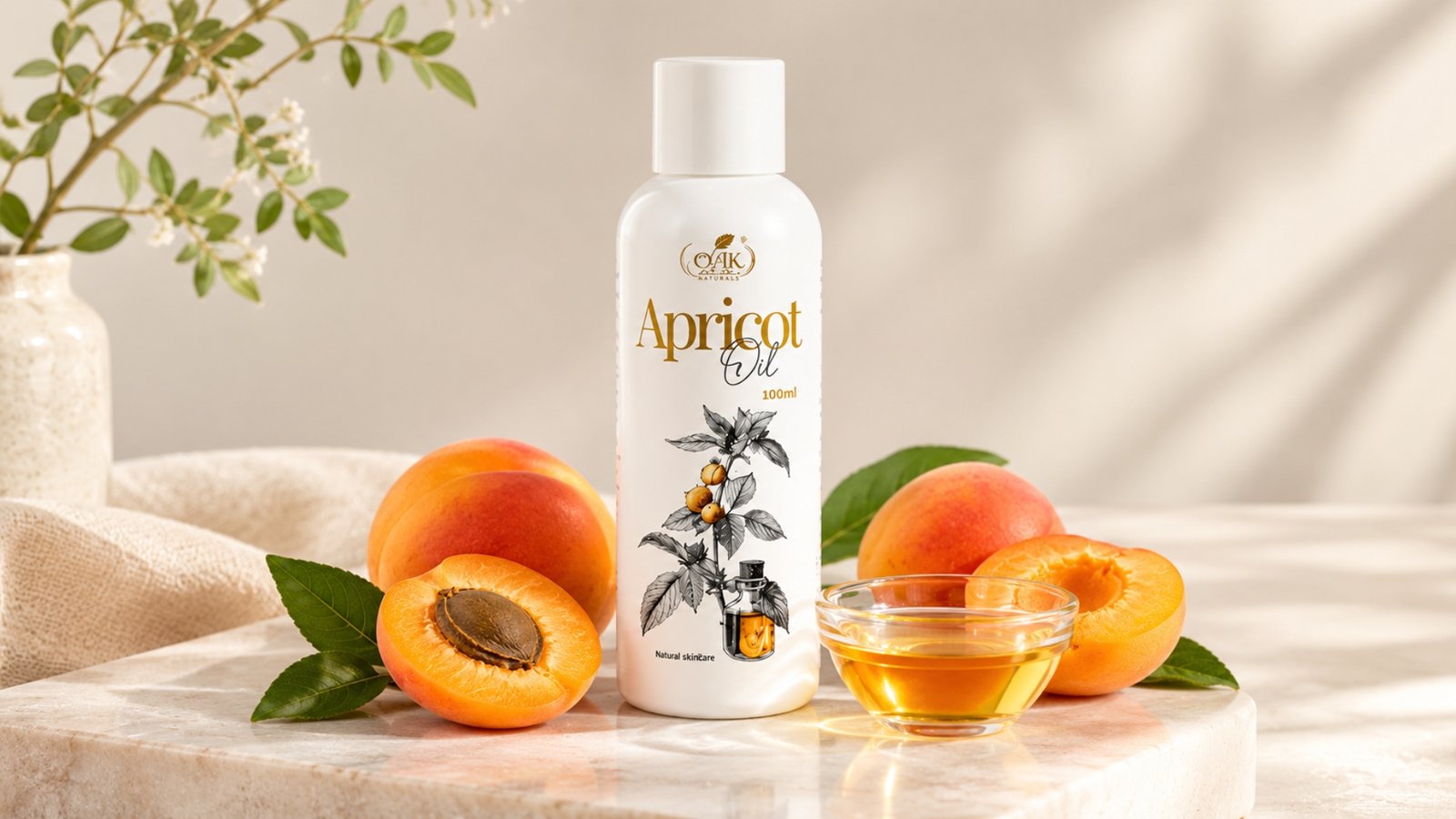
If your skin often feels dry, rough, or tight after cleansing, you may be wondering: Is apricot oil good for face?
The short answer is yes, apricot kernel oil can be a useful facial oil for many people, particularly when the goal is to add emollience and help the skin feel softer and more moisturized.
Apricot kernel oil comes from the kernels of the apricot fruit (Prunus armeniaca). Research on apricot kernel oil shows that it contains a high proportion of unsaturated fatty acids, particularly oleic and linoleic acids, along with tocopherols and other compounds. These characteristics help explain why apricot kernel oil is used in cosmetic and skincare applications.
But there is an important distinction between a nourishing facial oil and a treatment for a specific skin condition.
Apricot oil can be a useful moisturizing and conditioning step in a skincare routine, but it should not be presented as a guaranteed solution for acne, pigmentation, wrinkles, or other dermatological conditions.
Oaktree Naturals’ Oak Tree Apricot Oil 100ml is positioned as a lightweight facial and body oil. According to the product page, it is designed to provide hydration, absorb quickly, leave skin feeling soft and smooth, and is suitable for daily use and all skin types.
So, what exactly makes it interesting for facial skincare?
Let’s look at the seven benefits worth knowing.
Table of Contents
7 Benefits of Apricot Oil for Your Face
1. Helps Keep Skin Feeling Moisturized
One of the most practical reasons to use a facial oil is to improve the skin’s feeling of softness and reduce the uncomfortable sensation associated with dryness.
Plant-derived oils are commonly used in cosmetics because they can provide emollient and occlusive properties, helping improve the feel of the skin and reduce moisture loss from the skin surface.
Apricot kernel oil can therefore work well as a final moisturizing step, particularly when your skin tends to feel dry after cleansing.
Oaktree Naturals describes its Apricot Oil as a lightweight moisturizer intended to provide hydration without a heavy oily feel.
Best suited for: skin that feels dry, rough, or lacking softness.
2. Can Leave Skin Feeling Softer and Smoother
Dry skin often has a rougher surface texture.
An emollient oil can help make that surface feel smoother by filling in some of the spaces between the outermost skin cells and reducing the sensation of roughness.
This doesn’t mean apricot oil physically removes dead skin cells as an exfoliant does. Instead, its role is more about conditioning the skin.
That’s one reason facial oils are often used after water-based skincare products.
Apricot kernel oil’s fatty-acid composition contributes to its cosmetic value, although the exact experience can vary depending on the oil’s processing, formulation, and the individual’s skin.
3. Provides Lightweight Nourishment
Not everyone enjoys thick facial oils.
A product that leaves a very heavy or greasy film can make skincare feel uncomfortable, especially during warmer weather.
Oaktree Naturals specifically describes its Apricot Oil as lightweight and fast-absorbing, with the product intended to provide nourishment without leaving an oily finish.
This makes it an option for people who want to experiment with facial oils but don’t want an especially rich texture.
However, “lightweight” is still a sensory description rather than a guarantee that every skin type will experience the product in exactly the same way.
If you have oily or acne-prone skin, start with a small amount and observe how your skin responds.
4. Supports a Comfortable Skin Barrier
The skin barrier is the outer protective layer of your skin. It helps regulate water loss and protects the body from external environmental exposure.
Certain plant oils contain fatty acids and other compounds that can contribute to skin conditioning and barrier-supportive properties. Research reviewing plant oils has highlighted the importance of their fatty-acid composition in topical skincare.
Apricot kernel oil contains predominantly unsaturated fatty acids, including oleic and linoleic acids.
That makes it interesting as a conditioning ingredient.
However, the relationship between a particular oil and the skin barrier is more complicated than simply saying that every oil “repairs” the barrier. Different oils have different fatty-acid profiles, and individual skin can respond differently.
So the more accurate claim is that apricot oil can help condition and moisturize the skin, while its suitability depends on the individual formulation and skin type.
5. May Help Dry or Rough Areas Feel More Comfortable
If certain areas of your face regularly feel dry, a few drops of facial oil can provide an additional layer of conditioning.
Common areas include:
- Around the cheeks
- Along the jawline
- Around the sides of the nose
- Dry patches on the forehead
- Areas affected by cold or dry weather
You don’t necessarily need to apply a large amount over the entire face.
In fact, targeted application can be more practical.
Try placing one or two drops between your palms, gently spreading the oil and pressing it onto areas that need extra moisture.
6. Works as a Simple Addition to a Skincare Routine
One of the biggest advantages of a facial oil is simplicity.
You don’t necessarily need a complicated routine with numerous products.
Apricot oil can be incorporated in several ways:
After moisturizer:
Use a small amount as the final step to add a conditioning layer.
Mixed into your routine:
A small amount can be pressed onto the skin after your usual hydrating products.
As a facial massage oil:
Use a small amount when you want slip for a gentle facial massage.
On dry areas:
Apply only where additional nourishment is needed.
Oaktree Naturals also describes its Apricot Oil as versatile enough to be used as a body massage oil.
The best approach is the one that fits comfortably into your existing routine.
Who Can Use Apricot Oil on the Face?
Oaktree Naturals states that its Apricot Oil is suitable for all skin types and daily use.
However, “suitable for all skin types” should not be interpreted as meaning that every person will have the same experience.
Your skin’s response depends on factors such as:
- Existing dryness
- Oiliness
- Sensitivity
- Climate
- Other products in your routine
- How much oil you apply
Here’s a simple way to approach it:
Skin Type: How to Approach Apricot Oil
Dry skin Can be useful as an additional moisturizing step
Normal skin Use a few drops when extra softness is desired
Combination skin Apply mainly to drier areas if needed
Oily skin Start with a very small amount
Sensitive skin Patch test before regular use
Acne-prone skin Introduce cautiously and monitor how your skin responds
The important point is that natural oil does not automatically mean non-comedogenic or suitable for every acne-prone person.
If your skin is prone to breakouts, introduce any facial oil slowly.
How to Use Apricot Oil on Your Face
Using a facial oil correctly is more about quantity and placement than applying a large amount.
Step 1: Cleanse Your Face
Start with clean skin.
Use a cleanser appropriate for your skin type and rinse thoroughly.
Step 2: Apply Your Water-Based Skincare
If you use a toner, essence, or serum, apply those first according to their directions.
Step 3: Use a Few Drops of Apricot Oil
Start with 2–3 drops.
Warm the oil between your fingertips and gently press it onto your face.
You don’t need to massage the skin aggressively.
Step 4: Give It Time to Settle
Allow the oil to absorb before applying another product.
If your skin feels comfortable and soft, you’ve probably used an appropriate amount.
Step 5: Don’t Forget Sunscreen in the Morning
Apricot oil is not a replacement for sunscreen.
If you’re using it during your morning routine, apply an appropriate broad-spectrum sunscreen as the final sun-protection step.
Can You Use Apricot Oil on Your Face Every Day?
For a product specifically formulated for facial use, daily application may be appropriate if your skin tolerates it.
Oaktree Naturals specifically describes its Apricot Oil as suitable for daily use.
However, you don’t have to use facial oil every day simply because the product allows daily use.
For example:
Dry skin: Daily use may feel comfortable.
Combination skin: You may prefer it only on dry areas.
Oily skin: Using it less frequently or using fewer drops may feel better.
Sensitive skin: Start slowly and assess your skin’s response.
Skincare should be adjusted according to what your skin actually needs.
Is Apricot Oil Good for Face at Night?
Apricot oil can fit particularly easily into a nighttime routine because you don’t have to worry about applying makeup or sunscreen afterward.
A simple evening routine could be:
Cleanser → hydrating serum/moisturizer → 2–3 drops of apricot oil
The oil can act as a final conditioning step.
If you have very dry skin, you may find this approach more comfortable than applying a large amount of oil directly after cleansing.
Apricot Oil vs Apricot Scrub: What’s the Difference?
These two products are easy to confuse because both contain the word “apricot.”
But their purposes are different.
Apricot OilApricot Scrub
Primarily conditioning Primarily exfoliating
Helps skin feel soft Helps remove surface buildup
Usually leave-on Usually rinse-off
Used in small amounts Used according to scrub directions
Suitable for moisturizing routines Used periodically rather than excessively
So if your main concern is dryness and softness, apricot oil may make more sense.
If you’re looking for exfoliation, an appropriately formulated scrub serves a different purpose.
Using both does not necessarily mean better skincare. Over-exfoliating can be irritating, so your overall routine should remain balanced.
Is Apricot Oil Good for Face for Glowing Skin?
It can help your skin look more supple and moisturized, which may contribute to a healthier-looking glow.
But “glowing skin” should be understood as a description of appearance, not a promise that apricot oil will change your natural skin colour or permanently remove pigmentation.
When dry skin becomes better moisturized, it can look smoother and more reflective.
That’s a much more realistic explanation for the healthy-looking glow many people associate with facial oils.
Oaktree Naturals describes its Apricot Oil as helping skin appear naturally radiant with regular use.
Does Apricot Oil Remove Dark Spots?
Apricot oil should not be treated as a proven dark-spot removal treatment.
Although apricot kernel oil contains various naturally occurring compounds, that doesn’t mean applying the oil will remove hyperpigmentation.
If dark spots are your main concern, a routine built specifically around pigmentation management and daily sun protection is more appropriate.
A facial oil can still be part of that routine if your skin benefits from additional moisturization.
This distinction is important because hydration, radiance, and pigmentation are three different skincare goals.
Are There Any Side Effects of Using Apricot Oil on the Face?
Most cosmetic oils are used for their skin-conditioning properties, and plant-derived fatty-acid oils have been assessed for cosmetic use. However, no skincare ingredient is guaranteed to suit every person.
Possible problems can include:
- Irritation
- Redness
- Itching
- A feeling of heaviness
- Breakouts in some individuals
- Sensitivity to another ingredient in the finished product
If you’re trying a new facial oil, consider a patch test first.
If persistent irritation occurs, stop using the product.
People with an existing skin condition should avoid assuming that a cosmetic oil can replace treatment recommended by a dermatologist.
Common Mistakes When Using Apricot Oil on the Face
Using Too Much
A facial oil is concentrated in texture. More isn’t automatically better.
Start with a few drops.
Applying It to Completely Dry Skin Without Considering Your Routine
Oil itself isn’t a substitute for water-based hydration.
Many people find facial oils more comfortable when used after hydrating skincare or moisturizer.
Expecting It to Treat Acne
Apricot oil is a cosmetic moisturizing ingredient, not an acne medication.
If you’re dealing with persistent acne, choose evidence-based acne care rather than relying on facial oil alone.
Skipping Sunscreen
Apricot oil does not provide adequate sun protection.
Use sunscreen separately during the day.
Assuming Natural Means Risk-Free
Botanical ingredients can still cause sensitivity.
Patch testing is sensible when introducing a new product.
Using Facial Oil Because Everyone Else Does
Skincare isn’t a competition.
If your skin is already comfortable and moisturized, you don’t need to add another product simply because it is popular.
Why Choose Oaktree Naturals Apricot Oil?
Oaktree Naturals’ Oak Tree Apricot Oil 100ml is positioned as a lightweight facial and body oil made from apricot kernels.
The product page highlights:
- 100 ml quantity
- Lightweight texture
- Quick absorption
- Hydration
- Skin-softening benefits
- Vitamins A and E according to the brand
- Facial and body use
- Daily-use positioning
- Suitability for all skin types according to the brand
The product is therefore most naturally suited to someone looking for a multi-purpose botanical oil that can be incorporated into a daily moisturizing routine.
Rather than expecting it to solve every skin concern, think of it as a conditioning step that can complement cleansing, moisturizing and sun protection.
Should You Add Apricot Oil to Your Skincare Routine?
If your main goal is to make your skin feel softer, smoother, and more moisturized, apricot oil can be worth considering.
It may be particularly appealing if you prefer a simple skincare routine and enjoy lightweight facial oils.
A practical routine could look like:
Morning
- Cleanser
- Hydrating serum or moisturizer
- Apricot oil if needed
- Sunscreen
Evening
- Cleanser
- Serum or moisturizer
- A few drops of apricot oil
You don’t necessarily need every step.
If your skin feels comfortable with cleanser + moisturizer + sunscreen, keep it simple.
Apricot oil should complement your routine rather than make it unnecessarily complicated.
Final Thoughts: Is Apricot Oil Good for Face?
Yes, apricot oil can be a good facial oil for many people, especially when the goal is moisturized, softer, and smoother-feeling skin.
Its fatty-acid-rich composition and naturally occurring tocopherols help explain its popularity in cosmetic applications.
But the best way to use it is with realistic expectations.
Apricot oil can help condition and moisturize the skin. It can make dry skin feel more comfortable and may give the skin a softer, more radiant-looking appearance.
It should not, however, be presented as a cure for acne, pigmentation, wrinkles or other skin conditions.
If you want to try a facial oil, start with a few drops, introduce it gradually and observe how your skin responds.
For those looking for a lightweight apricot-based facial and body oil, Oaktree Naturals Apricot Oil 100ml is designed for daily use and positioned by the brand as a lightweight moisturizing option.

FAQ Section
1. Is apricot oil good for face?
Yes. Apricot kernel oil can be used as a facial conditioning oil and may help skin feel softer and moisturized. Its suitability depends on the individual’s skin and the specific formulation.
2. Can I use apricot oil on my face every day?
Yes, if your skin tolerates it well. Oaktree Naturals specifically describes its Apricot Oil as suitable for daily use. Start with a small amount rather than applying excessive oil.
3. Is apricot oil good for dry skin?
It can be particularly useful for dry-feeling skin because facial oils provide emollient properties that can help improve softness and reduce the feeling of dryness.
4. Is apricot oil good for oily skin?
It can be used by people with oily skin, but start with a very small amount. If it makes your skin feel heavy or contributes to breakouts, reduce or discontinue use.
5. Can apricot oil remove dark spots?
Apricot oil should not be considered a proven dark-spot removal treatment. It can be used for moisturization, but pigmentation usually requires a more targeted skincare approach.
6. Can I use apricot oil overnight?
Yes, if the product is intended for facial use and your skin tolerates it. Applying a few drops at night can be a simple way to incorporate facial oil into an evening routine.
7. Does apricot oil make skin glow?
It may make skin appear softer, smoother, and more radiant by improving moisturization. However, it should not be understood as changing your natural skin colour.
8. Can I use apricot oil instead of moisturizer?
Not necessarily. Facial oils and moisturizers serve somewhat different functions. Some people use an oil over moisturizer, while others may use it as part of a simpler routine.













One thought on “Is Apricot Oil Good for Face? 7 Powerful Benefits for Your Skin”