
Kumkumadi Serum for Acne Marks: Say Goodbye to Stubborn Marks With This Powerful Skincare Solution

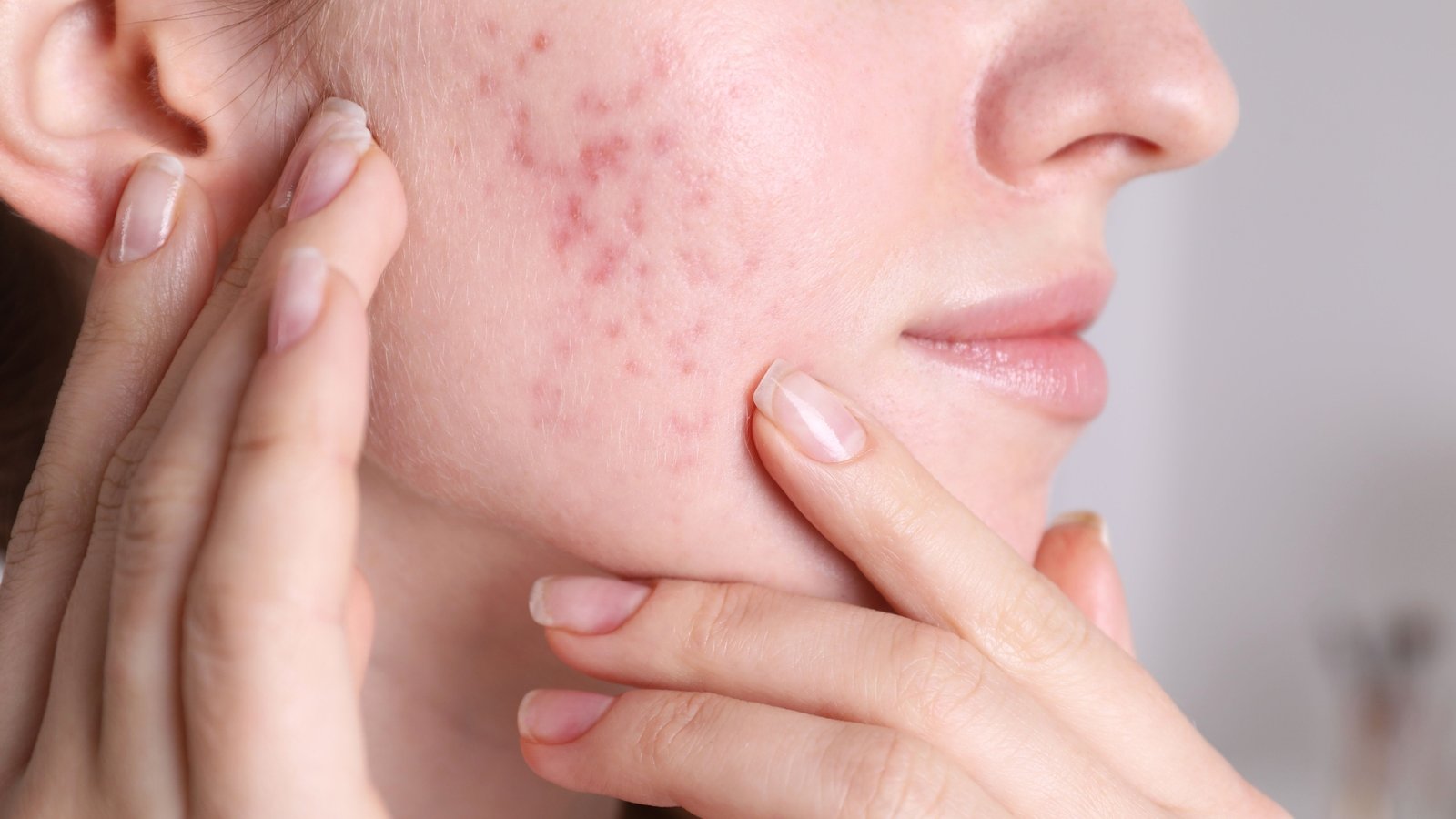
Acne can disappear, but the marks it leaves behind may seem to stay much longer. For many people, the frustrating part is not the occasional pimple itself but the flat dark or reddish spot that remains after the breakout has cleared.
These marks are often confused with acne scars. However, the two are different. According to the American Academy of Dermatology (AAD), a flat pigmented spot left after acne is often post-inflammatory hyperpigmentation (PIH) rather than a true acne scar. These spots can gradually fade, although the process can take time.
This is where interest in botanical skincare, including Kumkumadi serum for acne marks, comes in.
Kumkumadi is traditionally associated with Ayurvedic skincare, while modern products inspired by the concept can differ significantly in their ingredients and formulation. A serum featuring saffron and other nourishing botanicals can be incorporated into a skincare routine focused on maintaining soft, smooth, and radiant-looking skin.
But can a Kumkumadi-inspired serum actually remove acne marks? What should you expect from it? And how should you use a saffron serum without irritating your skin?
Let’s break it down.
Table of Contents
What Are Acne Marks?
Before choosing a product, it helps to understand what you are actually trying to improve.
After acne clears, some people are left with a flat area of discoloration. These spots may appear brown, red, pink, purple, or darker than the surrounding skin, depending partly on skin tone. The AAD identifies many of these flat spots as post-inflammatory hyperpigmentation rather than permanent acne scars. (American Academy of Dermatology)
Acne marks vs. acne scars
Acne Marks Acne Scars
Usually flat Often change the skin’s texture
Mainly involve discoloration Can appear as depressions or raised areas
Often fade over time May require professional treatment
Commonly called PIH when pigmented Include different types of true scars
This distinction matters because a skincare serum designed to support an even-looking complexion should not be presented as a treatment that can physically rebuild indented or raised scar tissue.
If you have persistent or significant acne scarring, a dermatologist can help determine which treatment options are appropriate.
Why Do Acne Marks Take So Long to Fade?
Acne causes inflammation in the skin. Once the breakout settles, the inflammation may leave behind discoloration.
The AAD notes that people with medium-to-dark skin tones are particularly likely to experience dark spots after acne, and these spots can remain for months.
Several factors can affect how long marks remain visible:
- Skin tone
- Severity of the original inflammation
- Whether the acne is still active
- Sun exposure
- Picking or squeezing pimples
- Existing skincare routine
- Individual skin response
This is why expecting a serum to make stubborn marks disappear overnight can lead to disappointment.
A more realistic approach is to focus on consistent skincare, preventing new breakouts, protecting the skin from sunlight, and choosing products that your skin tolerates well.
What Is Kumkumadi Skincare?
Kumkumadi refers to a traditional Ayurvedic skincare formulation associated with a combination of botanical ingredients. Saffron is traditionally associated with the name and is one of the ingredients commonly discussed in Kumkumadi formulations.
However, modern products marketed as Kumkumadi-inspired skincare do not necessarily have identical formulations.
That distinction is important.
A product called a Kumkumadi serum may contain a different combination of botanical extracts, oils, or cosmetic ingredients from another Kumkumadi product.
So, when searching for Kumkumadi serum for acne marks, don’t rely only on the name. Check:
- The complete ingredient list
- The product’s intended use
- Directions for application
- Texture and formulation
- Your skin type
- Whether the product causes irritation
Oak Tree Naturals itself explains in its Kumkumadi serum educational content that the exact benefits of a serum depend on its formulation and that products carrying the Kumkumadi name may not contain identical ingredients.
Kumkumadi Serum for Acne Marks: What Can You Reasonably Expect?
A botanical serum can be a useful addition to a skincare routine, but it is important to separate cosmetic skincare support from medical acne treatment.
A Kumkumadi-inspired or saffron-based serum may be used to support:
- A more moisturized skin feel
- Softer-looking skin
- A refreshed appearance
- A more radiant-looking complexion
- An even-looking appearance over time
However, that does not mean it has been clinically established as a treatment for acne or post-inflammatory hyperpigmentation.
The AAD recommends evidence-based acne treatments such as topical retinoids, benzoyl peroxide, and salicylic acid for appropriate acne concerns. It also notes that azelaic acid can treat acne and help fade dark spots left after acne.
Therefore, if you are dealing with active acne as well as marks, simply adding a cosmetic serum may not address the underlying acne.
Oak Tree Saffron Face Serum: What Does It Offer?
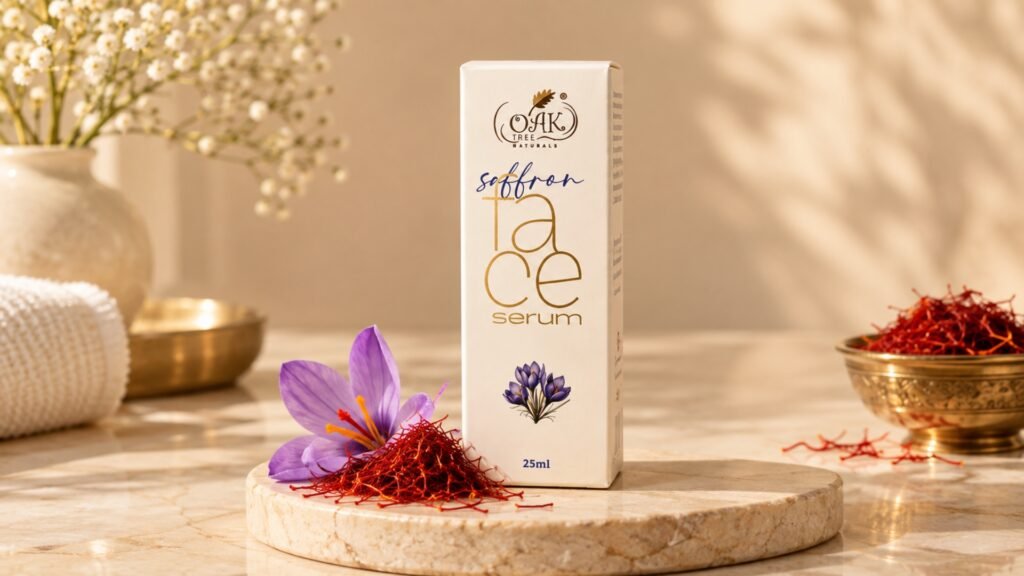
The product you provided is Oak Tree Saffron Face Serum, 25 ml.
According to the Oak Tree Naturals product page, the serum is formulated with saffron and nourishing ingredients and is positioned as a lightweight skincare product that helps hydrate the skin, improve the appearance of dullness, and leave the complexion looking soft, smooth, and refreshed.
The product page also describes it as:
- A lightweight serum
- Non-greasy in texture
- Inspired by Ayurvedic herbs and botanical ingredients
- Intended to support hydration
- Designed to improve the appearance of dullness
- Suitable, according to the brand, for different skin types
- Intended for morning and evening use
The brand also says that the serum can be applied after cleansing, followed by moisturizer.
Explore Oak Tree Saffron Face Serum
One important expectation to keep in mind
The product page describes cosmetic benefits such as hydration, radiance, and an improved appearance of dullness. It does not establish the serum as a clinically proven treatment for acne marks or PIH. (oaktreenaturals.in)
That distinction keeps your skincare expectations realistic.
How to Use a Saffron Serum in an Acne-Mark Skincare Routine
Using a serum correctly is just as important as choosing one.
A simple routine can help you avoid unnecessary layering.
Morning routine
Step 1: Cleanse
Use a gentle cleanser to remove overnight buildup without aggressively scrubbing the skin.
Step 2: Apply serum
After cleansing, apply a few drops of the Oak Tree Saffron Face Serum according to the product directions. The brand recommends gently pressing the serum into the skin rather than rubbing aggressively.
Step 3: Moisturize
Follow with a suitable moisturizer if your skin needs additional hydration.
Step 4: Sunscreen
Finish with broad-spectrum sunscreen.
This last step is particularly important when your concern is acne-related discoloration.
Why Sunscreen Matters for Acne Marks
If you are trying to improve the appearance of dark spots, sunscreen should not be an afterthought.
The AAD explains that sun exposure can worsen dark spots and recommends broad-spectrum, water-resistant sunscreen with SPF 30 or higher for appropriate protection. (American Academy of Dermatology)
For people with darker skin tones, visible light can also contribute to hyperpigmentation. The AAD notes that tinted sunscreen containing iron oxide can provide additional protection against visible light. (American Academy of Dermatology)
A simple daytime routine could therefore be:
Cleanser → Serum → Moisturizer → Sunscreen
You do not need to use numerous products to build an acne-mark routine.
Night Routine With a Saffron Serum
Your nighttime routine can be even simpler.
Step 1: Cleanse
Remove sunscreen, makeup, sweat, oil, and daily buildup.
Step 2: Apply the serum
Use the recommended amount and gently press it into your skin.
Step 3: Moisturize
Apply moisturizer according to your skin’s needs.
A simple routine may be easier to maintain consistently than a complicated routine with several unfamiliar products.
Oak Tree Naturals also recommends introducing skincare products gradually and keeping routines relatively simple in its beginner skincare guidance. (oaktreenaturals.in)
6 Mistakes to Avoid When Using Serum for Acne Marks
1. Expecting overnight results
Pigmentation often takes time to fade. A serum should be viewed as part of a consistent routine rather than an instant solution.
2. Picking active pimples
Picking or squeezing acne can increase inflammation and raise the risk of scarring and post-inflammatory hyperpigmentation. (American Academy of Dermatology)
3. Skipping sunscreen
Sun exposure can make dark spots more difficult to manage.
4. Using too many products at once
Adding multiple new serums, exfoliants, and treatments simultaneously makes it difficult to identify what is helping or irritating your skin.
5. Scrubbing acne marks aggressively
Scrubbing does not simply “remove” pigmentation. Excessive physical irritation can make already-sensitive skin more uncomfortable.
The AAD recommends gentle skincare for acne-prone skin and warns against harsh scrubbing because it can irritate the skin. (American Academy of Dermatology)
6. Assuming natural means irritation-free
Botanical ingredients can still cause individual reactions. If a product causes persistent burning, redness, itching, or swelling, stop using it and seek professional advice if needed.
Is a Saffron Serum Suitable for Acne-Prone Skin?
There is no single skincare routine that works identically for everyone with acne-prone skin.
Oak Tree Naturals describes its Saffron Face Serum as lightweight and suitable for different skin types. (oaktreenaturals.in)
However, suitability for your skin should be judged by how your skin actually responds.
If you have acne-prone or sensitive skin:
- Introduce one new product at a time.
- Start with a small amount.
- Avoid combining many new actives immediately.
- Stop if you develop persistent irritation.
- Continue using appropriate acne treatment if one has been recommended to you.
- Use sunscreen during the day.
For persistent acne or significant dark spots, a dermatologist can help create a treatment plan based on the underlying cause.
Saffron Serum vs. Acne Treatment: Know the Difference
This is one of the most important distinctions when shopping for skincare.
Saffron/Botanical Serum Acne Treatment
Primarily cosmetic skincare Designed to address acne
Can support hydration and skin appearance Targets acne formation or inflammation
May complement a routine May contain clinically established acne actives
Individual cosmetic results vary Treatment depends on the specific acne problem
Not automatically a treatment for PIH Some ingredients can specifically target dark spots
For example, the American Academy of Dermatology lists azelaic acid, retinoids, benzoyl peroxide, and salicylic acid among ingredients used for acne-related concerns, depending on the condition.
That does not make a botanical serum useless. It simply means that different products have different jobs.
How Long Do Acne Marks Take to Fade?
There is no universal timeline.
The AAD notes that some dark spots can last for a year or longer, although appropriate treatment and skincare can help them clear more quickly. (American Academy of Dermatology)
Your timeline may depend on:
- Depth and type of pigmentation
- Skin tone
- Severity of inflammation
- Sun exposure
- Whether new acne continues to develop
- Your skincare routine
- Individual response
This is why claims promising that a cosmetic serum will completely remove stubborn acne marks in a few days should be treated cautiously.
Consistency matters more than rushing through products.
A Simple Acne-Mark Skincare Checklist
If acne marks are your primary concern, focus on the basics:
- Cleanse gently
- Use a suitable serum if it fits your routine
- Moisturize when needed
- Apply broad-spectrum SPF 30+ during the day
- Avoid picking active acne
- Avoid aggressive scrubbing
- Introduce new products gradually
- Give your routine enough time
- Treat active acne rather than focusing only on leftover marks
- See a dermatologist if pigmentation or acne persists
This approach is more sustainable than constantly switching between products.
Can Kumkumadi Serum Completely Remove Acne Marks?
It is better not to think of any single cosmetic serum as a guaranteed solution.
A Kumkumadi-inspired serum may complement a skincare routine designed around hydration, nourishment, and a more even-looking complexion. However, evidence-based treatment for acne and post-inflammatory hyperpigmentation may require specific active ingredients or professional guidance.
The AAD specifically recommends treating both acne and the dark spots that can follow it, particularly when pigmentation is persistent.
So if you are considering Kumkumadi serum for acne marks, think of the serum as one possible part of your routine—not the entire solution.
Final Thoughts
Acne marks can be stubborn, but they do not always mean permanent scarring. Flat discoloration left after acne is often post-inflammatory hyperpigmentation, which can gradually fade over time.
Kumkumadi-inspired skincare has attracted attention because of its connection with traditional Ayurvedic botanical formulations. However, modern products can vary considerably, so the ingredient list and formulation matter more than the name alone.
The product you selected from Oak Tree Naturals is the Saffron Face Serum 25 ml. It is described by the brand as a lightweight, Ayurvedic-inspired serum containing saffron and nourishing ingredients that helps hydrate the skin, improve the appearance of dullness, and leave the complexion soft, smooth, and refreshed.
For acne marks, pair any cosmetic serum with the fundamentals: gentle skincare, avoidance of picking, appropriate acne management, and consistent sun protection.
And if your marks are persistent, worsening, or accompanied by ongoing acne, professional dermatological advice can help you identify whether you are dealing with PIH, acne scars, melasma, or another form of pigmentation.
FAQ Section
1. Is Kumkumadi serum good for acne marks?
Kumkumadi-inspired serums may be used as part of a cosmetic routine focused on hydration and an even-looking complexion. However, they should not automatically be considered medical treatments for acne marks or hyperpigmentation.
2. Can saffron serum remove acne marks?
A saffron serum may support a brighter and more even-looking complexion, but there is no basis for guaranteeing that it will completely remove acne marks. Persistent pigmentation may require evidence-based treatment.
3. Is Oak Tree Saffron Face Serum a Kumkumadi serum?
The product URL provided is for Oak Tree Saffron Face Serum, not a product explicitly named Kumkumadi Serum. Its product page describes it as a saffron serum inspired by Ayurvedic herbs and nourishing botanicals. (oaktreenaturals.in)
4. Can I use saffron serum every day?
Oak Tree Naturals recommends using its Saffron Face Serum morning and evening as part of a consistent routine. If your skin is sensitive or you are introducing it, introducing it gradually can make it easier to monitor your skin’s response.
5. Should I use sunscreen with a serum for acne marks?
Yes. Sunscreen is particularly important when managing dark spots because sun exposure can worsen hyperpigmentation. The AAD recommends broad-spectrum, water-resistant SPF 30 or higher.
6. Are acne marks the same as acne scars?
No. Acne marks are often flat areas of discoloration, including post-inflammatory hyperpigmentation. Acne scars can involve permanent changes to skin texture, such as depressions or raised areas. (American Academy of Dermatology)
7. What should I do if acne keeps causing new marks?
Treating the active acne is important because new inflammation can lead to additional dark spots. If your acne or pigmentation persists despite basic skincare, consider consulting a dermatologist.












One thought on “Kumkumadi Serum for Acne Marks: Say Goodbye to Stubborn Marks With This Powerful Skincare Solution”