Exfoliating Every Other Day: 7 Amazing Benefits and Common Mistakes to Avoid


Is Exfoliating Every Other Day Good for Your Skin?
A smooth, fresh-looking complexion often begins with a simple skincare routine. However, when dead skin cells accumulate on the skin’s surface, your complexion may appear dull or feel rough. This is where exfoliation can become a useful part of your skincare routine.
But how often should you exfoliate? Is Exfoliating Every Other Day a good approach, or could it leave your skin irritated and uncomfortable?
The answer depends on your skin type, the exfoliation method you choose, and how your skin responds. While occasional exfoliation can help improve the appearance of uneven texture, frequent use of a physical scrub may be too much for sensitive or dry skin. The American Academy of Dermatology recommends adjusting your approach according to your skin type and avoiding aggressive scrubbing. Source: American Academy of Dermatology.
In this guide, we will explore the potential benefits of Exfoliating Every Other Day, the warning signs of over-exfoliation, and practical ways to build a balanced routine. We will also discuss how Oak Tree Naturals Apricot Scrub 50 g may fit into your skincare regimen.
Table of Contents
What Does Exfoliating Every Other Day Mean?
Exfoliation is the process of removing dead skin cells from the outermost layer of the skin. It can be performed using physical methods, such as facial scrubs, or chemical exfoliants containing ingredients that help loosen dead cells.
Exfoliating Every Other Day means exfoliating approximately three to four times per week, depending on your schedule. Although this frequency may suit some people using certain gentle products, it is not a universal recommendation.
Physical exfoliation works through friction. When you massage a scrub over damp skin, its particles help loosen surface buildup. Chemical exfoliants, in contrast, use ingredients such as alpha hydroxy acids or beta hydroxy acids.
The distinction matters because different methods can have different effects on the skin. A routine that works for someone with resilient, oily skin may cause discomfort for someone with dry or sensitive skin.
The key takeaway: Exfoliating more frequently does not automatically produce better results. Your skin’s comfort and tolerance should guide your routine.
7 Amazing Benefits of Exfoliating Every Other Day
When the method and frequency suit your skin, regular exfoliation can offer several cosmetic benefits. However, these results are not guaranteed, and excessive exfoliation can undermine them.
1. Helps Improve the Appearance of Dull Skin
Dead skin cells and surface buildup can contribute to a dull-looking complexion. Appropriate exfoliation helps remove some of this buildup, leaving the skin looking fresher.
For people who tolerate the method well, Exfoliating may be one way to improve the appearance of dull skin. However, aggressive scrubbing is unnecessary. Gentle application is preferable to rubbing harder in pursuit of an immediate glow.
2. Supports a Smoother-Looking Skin Texture
Rough patches and uneven surface texture can affect how your skin looks and feels. Carefully chosen exfoliation can help smooth the outer surface by loosening dead skin cells.
Consistency matters more than intensity. Rather than repeatedly scrubbing the same area, use a gentle technique and allow your skin time to recover between sessions.
If your skin starts feeling tight, tender, or unusually rough after a scrub, reduce the frequency or stop using the product until the irritation settles.
3. Helps Remove Surface Buildup
Everyday life exposes your skin to sweat, oil, sunscreen, and environmental particles. A cleanser should handle routine cleansing, while exfoliation serves a different purpose: addressing the buildup of dead cells on the skin’s surface.
Exfoliating should therefore complement cleansing rather than replace it. A scrub is not necessarily the best tool for removing makeup, sunscreen, or all everyday impurities.
Begin with a gentle cleanser, follow the directions for your chosen exfoliant, and rinse thoroughly. This simple approach helps prevent unnecessary friction.
4. Can Make Skincare Feel More Comfortable
When rough surface buildup is reduced, some people find that their skin feels smoother after exfoliation. This may make applying moisturizer feel more comfortable.
However, exfoliation does not guarantee better absorption of every skincare product. The result depends on the formulation, the condition of your skin, and the products used afterward.
Exfoliating should never leave your face burning or painfully dry. Follow it with a suitable moisturizer to support skin comfort.
5. Helps You Build a More Consistent Routine
A structured skincare schedule can make it easier to remember which products you use and how your skin responds.
Rather than automatically Exfoliating every other day, start with a less frequent schedule if you are new to physical scrubs. Observe your skin before increasing the frequency.
A basic routine might include:
- Morning: Gentle cleanser, moisturizer, and broad-spectrum sunscreen.
- Evening: Cleanser and moisturizer.
- Exfoliation day: Cleanser, a suitable exfoliant used as directed, and moisturizer.
This approach keeps exfoliation as an additional skincare step rather than making it a daily necessity.
6. Encourages Better Awareness of Your Skin Type
One of the most useful aspects of developing a skincare routine is learning what your skin tolerates.
People with oily skin may tolerate some exfoliation methods better than those with dry or sensitive skin. Nevertheless, oily skin is not immune to irritation, and sensitive skin does not necessarily benefit from every product labelled gentle.
Pay attention to redness, stinging, flaking, and unusual sensitivity. These signs can indicate that you need to adjust your routine.
Exfoliating Every Other Day should be considered an option to evaluate, not a rule that everyone must follow.
7. Can Complement a Balanced Skincare Routine
Skincare works best when individual steps have clear purposes. Cleansing removes everyday dirt and excess oil, moisturizing helps maintain hydration, and sunscreen protects against ultraviolet radiation.
Exfoliation can complement these steps by addressing surface texture and dullness. It cannot replace the other essentials, nor should it be treated as a guaranteed solution for acne, pigmentation, or other skin conditions.
The best results come from choosing appropriate products, applying them gently, and avoiding unnecessary experimentation.
Is Exfoliating Every Other Day Safe for Every Skin Type?
No. The ideal frequency depends on your skin and the product you use. The American Academy of Dermatology advises people to choose an exfoliation method appropriate for their skin type and to be particularly careful with dry, sensitive, or acne-prone skin. Read the dermatology guidance.
| Skin type | What to consider |
| Oily skin | A suitable exfoliant may help address surface buildup, but aggressive scrubbing can still irritate skin. |
| Normal skin | Begin conservatively and increase frequency only if the product directions and your skin’s response support it. |
| Dry skin | Frequent physical exfoliation may worsen dryness and flaking. Prioritize moisturizing. |
| Sensitive skin | Strong friction can trigger discomfort. Consider gentler alternatives and seek professional advice if needed. |
| Acne-prone skin | Scrubbing inflamed breakouts may aggravate irritation. Choose products carefully and consult a dermatologist for persistent acne. |
If you have eczema, rosacea, active inflammation, broken skin, or a history of dark marks after irritation, seek professional advice before starting a new exfoliation routine.
5 Common Mistakes to Avoid When Exfoliating
Even an appropriate product can cause problems if you use it incorrectly. Avoid these common mistakes.
Mistake 1: Assuming More Is Always Better
Frequent Exfoliating can weaken your skin’s comfort and increase redness, dryness, or irritation. A more intensive routine is not necessarily a more effective one.
Mistake 2: Applying Too Much Pressure
Scrubbing vigorously can cause friction and discomfort. Use light, circular movements and follow the product instructions. The American Academy of Dermatology recommends gentle application and rinsing with lukewarm water.
Mistake 3: Using a Scrub on Irritated Skin
Avoid exfoliating sunburned skin, open cuts, wounds, or visibly irritated areas. Give your skin time to recover before considering another session.
Mistake 4: Combining Too Many Active Products
Using a physical scrub alongside retinoids, exfoliating acids, or other potentially irritating products may increase the risk of irritation. Consider your complete routine rather than evaluating each product in isolation.
Mistake 5: Skipping Moisturizer and Sunscreen
Exfoliation may leave the skin feeling dry. Apply moisturizer afterward and use broad-spectrum sunscreen during the day. If you experience persistent burning, redness, or peeling, discontinue the irritating product and consult a qualified dermatologist.
How to Use Oak Tree Naturals Apricot Scrub in Your Routine
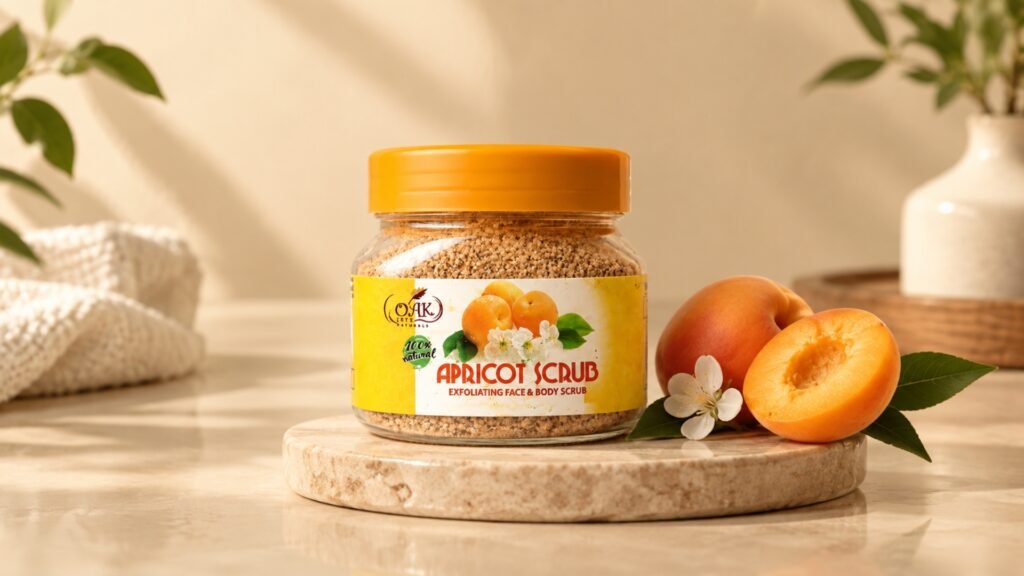
If you are exploring physical exfoliation, Oak Tree Naturals Apricot Scrub 50 g is one product to consider. The brand describes this scrub as helping remove dead skin cells, excess oil, and impurities while leaving skin feeling soft and refreshed. View the product.
As with any scrub, suitability depends on your skin type, the formulation, and your individual tolerance. Do not assume that a product is suitable for every skin type simply because it is marketed for regular skincare.
A Simple Step-by-Step Approach
- Cleanse first. Wash your face with a gentle cleanser to remove everyday dirt and surface impurities.
- Read the product directions. Follow the manufacturer’s instructions for application and frequency.
- Apply gently. If the product is suitable for your skin, use light circular movements without pressing hard.
- Avoid sensitive areas. Keep the scrub away from your eyes, broken skin, and inflamed blemishes.
- Rinse thoroughly. Use lukewarm water and avoid vigorous rubbing with a towel.
- Moisturize. Apply a moisturizer suitable for your skin type.
- Monitor your skin. Stop using the scrub if you notice persistent redness, burning, or unusual sensitivity.
If you are new to Exfoliating, begin cautiously rather than immediately following an every-other-day schedule. You can reassess your routine based on comfort, product directions, and professional advice when needed.
How Often Should You Exfoliate for Healthy-Looking Skin?
There is no single schedule that works for everyone. The appropriate frequency depends on whether you use a physical scrub, a chemical exfoliant, or another method, as well as your skin’s sensitivity.
For a physical product such as an apricot scrub, avoid assuming that Exfoliating Every Other Day is necessary. Start with a conservative frequency consistent with the product instructions, and adjust only if your skin tolerates it.
Keep these practical guidelines in mind:
- Avoid exfoliating when your skin is irritated or sunburned.
- Do not combine several exfoliating products without understanding their potential effects.
- Stop if your skin becomes persistently red, tender, or unusually dry.
- Use moisturizer after exfoliation and broad-spectrum sunscreen during the day.
- Ask a dermatologist for guidance if you have a skin condition or persistent concerns.
Remember, the aim is to support a comfortable, healthy-looking complexion, not to remove as many skin cells as possible.
Final Thoughts
Exfoliating Every Other Day may suit some skincare routines, but it is not automatically the best choice for every complexion. Gentle technique, appropriate product selection, and careful attention to your skin’s response matter more than following a fixed schedule.
Oak Tree Naturals Apricot Scrub 50 g can be considered as part of a physical exfoliation routine if its formulation and instructions suit your skin. Introduce it carefully, avoid aggressive rubbing, and prioritize moisturizing and sun protection.
A thoughtful skincare routine should leave your skin feeling comfortable—not tight, sore, or irritated. When it comes to exfoliation, consistency should always be balanced with care.
FAQ Section
1. Is exfoliating every other day good for your face?
It depends on your skin type and the exfoliation method. Some people may tolerate frequent exfoliation, while others can experience dryness, redness, or irritation. Physical scrubs may require a less frequent schedule.
2. Can I use an apricot scrub every other day?
Not everyone should. Follow the product’s instructions and consider your skin’s sensitivity. If you are new to physical scrubs, start conservatively and avoid increasing the frequency if your skin becomes irritated.
3. What are the benefits of exfoliating your face?
Appropriate exfoliation can help remove dead skin cells from the surface, improve the appearance of dullness, and make skin feel smoother. Results depend on the product and individual skin tolerance.
4. What are the signs of over-exfoliation?
Common warning signs include persistent redness, stinging, tightness, dryness, flaking, and increased sensitivity. Stop using the irritating product and seek medical advice if symptoms persist or worsen.
5. Should I moisturize after exfoliating?
Yes. Applying a suitable moisturizer after exfoliation helps maintain skin hydration and comfort. Use a broad-spectrum sunscreen during the day as part of your regular skincare routine.
6. Is exfoliation suitable for sensitive skin?
Some exfoliation methods may be too irritating for sensitive skin. A gentler approach or an alternative skincare step may be more appropriate. Consult a dermatologist if you are unsure which method to choose.
7. Can exfoliation remove dark spots?
Exfoliation may improve the appearance of surface dullness, but it is not a guaranteed treatment for pigmentation or dark spots. Aggressive exfoliation can worsen discoloration in some people, so targeted skincare and professional guidance may be preferable.