Is Apricot Oil Good for Skin? 7 Powerful Benefits You Should Know


If your skin often feels dry, rough, or less supple than usual, adding a nourishing facial oil to your skincare routine may be worth considering. One ingredient that deserves attention is apricot kernel oil, a plant-based oil commonly used in cosmetic formulations for its softening and moisturizing properties.
So, is apricot oil good for skin? It can be a useful addition to a skincare routine, particularly if you want softer-feeling skin and extra moisture. Apricot kernel oil contains fatty acids, including oleic and linoleic acids, that contribute to its emollient properties. Research on apricot kernel oil also discusses its composition and applications in cosmetics.
However, its suitability depends on your skin type, how much you apply, and how your skin responds. It is not a guaranteed treatment for acne, pigmentation, or wrinkles.
In this guide, we will explore seven potential benefits, practical application tips, precautions, and how Oak Tree Naturals Apricot Oil may fit into your skincare routine.
Table of Contents
What Is Apricot Oil, and Why Is It Used in Skincare?
Apricot oil is generally extracted from the kernels, or seeds, inside apricot fruits. It is valued in personal-care products for its smooth texture and emollient qualities.
Emollients help soften the skin by filling spaces between surface cells, improving the feel of roughness and supporting a comfortable skin surface. Oils can also help reduce moisture loss when used appropriately.
Apricot kernel oil contains several types of fatty acids, particularly oleic acid and linoleic acid. Its exact composition varies according to the apricot variety, growing conditions, and extraction method.
This explains why apricot oil is commonly used in facial oils, massage oils, creams, and other personal-care products.
But is apricot oil good for skin beyond providing moisture? Let’s examine seven potential benefits and what you can realistically expect.
7 Powerful Benefits of Apricot Oil for Skin
1. Helps Moisturize Dry Skin
Dry skin can feel tight, rough, or uncomfortable, particularly after bathing or exposure to dry weather. An emollient oil can help soften the skin and complement your regular moisturizing routine.
When considering whether apricot oil is good for skin, moisture retention is one of its most practical advantages. Its oily texture creates a conditioning layer that may help reduce water loss from the skin’s surface.
How to use it: Apply a few drops to slightly damp skin after bathing, or use it after your usual moisturizer if your skin needs additional nourishment.
For persistent dryness, choose a moisturizer containing established hydrating ingredients, such as glycerin, alongside an emollient oil. An oil alone does not supply water in the same way a humectant does.
2. Leaves Skin Feeling Softer and Smoother
Rough-feeling skin can result from dryness, environmental exposure, and an inconsistent moisturizing routine. Apricot kernel oil may help improve the feel of the skin by conditioning its surface.
This is another reason people ask, “Is apricot oil good for skin?” The appeal is not necessarily dramatic transformation but a simple improvement in everyday skin comfort.
You may find it useful in areas such as
- Hands and knuckles
- Elbows and knees
- Arms and legs
- Other areas that feel rough or dry
Use a small quantity and massage gently. Applying more oil than your skin needs may leave an unwanted residue without providing additional benefits.
3. Supports a Comfortable Skin Barrier
Your skin barrier helps limit excessive moisture loss and protects the body from external irritants. Maintaining it requires a combination of appropriate cleansing, moisturizing, and protection from environmental stressors.
Apricot kernel oil contains fatty acids that contribute to its emollient properties. As part of a suitable skincare routine, it may help soften the skin and reduce the uncomfortable sensation associated with dryness.
So, is apricot oil good for skin when it feels dry or tight? It may help, especially when used alongside a moisturizer rather than as a complete replacement for one.
Remember that the skin barrier responds to your entire routine. Harsh cleansers, excessive exfoliation, and unsuitable products can undermine skin comfort even if you use a nourishing oil.
4. Helps Maintain a Healthy-Looking Glow
Skin can look dull when its surface is dry or uneven in texture. Moisturizing helps the surface appear smoother, allowing light to reflect more evenly.
Apricot oil may contribute to this effect by softening the skin and giving it a temporary, natural-looking sheen.
When deciding whether apricot oil is good for skin that looks dull, it helps to distinguish between hydration-related appearance and actual changes in pigmentation. An oil may improve the appearance of dryness, but that does not establish that it removes dark spots or changes your natural skin tone.
For a healthy-looking complexion, combine appropriate moisturizing with gentle cleansing, adequate sleep, and daily broad-spectrum sunscreen.
5. Provides Fatty Acids That Condition the Skin
Apricot kernel oil is valued for its fatty-acid profile. Oleic acid and linoleic acid contribute to its characteristic texture and conditioning properties. The proportions vary between oils, so individual products should not automatically be assumed to have identical compositions.
These fatty acids help explain why the ingredient is used in cosmetic formulations intended to soften the skin.
If you are wondering whether apricot oil is good for skin as part of a minimal routine, its conditioning properties may make it a useful option. However, the presence of fatty acids does not automatically mean that an oil will suit everyone or correct a specific skin concern.
Choose a product with clear ingredient information and directions for use.
6. Makes Body Massage More Comfortable
A skincare oil can serve a practical purpose beyond facial moisturizing. Its smooth texture may help fingers glide over the skin during a gentle body massage.
Apricot oil is used in cosmetic and massage formulations for this reason.
You can try a small amount on your arms, legs, or other suitable areas of the body. Spread it evenly and massage gently without excessive pressure.
Is apricot oil good for skin when used for massage? It may help condition the skin while making the massage more comfortable, but it should not be presented as a treatment for muscle injuries, circulation problems, or medical conditions.
Avoid massaging oil onto broken, infected, or actively irritated skin.
7. May Make Dryness-Related Fine Lines Less Noticeable
Fine lines can appear more prominent when the skin is dehydrated. Improving moisture levels can temporarily make these lines look less noticeable by leaving the skin surface smoother.
Apricot oil may contribute to this effect through its emollient properties.
However, is apricot oil good for skin as an anti-aging treatment? The realistic answer is that it may improve the appearance of dryness, but there is insufficient evidence to claim that applying apricot kernel oil alone removes wrinkles, reverses aging, or stimulates collagen production in a clinically meaningful way.
For long-term skin care, daily sun protection, a suitable moisturizer, and a consistent routine are more dependable foundations. If you want to address persistent signs of aging, a dermatologist can help you choose ingredients with evidence appropriate to your concerns.
Is Apricot Oil Good for Skin for Every Skin Type?
The answer depends on your skin’s needs. A product that feels comfortable on dry skin may feel too rich for someone with an oily or acne-prone complexion.
| Skin type | How apricot oil may fit | Practical tip |
| Dry skin | May help soften and condition dry areas | Apply a few drops after moisturizing |
| Normal skin | May add softness and a smooth finish | Use a small amount as needed |
| Combination skin | May suit drier areas | Apply selectively rather than over the entire face |
| Oily skin | May feel too rich for some people | Start with a small amount and monitor your skin |
| Acne-prone skin | Individual responses vary | Introduce it cautiously and stop if breakouts worsen |
| Sensitive skin | Tolerance cannot be guaranteed | Patch-test before regular use |
If you have acne-prone skin, remember that a plant-based ingredient is not automatically non-comedogenic. The suitability of the finished product also depends on its formulation and how your skin responds.
How to Use Apricot Oil on Your Face
If you decide that apricot oil is good for skin care in your particular routine, use it carefully and start with a small amount.
Follow these steps:
- Cleanse your face. Use a gentle cleanser suitable for your skin type.
- Apply hydrating products. If you use a water-based serum, apply it according to its instructions.
- Moisturize. Use your regular moisturizer to help maintain skin hydration.
- Apply a few drops of oil. Start with two or three drops, spread gently, and avoid the eyes.
- Observe your skin. Notice whether it feels comfortable or develops irritation, congestion, or excess greasiness.
You can use facial oil in the evening or at another suitable time in your routine. In the morning, finish with broad-spectrum sunscreen of SPF 30 or higher.
There is no need to apply a large quantity or use it several times daily. The right amount is the smallest quantity that gives you the desired feel without discomfort.
Common Mistakes to Avoid When Using Apricot Oil
Understanding whether apricot oil is good for skin also means knowing when and how not to use it.
Applying too much: Excess oil can leave a greasy finish. Begin with a few drops and adjust only if needed.
Skipping moisturizer: Facial oils are primarily emollients. They do not replace every function of a moisturizer, particularly its ability to supply and retain water.
Expecting pigmentation treatment: Apricot oil is not a proven standalone treatment for melasma, dark spots, or post-acne marks.
Ignoring patch testing: Even botanical products can trigger reactions. Test the product on a small area before regular application.
Using it on irritated skin: Avoid application to broken skin or areas with active irritation unless a healthcare professional advises otherwise.
Assuming “natural” means suitable for everyone: skin type, product formulation, and individual sensitivity matter more than a natural label alone.
Why Consider Oak Tree Naturals Apricot Oil?
Product information checked against the brand’s official listing.
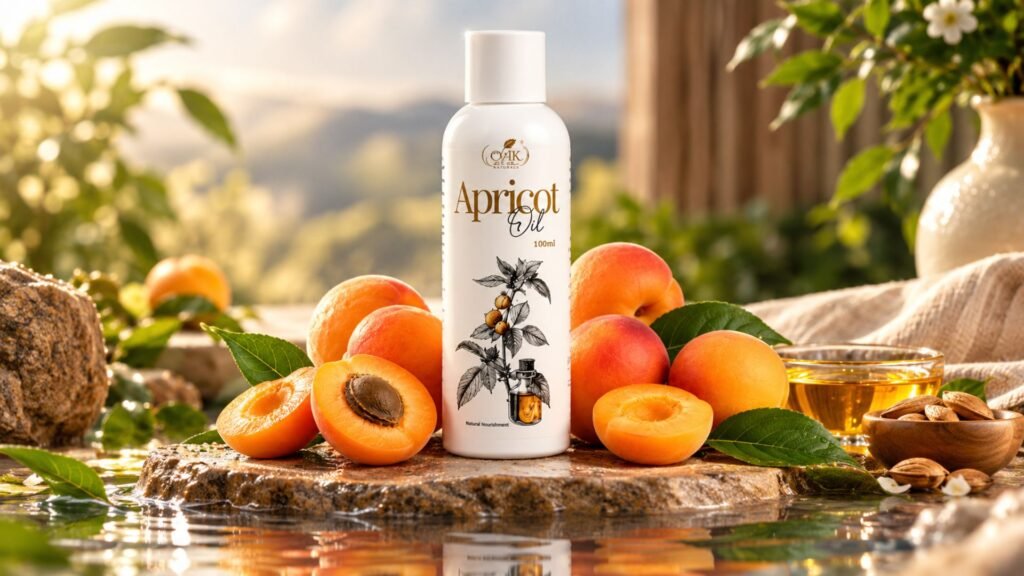
The brand describes this oil as a lightweight, nourishing product intended to help moisturize and soften the skin. Its listed uses include facial care and body massage.
If you are considering adding apricot oil to your routine, start by checking the product’s ingredient information, directions, and intended use. Introduce it gradually and assess how your skin responds.
The product page describes the oil as suitable for all skin types, but individual tolerance can vary. If you have very sensitive or acne-prone skin, take extra care when introducing any new facial oil.
How to Choose a Quality Apricot Oil
Before purchasing, look for the following:
- Clear ingredient information: Check what the product contains rather than relying only on marketing descriptions.
- Suitable intended use: Confirm whether it is designed for facial application, body care, or both.
- Clear directions: The label should explain how to apply and store the product.
- Appropriate packaging: A tightly closed container and storage away from excessive heat and direct sunlight help protect oil quality.
- Transparent product information: Look for manufacturer details, batch information, and relevant usage precautions.
Price and packaging alone cannot establish quality. A well-described product with clear instructions makes it easier to decide whether it suits your routine.
Final Thoughts: Is Apricot Oil Good for Skin?
Apricot kernel oil can be a useful cosmetic ingredient for people seeking softer, more comfortable, moisturized-feeling skin. Its emollient properties make it suitable for consideration in facial care, body care, and massage routines.
Still, is apricot oil good for skin in every situation? No single skincare ingredient suits everyone. It may be helpful for dryness and skin softness, but claims about removing pigmentation, treating acne, or reversing wrinkles should not be assumed.
For a practical approach, start with a small amount, patch-test the product, and use it alongside gentle cleansing, a suitable moisturizer, and daily sunscreen. If you are looking for an apricot-based oil for your routine, explore Oak Tree Naturals Apricot Oil and review the product details before purchasing.
FAQ Section
1. Is apricot oil good for skin every day?
It may be suitable for daily use if your skin tolerates it. Begin with a small amount and reduce or stop use if irritation, congestion, or breakouts develop.
2. Is apricot oil good for dry skin?
Apricot kernel oil can help soften dry-feeling skin because it acts as an emollient. For better moisture management, combine it with a suitable moisturizer.
3. Can I apply apricot oil directly to my face?
You can apply a cosmetic apricot oil directly if the product is intended for facial use. Start with a few drops, avoid the eyes, and patch-test first.
4. Is apricot oil good for skin with pigmentation?
Apricot oil may moisturize the skin, but there is insufficient evidence that it independently removes pigmentation or dark spots. Daily sunscreen and appropriate skincare ingredients are more relevant to pigmentation management.
5. Does apricot oil help reduce wrinkles?
It may temporarily soften the appearance of fine lines associated with dryness. It should not be considered a proven treatment for wrinkles or a substitute for sun protection.
6. Is apricot oil suitable for oily and acne-prone skin?
It may feel too rich for some people and may not suit every acne-prone complexion. Introduce it cautiously and discontinue use if breakouts worsen.
7. Should I apply apricot oil before or after moisturizer?
Many people prefer applying it after moisturizer as a final emollient step. The best order depends on your other products and how your skin responds.
8. How long does apricot oil take to show results?
Skin may feel softer immediately after application, but longer-term changes vary. There is no established universal timeline for results from apricot oil alone.