Avocado Soap Benefits: How Avocado Oil Supports Soft, Nourished Skin

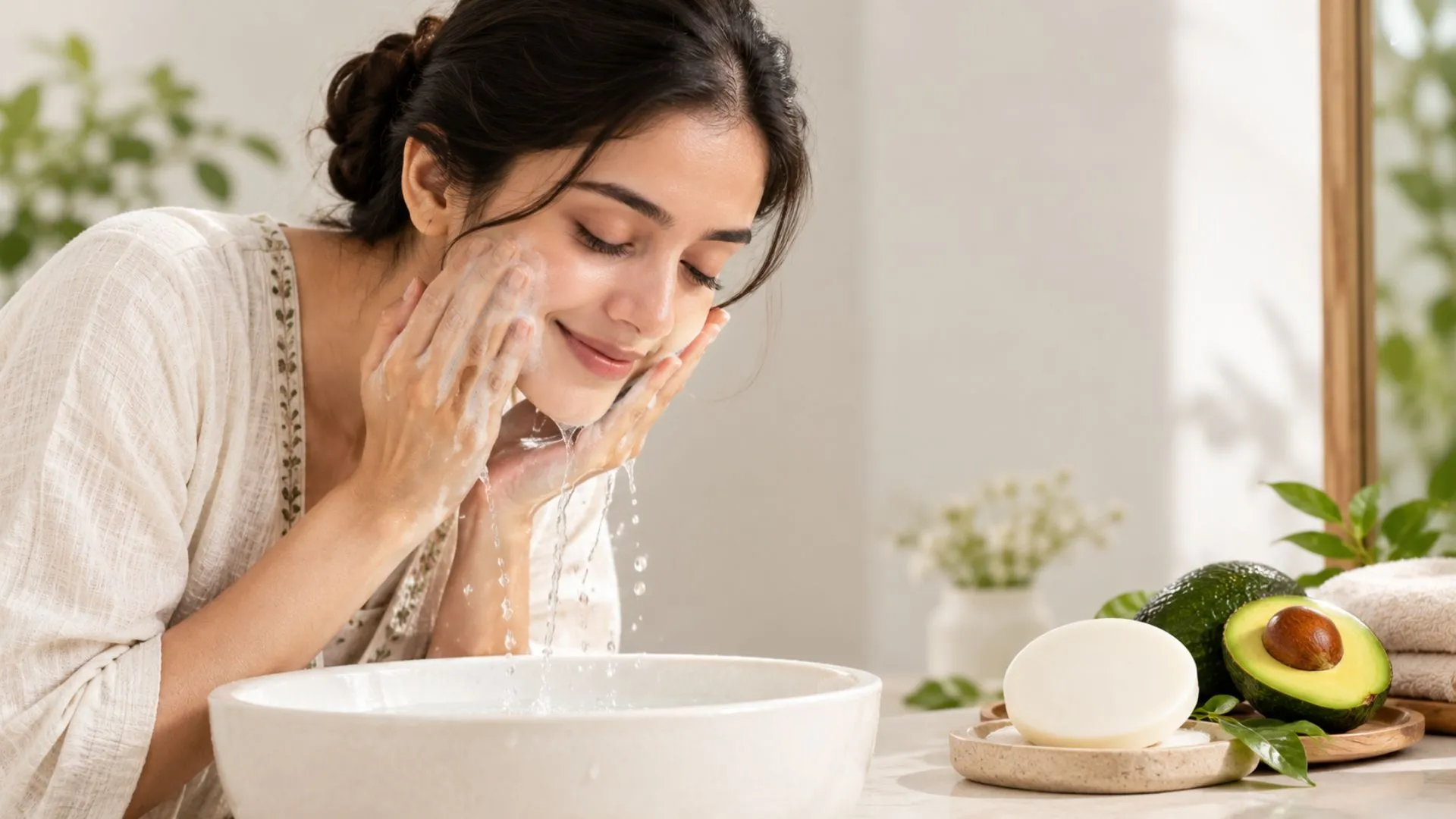
Avocado is widely known as a nutrient-rich fruit, but its oil has also become a popular ingredient in modern skin and personal care. Rich in fatty acids and naturally occurring skin-conditioning compounds, avocado oil is often included in products designed to cleanse while helping the skin feel soft and comfortable.
One simple way to incorporate avocado oil into an everyday routine is through avocado soap.
Unlike leave-on facial oils or creams, soap is a rinse-off product. This means its primary purpose is cleansing, while ingredients such as avocado oil can contribute to the overall feel and formulation of the bar.
So, what are the actual avocado soap benefits? Is avocado soap suitable for dry skin? Can it be used every day? And what should you look for when choosing one?
This guide explains how avocado oil fits into cleansing products, how to use avocado soap effectively, and how to choose a bar that works well with your skin type.
Table of Contents
What Is Avocado Soap?
Avocado soap is a cleansing bar formulated with avocado oil or avocado-derived ingredients alongside other soap-making and cleansing ingredients.
Avocado oil is known for containing fatty acids and other naturally occurring compounds that can help condition the skin. In a soap formulation, however, the final experience depends on the complete formula rather than one ingredient alone.
A quality avocado soap may contain a combination of:
- Avocado oil
- Other plant-based oils
- Cleansing agents
- Moisturizing or conditioning ingredients
- Fragrance
- Botanical extracts
- Other ingredients required for the soap’s formulation and stability
This is why the ingredient list is more useful than simply looking at the word “avocado” on the front of the package.
Why Is Avocado Oil Used in Skin Care?
Avocado oil is valued in personal care because of its lipid-rich composition.
It contains various fatty acids, including oleic acid, as well as other naturally occurring components. These characteristics make avocado oil useful as an emollient or skin-conditioning ingredient in many cosmetic formulations.
In practical terms, an avocado-oil-containing product may help leave the skin feeling:
- Softer
- Smoother
- More comfortable
- Less stripped after cleansing, depending on the formulation
However, there is an important distinction between avocado oil as a leave-on ingredient and avocado oil in a rinse-off soap.
A soap is washed away after a short period. Therefore, it is more realistic to view avocado oil as part of the soap’s overall cleansing and skin-feel formulation rather than expecting the same effect as applying pure avocado oil directly to the skin.
Avocado Soap Benefits for Everyday Skin Care
A well-formulated avocado soap can be a useful addition to a simple bathing routine. Its benefits primarily relate to cleansing and skin feel.
1. Helps Cleanse Away Dirt and Excess Oil
The fundamental purpose of soap is cleansing.
During the day, sweat, excess sebum, dust and other residues can accumulate on the skin. Using an appropriate cleansing bar helps remove these substances during bathing.
Avocado soap can therefore provide the same basic cleansing function expected from a quality body soap while offering the additional appeal of avocado oil as a conditioning ingredient.
2. Can Help Skin Feel Soft After Bathing
Some cleansing products can leave the skin feeling tight or uncomfortable, particularly when used frequently or on naturally dry skin.
The overall formulation of an avocado soap may help provide a more comfortable skin feel.
The result depends on the soap’s cleansing system, oils, additives and your individual skin type.
3. Supports a Simple Body-Care Routine
Not everyone needs a complicated collection of body-care products.
A suitable cleansing bar followed by a moisturizer when needed can form the foundation of a simple routine.
Avocado soap can fit into this type of uncomplicated approach, especially for people who prefer plant-based oils in their personal-care products.
4. Offers the Conditioning Appeal of Avocado Oil
Avocado oil is commonly used in cosmetic formulations for its emollient properties.
When incorporated into soap, it can contribute to the product’s overall formulation and sensory experience.
It should not, however, be treated as a miracle ingredient. The quality of the finished soap depends on how avocado oil works together with the other ingredients.
5. Suitable for Everyday Body Cleansing for Many People
A properly formulated soap can be used as part of regular bathing.
However, “everyday” does not mean that every person should use the same soap at the same frequency. Dry, sensitive or easily irritated skin may require a gentler cleansing approach.
6. Convenient Alternative to Using Multiple Products
For someone who wants straightforward body care, an avocado soap can combine cleansing with the traditional appeal of a plant-based oil in one product.
It can be particularly convenient for everyday bathing, travel and simple personal-care routines.
Avocado Soap for Different Skin Types
Your skin type should influence the type of cleansing bar you choose.
| Skin Type | Potential Suitability | What to Consider |
| Normal | Generally suitable | Choose a balanced cleansing formula |
| Dry | Can be suitable | Look for a gentler formulation and moisturize afterward |
| Oily | Can be suitable | Avoid excessive cleansing or scrubbing |
| Combination | Usually manageable | Adjust cleansing according to different areas |
| Sensitive | Depends on formulation | Check fragrance and other potential irritants |
Avocado Soap for Dry Skin
Dry skin generally benefits from avoiding unnecessary stripping.
If your skin feels tight after bathing, the issue may not be the absence of oil alone. The cleansing strength, bathing temperature, frequency and environmental conditions can all contribute.
For a dry-skin routine:
- Use lukewarm water.
- Avoid aggressive scrubbing.
- Use soap mainly where cleansing is needed.
- Rinse thoroughly.
- Apply body moisturizer after bathing.
An avocado-oil-containing soap may be comfortable for some people, but it should not be assumed to suit every dry-skin type.
Avocado Soap for Oily Skin
Oily skin still needs effective cleansing, but stronger cleansing is not always better.
Use the soap gently and focus on areas that become sweaty or oily. If the skin starts feeling unusually tight or irritated, reconsider the frequency or product you’re using.
Avocado Soap for Sensitive Skin
Sensitive skin requires more careful product selection.
Avocado oil itself is not a guarantee that a soap will be gentle. Fragrance, essential oils and cleansing ingredients may also influence how the skin responds.
If you have sensitive skin, check the complete ingredient list and consider performing a patch test before regular use.
Avocado Soap vs Regular Soap
It is tempting to assume that a soap containing avocado oil must automatically be better than an ordinary soap. That isn’t necessarily true.
The better comparison is based on formulation and skin compatibility.
| Factor | Avocado Soap | Conventional/Regular Soap |
| Primary purpose | Cleansing | Cleansing |
| Defining ingredient | Avocado oil or avocado-derived ingredients | Varies |
| Conditioning appeal | May offer a more emollient-oriented formulation | Depends on formula |
| Fragrance | Depends on product | Depends on product |
| Suitable for daily use | Depends on formulation and skin | Depends on formulation and skin |
| Best way to compare | Full ingredient list + skin response | Full ingredient list + skin response |
The important point is that ingredient quality and formulation matter more than marketing labels.
How to Use Avocado Soap Correctly
Even a well-formulated soap should be used appropriately.
Step 1: Wet Your Skin
Use lukewarm water to wet your body.
Avoid very hot water if your skin tends to become dry.
Step 2: Create a Gentle Lather
Wet the soap and work it between your hands or gently over the body.
You do not need to scrub aggressively to get clean.
Step 3: Cleanse the Body
Apply the lather to areas that need cleansing, especially areas exposed to sweat and oil.
Common areas include:
- Underarms
- Neck
- Back
- Chest
- Feet
- Hands
Step 4: Rinse Thoroughly
Rinse away the soap with clean water.
Avoid leaving excessive product residue on the skin.
Step 5: Moisturize When Needed
If your skin feels dry after bathing, apply a body moisturizer while the skin is slightly damp.
This is particularly useful during colder or drier weather.
How Much Soap Should You Use?
More soap does not necessarily mean better cleansing.
The amount required depends on the product, your bathing routine and how much lather you prefer.
| Situation | Practical Approach |
| Normal daily bath | Use enough to cleanse comfortably |
| After exercise | Focus on sweat-prone areas |
| Very dry skin | Avoid excessive repeated washing |
| Hot weather | Cleanse according to sweat and activity |
| Sensitive skin | Use gently and observe skin response |
The goal should be effective cleansing without unnecessary over-cleansing.
Does Avocado Soap Moisturize the Skin?
This is an important distinction.
Soap primarily cleanses. It should not automatically be described as a replacement for a moisturizer.
Avocado oil may contribute conditioning properties to a soap’s formulation, but because soap is rinsed away, its moisturizing effect should not be compared directly with a leave-on cream, lotion or body oil.
If your skin is dry, a more effective approach is:
Gentle cleansing → rinse → pat dry → apply moisturizer
This simple routine can provide better ongoing support for skin comfort than relying on the soap alone.
Avocado Oil vs Other Popular Oils in Soap
Different plant oils can contribute different characteristics to soap formulations.
| Oil | Common Cosmetic Role | General Skin-Care Appeal |
| Avocado Oil | Emollient/conditioning | Rich, nourishing skin feel |
| Coconut Oil | Cleansing/lather support | Strong cleansing and lather |
| Olive Oil | Conditioning | Mild, smooth skin feel |
| Castor Oil | Lather support | Helps create creamy lather |
| Almond Oil | Emollient | Soft, conditioning feel |
These roles can overlap, and the final properties depend on the formulation and proportions used.
There is no single “best” oil for every person.
Is Avocado Soap Good for Everyday Skin Care?
For many people, yes—but the answer depends on the complete formulation and individual skin response.
A practical everyday routine might look like:
Morning
- Shower with a suitable cleansing bar
- Rinse thoroughly
- Apply body moisturizer if needed
- Use sunscreen on exposed skin when appropriate
After Exercise
- Shower to remove sweat
- Cleanse areas that need it
- Change into clean clothing
Evening
- Cleanse if necessary
- Moisturize dry areas
- Avoid repeatedly washing already-clean skin
Consistency is generally more useful than an unnecessarily complicated routine.
Common Mistakes When Using Avocado Soap
1. Assuming Avocado Automatically Means Moisturizing
The presence of avocado oil does not tell you everything about how the finished soap will behave.
Always consider the complete formulation.
2. Using Very Hot Water
Hot water can make dry skin feel even more uncomfortable.
Lukewarm water is usually a better everyday choice.
3. Scrubbing Aggressively
Physical scrubbing is not necessary for normal cleansing and can cause irritation when excessive.
4. Using Soap Too Frequently
Repeated cleansing throughout the day can contribute to dryness for some people.
Cleanse according to your activity and skin needs.
5. Ignoring Fragrance
A product can contain a plant oil and still contain fragrance.
If your skin is sensitive, fragrance may be an important factor when selecting a cleansing product.
6. Expecting Soap to Treat Skin Conditions
Avocado soap is a cosmetic cleansing product. It should not be considered a treatment for eczema, infections, severe acne or other medical skin conditions unless specifically formulated and appropriately supported for such use.
Persistent skin concerns should be discussed with a qualified healthcare professional.
How to Choose a Good Avocado Soap
If you’re shopping for an avocado soap, consider these factors before making a decision.
Read the Ingredient List
Look beyond the product name.
Check whether avocado oil is actually listed and look at the other cleansing, conditioning and fragrance ingredients.
Consider Your Skin Type
A formula that works well for normal skin may not be ideal for very dry or sensitive skin.
Look for Transparent Product Information
A trustworthy product should provide useful details such as:
- Complete or appropriate ingredient information
- Product quantity
- Manufacturer details
- Usage directions
- Batch/product identification where applicable
- Storage information
Consider How Your Skin Feels After Use
Your own experience is valuable.
If your skin consistently feels clean and comfortable, the product may be working well for you.
If it repeatedly feels tight, itchy, burning or excessively dry, consider changing your cleansing routine.
How to Evaluate Avocado Soap Claims
When reading skincare content online, E-E-A-T—Experience, Expertise, Authoritativeness and Trustworthiness—provides a useful way to distinguish helpful information from exaggerated marketing.
Experience
Good skincare guidance should explain how to actually use the product.
For avocado soap, that means discussing water temperature, cleansing frequency, moisturizing and storage—not just listing ingredient benefits.
Expertise
Avocado oil is a cosmetic emollient, but the final effect depends on the product formulation.
A rinse-off soap should not be described as having the same effect as a leave-on avocado oil treatment.
Authoritativeness
Reliable brands should provide clear information about their products and manufacturing or business details.
When considering an Oak Tree Naturals Avocado Soap, consumers should review the product’s current label and available brand information rather than relying solely on promotional descriptions.
Trustworthiness
Trustworthy skincare communication should also explain what a product cannot do.
Avocado soap can be part of everyday cleansing, but it should not be presented as a cure for medical skin problems or as a guaranteed solution for pigmentation, wrinkles or acne.
Balanced claims are more useful to consumers.
Natural Ingredients Don’t Automatically Mean Better
Avocado oil is a natural ingredient, but that doesn’t mean every avocado-based soap will suit every person.
Likewise, synthetic ingredients are not automatically harmful.
Modern skincare often combines natural and synthetic ingredients to achieve particular textures, stability, cleansing performance and preservation.
When choosing a soap, focus on:
- The complete formulation
- Ingredient quality
- Product transparency
- Your skin type
- Fragrance sensitivity
- How your skin responds over time
This is a more reliable approach than judging a product simply by whether it is labeled “natural,” “herbal” or “chemical-free.”
How to Store Avocado Soap
Proper storage can help your soap last longer.
After bathing:
- Rinse excess soap from the bar.
- Place it on a draining soap dish.
- Keep it away from standing water.
- Allow the bar to dry between uses.
- Avoid storing it in a constantly wet environment.
A soap that remains submerged in water can soften quickly and become less economical to use.
Final Thoughts
Avocado soap offers a simple way to combine everyday cleansing with the skin-conditioning appeal of avocado oil.
Avocado oil is valued in cosmetic formulations for its emollient properties and rich lipid profile. When used in a soap, it can contribute to the overall formulation and skin feel, but the finished product should still be judged as a rinse-off cleanser rather than a replacement for leave-on moisturizing products.
For everyday skin care, the basics remain important: choose a cleanser that suits your skin, avoid excessive scrubbing, use comfortable water temperatures and moisturize when your skin needs additional hydration.
If you are considering an Oak Tree Naturals Avocado Soap, look at the complete ingredient list, product information and intended use, then consider how your own skin responds with regular use.
The best skincare routine is not necessarily the most complicated one. A few well-chosen products used consistently can often provide a more practical approach to everyday skin care.
Frequently Asked Questions
1. What are the main avocado soap benefits?
Avocado soap primarily helps cleanse the skin. When formulated with avocado oil, it may also provide a softer or more conditioning skin feel depending on the overall formulation.
2. Is avocado soap good for dry skin?
It can be suitable for some people with dry skin, depending on the cleansing formula. If your skin feels dry after bathing, follow with a body moisturizer and avoid excessive cleansing.
3. Can avocado soap be used every day?
Many people can use a suitable avocado soap daily. However, the ideal frequency depends on your skin type, bathing habits, climate and how your skin responds.
4. Does avocado soap moisturize the skin?
Avocado oil can have emollient properties, but soap is primarily a rinse-off cleanser. It should not be considered a replacement for a leave-on moisturizer.
5. Can avocado soap be used on the face?
Not necessarily. A body soap may have a cleansing strength or fragrance profile that is not ideal for facial skin. Check the product’s intended use before applying it to your face.
6. Is avocado soap suitable for sensitive skin?
It depends on the complete formulation. Sensitive skin may react to fragrance or particular cleansing ingredients, so check the ingredient list and patch test a new product when appropriate.
7. Does avocado soap help with acne?
Avocado soap should not be considered an acne treatment. It may help cleanse the skin, but persistent or significant acne is better addressed with an appropriate skincare routine or professional advice.
8. Is avocado oil safe for skin?
Avocado oil is widely used as a cosmetic ingredient, but individual reactions can vary. Anyone with known sensitivities should review the ingredient list and discontinue use if irritation occurs.
9. Is avocado soap better than regular soap?
Not automatically. The best option depends on the complete formulation, cleansing strength, fragrance, skin type and individual skin response.
10. How should I store avocado soap?
Keep the bar in a dry, well-drained soap dish between uses. Avoid leaving it in standing water so that it can dry properly between baths.