Rosemary Water for Hair Growth Before and After: Results, Tips, and What to Know


The Hair-Care Trend Everyone Wants to Understand
Have you ever looked at a picture of long, thick hair and wondered what changed between the before and after? Perhaps it was a new haircut, a different routine, or months of consistent care. Whatever the reason, the transformation often makes us curious about the products and habits behind it.
Recently, rosemary has become a popular ingredient in conversations about hair care. From homemade herbal rinses to rosemary-infused oils and ready-to-use mists, people are exploring different ways to include this aromatic herb in their routines.
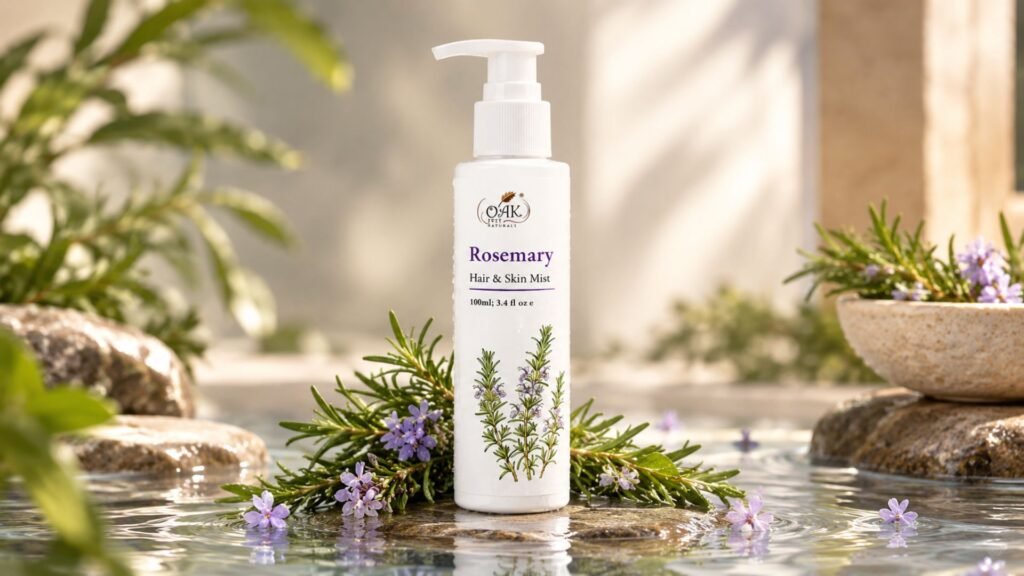
But does rosemary water actually help hair grow? How long should you wait before judging the results? And can a product such as the Rosemary Hair and Skin Mist from Oaktree Naturals fit into your everyday routine?
The answers require a little more than a viral before-and-after photograph.
Rosemary oil has been investigated in a small clinical study involving people with pattern hair loss, but rosemary water has much less direct clinical evidence. These preparations are not interchangeable, and neither should be assumed to produce identical results.
In this guide, we will explore what realistic progress can look like, how to build a consistent hair-care routine, common mistakes to avoid, and how the Oaktree Naturals Rosemary Hair and Skin Mist may fit into your personal-care habits.
Table of Contents
What Is Rosemary Water, and Why Is It Popular for Hair?
Rosemary is an aromatic herb traditionally used in cooking and personal care. Its leaves contain naturally occurring compounds that have attracted scientific interest, including those with antioxidant activity.
Rosemary appears in hair-care products in several forms:
- Rosemary water: Usually a water-based infusion or preparation made using rosemary.
- Rosemary essential oil: A concentrated aromatic oil that requires appropriate handling.
- Rosemary-infused oil: A carrier oil prepared with rosemary.
- Rosemary hair mist: A formulated cosmetic product designed for convenient application to hair, skin, or both, depending on its label.
These differences matter. A homemade rosemary water rinse is not the same as rosemary essential oil, and neither is automatically equivalent to a commercially formulated mist.
The Oaktree Naturals Rosemary Hair and Skin Mist offers a ready-made option for people interested in rosemary-inspired personal care. Rather than preparing a mixture at home, shoppers can explore a formulated product and review its directions before use.
However, the presence of rosemary alone does not prove that a product stimulates hair growth or prevents hair loss. Those claims require evidence relating to the specific formulation and its intended use.

Rosemary Water for Hair Growth Before and After: What Results Can You Expect?
Before-and-after photographs can be inspiring, but they often fail to provide a complete picture. Hair length, density, styling, lighting, and even the angle of a photograph can make two pictures look dramatically different.
When researching rosemary water for hair growth before and after, it helps to separate three different outcomes: hair looking healthier, less breakage during grooming, and actual new hair growth.
These are not the same thing.
Before using rosemary
You may be concerned about excessive shedding, a dry-feeling scalp, dull strands, or hair that never seems to gain length. First, identify what you want to improve. A cosmetic mist may fit into a refreshing hair-care routine, but persistent hair loss may have an underlying cause that needs attention.
After a few weeks
You may notice that your routine feels easier to maintain or that your hair looks fresher after applying a suitable mist. These are cosmetic observations, not proof that new hair is growing.
The Rosemary Hair and Skin Mist can be considered a convenient addition to personal care, provided its ingredients and directions suit you. Do not expect a few applications to change hair density.
After three to six months
This timeframe is a more meaningful period for reviewing potential changes in hair growth, although individual timelines vary.
A 2015 clinical trial compared rosemary oil with 2% minoxidil in 100 people with androgenetic alopecia. Neither group showed a significant increase in hair count at three months, while both showed an increase at six months. The study provides limited evidence specifically about rosemary oil, excluding rosemary water and all rosemary-based cosmetic mists.
For that reason, any before-and-after comparison should be honest. Do not attribute improvement to a single product without evidence, and do not promise that every user will experience the same results.
How to Use Rosemary Hair and Skin Mist in Your Routine
Consistency is useful in hair care, but using more product does not necessarily produce better results.
If you are interested in the Oaktree Naturals Rosemary Hair and Skin Mist, start by checking its official product page for current application directions and the complete ingredient list.
A simple approach is to:
- Read the label first. Confirm whether the product is intended for application to the scalp, hair lengths, skin, or a combination of these areas.
- Start with a small amount. Follow the product directions instead of repeatedly spraying the same area.
- Apply evenly. If the label permits hair application, distribute the mist as directed rather than soaking your hair.
- Keep your regular washing routine. A mist is not a substitute for shampooing when your scalp needs cleansing.
- Monitor your response. Stop using the product if you experience redness, itching, burning, or other irritation.
The Rosemary Hair and Skin Mist is a cosmetic option to explore, not a clinically established hair-loss treatment. Its specific effects depend on the formulation, so avoid assuming that findings from studies of rosemary essential oil apply to it.
You can view the Oaktree Naturals Rosemary Hair and Skin Mist to review the available product details.
Online discussions often group these three options together, but they differ significantly.
Online discussions often group Rosemary Water, Rosemary Oil, and Hair Mist together, but they have important differences.
| Feature | Rosemary water | Rosemary essential oil | Rosemary hair mist |
| Preparation | Water-based herbal infusion or formulation | Concentrated aromatic oil | Finished cosmetic formulation |
| Main consideration | Preparation and storage | Appropriate dilution and irritation risk | Product-specific ingredients and directions |
| Evidence for hair regrowth | Limited direct human evidence | Limited clinical evidence | Depends on the specific product and available research |
| Convenience | Requires preparation if homemade | Requires careful handling | Generally ready to use |
| Best approach | Treat as an optional hair-care step | Use cautiously and appropriately | Follow the product label |
The most important distinction is that a study on rosemary oil does not automatically validate rosemary water or a commercial mist. The concentrations, ingredients, and intended uses can differ considerably.
For someone who prefers a ready-made product, the Rosemary Hair and Skin Mist offers a convenient format to consider. Check to see if its intended use aligns with your personal care objectives before making a purchase.
Five Common Mistakes to Avoid
1. Expecting overnight hair growth
Hair growth takes time, and no cosmetic mist can guarantee rapid results. Be cautious of dramatic transformation claims that lack reliable evidence.
2. Confusing rosemary water with rosemary oil can lead to misunderstandings about their uses and effects.
Rosemary essential oil is concentrated and should not be applied undiluted. A water-based preparation and a formulated mist have different properties and safety considerations.
3. Applying too much product
Repeatedly soaking your scalp is not a proven way to encourage growth. Use the product as directed and monitor how your hair and skin respond.
4. Ignoring persistent hair loss
Hair shedding can be associated with genetics, nutritional deficiencies, hormonal changes, illness, stress, and scalp conditions. If hair loss is sudden, patchy, persistent, or worsening, consult a dermatologist rather than relying on a cosmetic product alone.
5. Believing every before-and-after picture
Lighting, hair styling, extensions, camera angles, and editing can influence the appearance of hair. Seek transparent evidence and realistic expectations rather than assuming a photograph proves a product works.
Is Oaktree Naturals Rosemary Hair and Skin Mist Worth Considering?
If you enjoy botanical-inspired personal care and prefer a ready-to-use product, the Oaktree Naturals Rosemary Hair and Skin Mist is an option worth exploring.
The appeal of a mist is its convenience. Instead of preparing an herbal infusion at home, you can review a commercially formulated product and decide whether it suits your routine.
Before purchasing the Rosemary Hair and Skin Mist, consider these questions:
- Does the product’s intended use match your needs?
- Have you checked its full ingredient list?
- Are you looking for a refreshing cosmetic product or treatment for hair loss?
- Do you understand what the product can realistically be expected to do?
- Are you prepared to discontinue use if irritation occurs?
The answers will help you make a more informed choice.
If your goal is to refresh your hair and skin as part of everyday personal care, explore the official product listing. If your main concern is noticeable thinning or ongoing hair loss, professional guidance is a better starting point.
A Simple Way to Track Your Hair-Care Progress
Instead of relying on memory, create a basic monthly record of your hair-care routine.
- Take photographs in the same lighting and from the same angles.
- Record any changes to your shampoo, conditioner, styling habits, or treatments.
- Note scalp irritation, excessive shedding, or other new symptoms.
- Evaluate whether your routine is manageable and comfortable.
- Avoid crediting one product for changes that could have several causes.
This approach makes it easier to distinguish visible cosmetic improvements from changes in actual hair density.
It also keeps your expectations realistic when experimenting with rosemary-based products.
Final Thoughts: Focus on Consistency, Not Viral Promises
The interest in rosemary water for hair growth before and after reflects a common wish: to find a simple routine that helps hair look and feel healthier.
Rosemary oil has some preliminary clinical evidence for a specific type of hair loss, but research remains limited. Rosemary water has even less direct evidence, and the results of an oil study cannot be assumed to apply to every rosemary-based mist.
The Oaktree Naturals Rosemary Hair and Skin Mist is a ready-made option for people interested in rosemary-inspired personal care. Review its formulation and directions, use it appropriately, and judge it by realistic expectations rather than promises of dramatic regrowth.
Healthy-looking hair is supported by consistent care, gentle handling, appropriate nutrition, and attention to underlying health concerns when they arise.
Ready to explore a rosemary-based addition to your routine? Visit the Oaktree Naturals Rosemary Hair and Skin Mist product page to review the product details and decide whether it fits your needs.
Frequently Asked Questions
1. Does rosemary water help hair growth?
There is limited direct clinical evidence that rosemary water promotes hair regrowth in humans. Some research has investigated rosemary essential oil, but its findings should not be applied automatically to water-based preparations.
2. How long does rosemary take to show hair-growth results?
Hair growth is gradual. A small rosemary oil trial reported changes in hair count at six months, but the study does not establish a timeline for rosemary water or commercial hair mists. Results vary by individual and cause of hair loss.
3. Can I use rosemary water every day?
That depends on the preparation and your scalp’s tolerance. Introduce new products gradually, follow their directions, and stop if irritation develops.
4. Is rosemary water the same as rosemary essential oil?
No. Rosemary water is water-based, while rosemary essential oil is concentrated. They differ in composition, strength, and application considerations.
5. Can Rosemary Hair and Skin Mist regrow lost hair?
Hair regrowth should not be assumed without product-specific clinical evidence. A cosmetic mist may complement a personal-care routine, but it should not replace professional assessment or appropriate treatment for hair loss.
6. Can rosemary water replace shampoo?
No. A rosemary rinse or mist does not replace shampoo when cleansing is needed. Keep a washing routine appropriate for your scalp and hair type.
7. Where can I buy Oaktree Naturals Rosemary Hair and Skin Mist?
You can review the product and its current listing information on the official Oaktree Naturals website.