Kumkumadi Oil Making: 7 Amazing Steps to Understand This Traditional Ayurvedic Recipe

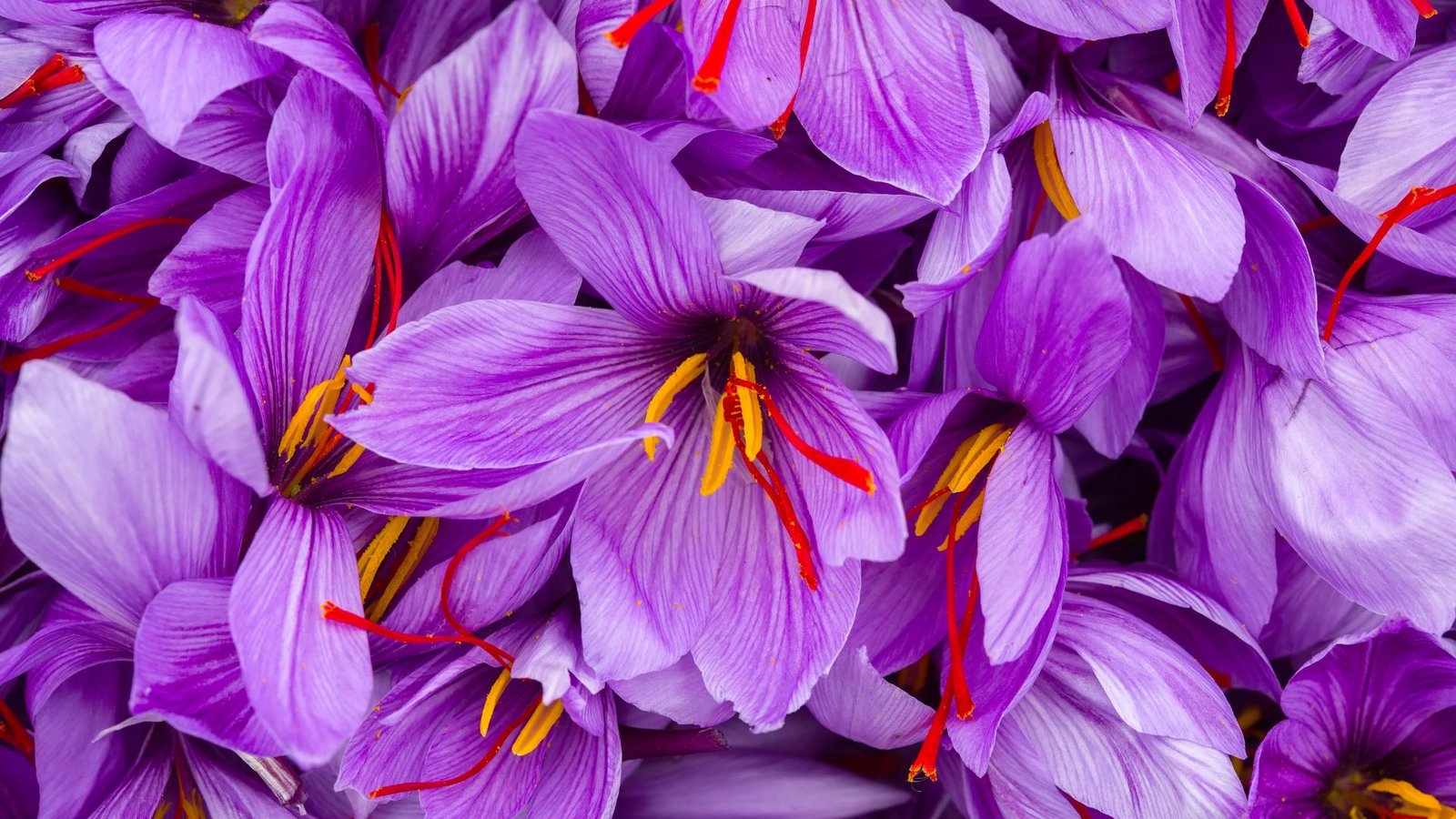
Ayurveda has a long tradition of using botanical ingredients in skincare. Among its well-known facial oils, Kumkumadi Tailam, also called Kumkumadi Oil, is recognized for its saffron-based herbal blend and its traditional role in facial care. Its rich appearance and combination of plant-derived ingredients have made it an intriguing subject for people who want to understand traditional skincare preparations.
Kumkumadi oil making involves more than mixing a few herbs with oil. Traditional formulations can involve carefully selected ingredients, extraction or processing methods, controlled heating, and quality checks. The exact recipe may vary according to the classical Ayurvedic text or formulation being followed.
If you are curious about Kumkumadi oil making, this guide explains seven important stages involved in understanding the traditional preparation process. It also covers the role of common ingredients, essential safety considerations, and how to choose a ready-made product from Oak Tree Naturals.
One important distinction: the steps below explain the general principles behind traditional herbal oil preparation. They are not a verified manufacturing recipe for Oak Tree Naturals’ product, and they should not be treated as a substitute for a classical Ayurvedic formulation or professional manufacturing process.
Table of Contents
What Is Kumkumadi Oil?
Kumkumadi Oil is a traditional Ayurvedic facial oil commonly associated with saffron, known in Sanskrit as Kumkuma. Traditional formulations may contain several botanical ingredients combined with a carrier oil and, in some versions, other ingredients such as milk or herbal extracts.
The name Kumkumadi refers to saffron’s central role in the formulation, but the complete ingredient list is not necessarily identical across all products. Classical preparations may include ingredients such as sandalwood, liquorice, and other herbs. The exact combination depends on the formula being followed. Research published in Frontiers in Medicine discusses a classical formulation containing multiple botanical ingredients alongside sesame oil and goat milk.
Understanding these differences is essential when learning about Kumkumadi oil making. A homemade blend inspired by a traditional formula is not automatically equivalent to a properly prepared, quality-tested Ayurvedic oil.
Kumkumadi Oil is generally used as part of a facial skincare routine. Depending on its formulation and individual skin compatibility, it may help moisturize the skin and support a softer, more nourished appearance. However, results vary, and no facial oil can guarantee the removal of pigmentation, acne marks, or other skin concerns.
Kumkumadi Oil Making: 7 Amazing Steps to Understand the Traditional Process
Step 1: Selecting the Right Ingredients
The first stage of Kumkumadi oil making is understanding the ingredients required by the chosen traditional formula. Ingredient selection matters because different herbs contribute different properties, aromas, colors, and characteristics to the final preparation.
Commonly discussed ingredients include:
- Saffron: The signature botanical associated with Kumkumadi formulations.
- Sandalwood: Traditionally valued for its fragrance and role in Ayurvedic preparations.
- Liquorice: A botanical used in various traditional skincare formulations.
- Other herbs: Depending on the recipe, additional plant materials may be included.
- Carrier oil: Sesame oil is used in some classical Kumkumadi formulations.
These ingredients should not be treated as interchangeable. Replacing one herb with another can change the composition and properties of the preparation.
For anyone researching Kumkumadi oil making, the key lesson is to identify the precise formula first rather than collecting ingredients based on a general online list. Use correctly identified raw materials from reliable suppliers, and avoid ingredients that are mouldy, contaminated, adulterated, or incorrectly labelled.
Step 2: Preparing the Botanical Ingredients
Once the ingredients have been identified, the next stage involves preparing them according to the selected formulation. Depending on the plant material and traditional method, this may involve cleaning, sorting, drying, cutting, or reducing the ingredients to a suitable form.
Preparation affects how the botanical material interacts with the carrier oil or other components during processing. For example, the required preparation for a delicate flower may differ from that for a woody ingredient or a dried root.
In Kumkumadi Oil Making, cleanliness is just as important as ingredient selection. Equipment and containers should be appropriate for cosmetic or medicinal manufacturing, and the raw materials should be protected from dust, moisture, and other sources of contamination.
This stage should follow a documented procedure rather than guesswork. Incorrect preparation can affect the final product’s consistency and may introduce avoidable quality problems.
Step 3: Understanding the Herbal Extraction Process
Traditional herbal oil preparations are designed to transfer selected constituents from plant materials into a suitable medium. Depending on the formulation, this may involve processing the herbs with oil, water-based herbal preparations, or other specified ingredients.
This is one of the most important concepts in Kumkumadi oil making. The objective is not simply to place herbs in oil and assume that all their useful constituents will be extracted. Different plant compounds behave differently, and the extraction method influences what enters the final preparation.
Traditional Ayurvedic oil processing can be more complex than a simple home infusion. A specific classical formula may prescribe particular proportions, processing conditions, and endpoints. Those details should be taken from a reliable formulation source and followed by trained personnel.
Avoid presenting an improvised recipe as the authentic Kumkumadi method. Without a verified formulation, ingredient ratios and processing conditions cannot be responsibly specified.
Step 4: Combining the Ingredients in the Correct Proportions
After understanding the preparation and extraction requirements, the ingredients must be combined according to the selected formula. The proportions matter because a traditional herbal oil is intended to have a defined composition rather than an arbitrary mixture.
When making Kumkumadi Oil, changing the amount of saffron, sandalwood, carrier oil, or another ingredient can change the color, texture, smell, and overall makeup of the oil.
This is also where a distinction between traditional preparation and commercial production becomes important. Manufacturers need documented procedures that help maintain consistency from one batch to another. Simply using similar ingredients does not establish that two oils have the same composition or quality.
For readers interested in making herbal skincare at home, it is safer to understand the traditional principles without attempting a complex formulation using unverified ratios. If the goal is to use Kumkumadi Oil on the face, a ready-made product with clear ingredient information and appropriate quality controls may be a more practical choice.
Step 5: Processing Under Controlled Conditions
Traditional herbal oils may require controlled processing, including careful management of heat, time, and moisture. The exact conditions depend on the formulation; there is no single temperature or processing duration that can be recommended for every Kumkumadi Oil.
During Kumkumadi oil making, uncontrolled heating can affect delicate plant constituents and may create an inconsistent product. Excess moisture, unsuitable utensils, or poor handling can also affect quality and storage stability.
For this reason, a commercial preparation should be produced using a defined manufacturing process. Temperature and processing time should be monitored when required by the formula, and the finished material should meet predetermined quality criteria.
Home experimentation should not involve prolonged heating of unknown ingredient combinations or the use of inappropriate equipment. Traditional Ayurvedic preparations can require technical knowledge that goes beyond ordinary kitchen infusion methods.
Step 6: Filtering and Checking the Finished Oil
Once the processing stage is complete, the preparation may require separation or filtration to remove residual plant material. The appropriate method depends on the formula and the intended finished product.
Filtration alone, however, does not prove that an oil is safe, pure, or effective. Kumkumadi oil making also requires attention to the finished product’s appearance, odor, consistency, contamination risks, and stability.
Commercial quality checks may include verifying raw materials, reviewing manufacturing records, assessing relevant physical and chemical characteristics, and conducting suitable microbiological or other testing based on the product type and applicable requirements.
Research published in Discover Chemistry in 2026 describes a laboratory method for identifying saffron-derived compounds in marketed Kumkumadi Tailam samples. This illustrates why analytical testing can be useful when evaluating the composition of a complex herbal oil.
Consumers should not rely on colour or fragrance alone to determine whether a product is genuine. A darker colour or stronger herbal smell does not automatically mean that an oil is more authentic or of higher quality.
Step 7: Packaging and Storing the Oil Properly
The final stage of Kumkumadi oil making involves selecting suitable packaging and storage conditions. The container should protect the oil from avoidable contamination and excessive exposure to heat, light, and air.
Packaging should be compatible with the formulation and close securely. Product labels should provide relevant information, including ingredients, directions for use, batch details, and the applicable shelf-life or expiry information.
For consumers, proper storage is straightforward:
- Follow the storage instructions printed on the label.
- Keep the bottle tightly closed after use.
- Avoid leaving the product in direct sunlight or near a heat source.
- Use clean hands or an appropriate dropper when dispensing the oil.
- Do not use the product if its smell, texture, or appearance changes unexpectedly.
These precautions help preserve product quality. They do not extend a product’s stated shelf life or replace appropriate manufacturing and stability checks.
Why Do Ingredients Matter in Kumkumadi Oil Making?
Understanding the ingredients helps explain why the traditional formula is more than a simple mixture of fragrant plants.
| Ingredient or component | Traditional role or relevance |
| Saffron | The signature ingredient associated with Kumkumadi formulations |
| Sandalwood | Traditionally used in aromatic and skincare preparations |
| Liquorice and other herbs | May form part of particular classical formulations |
| Sesame oil | Used as the carrier oil in some traditional recipes |
| Other formula-specific ingredients | Depend on the classical text or formulation selected |
The table is a general overview, not a complete recipe. The presence of an ingredient in one traditional formula does not mean it appears in every commercial Kumkumadi oil.
When exploring Kumkumadi Oil Making, always distinguish between a classical formulation, a simplified homemade infusion, and a modern branded product. Each may use a different process and ingredient profile.
Potential Skincare Benefits and Their Limitations
Kumkumadi Oil is traditionally used in facial skincare, especially in routines focused on nourishment and the appearance of skin radiance. An oil-based product may help reduce the feeling of dryness by supporting the skin’s surface and limiting moisture loss.
Some research has investigated the effects of Kumkumadi Taila on measurable facial skin characteristics. A 2026 exploratory study involving 30 healthy adults reported changes in selected skin measurements over 15 days. However, the study was small, short-term, and exploratory, so its results should not be interpreted as proof that every Kumkumadi product produces the same outcomes.
Keep these practical points in mind:
- Hydration: An oil may help skin feel softer and less dry.
- Radiance: Better moisturization can make skin appear smoother and more refreshed.
- Uneven-looking tone: Results depend on the cause of discolouration, the formula, and individual skin response.
- Acne-prone skin: Rich facial oils may not suit everyone and can contribute to clogged pores for some people.
- Sun protection: A facial oil is not a substitute for broad-spectrum sunscreen.
Learning about Kumkumadi oil making can help explain the product’s traditional background, but the preparation method alone does not establish a skincare claim. Benefits depend on the actual formulation, product quality, and the person using it.
Common Mistakes to Avoid
People researching Kumkumadi oil making should be cautious about these frequent mistakes:
- Following an unverified recipe: Ingredient lists and methods may differ across traditional sources.
- Using unidentified herbs: Incorrect plant identification can create safety risks.
- Assuming all natural ingredients are safe: Botanical ingredients can cause irritation or allergic reactions.
- Ignoring cleanliness: Contaminated ingredients or equipment can compromise the preparation.
- Overheating the mixture: Excessive or uncontrolled heat may affect the finished product.
- Skipping quality checks: Appearance and fragrance cannot establish purity or stability.
- Expecting instant results: No skincare oil can guarantee the removal of dark spots or pigmentation.
A reliable approach combines respect for traditional knowledge with careful attention to ingredient identity, preparation standards, and realistic expectations.
Choosing a Ready-Made Kumkumadi Oil from Oak Tree Naturals
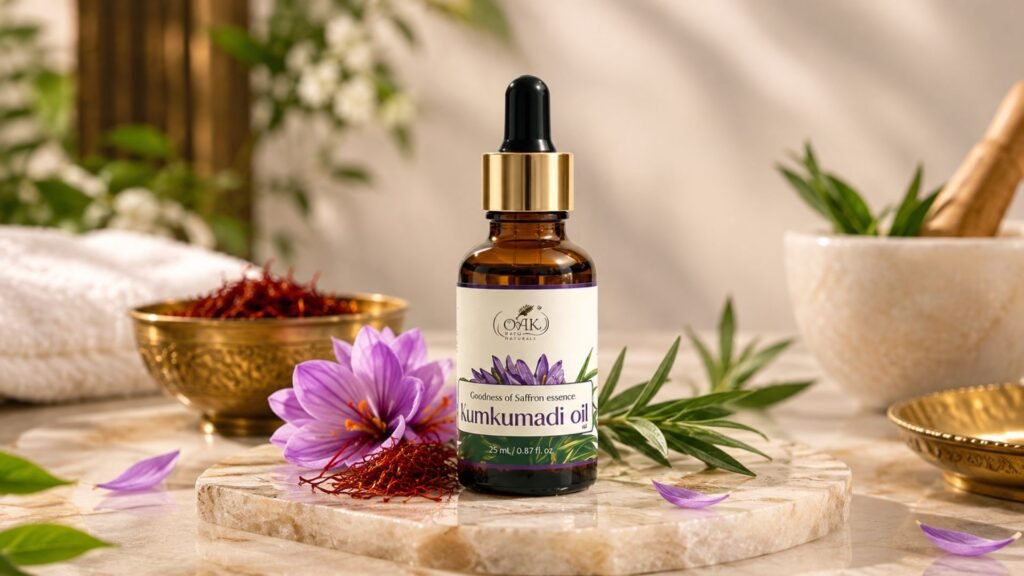
If you want to experience Kumkumadi Oil without attempting a complex preparation at home, Oak Tree Naturals offers a 25 ml Kumkumadi Oil formulated with saffron, sandalwood, and herbal extracts. Its product page describes the oil as a nourishing facial-care product intended to help moisturize the skin and improve the appearance of dullness and uneven-looking tone.
You can explore the product here: Oak Tree Naturals Kumkumadi Oil – 25 ml.
Before purchasing, review the complete ingredient information, directions, and suitability for your skin. If you have sensitive skin, introduce the product cautiously and perform a patch test according to the product instructions. Stop using it if you develop irritation.
For informational readers, learning about Kumkumadi oil making provides useful context for understanding the traditional formulation. Choosing a ready-made product, meanwhile, means you do not have to prepare, filter, package, or assess a complex herbal oil yourself.
Final Thoughts
Kumkumadi Oil Making brings together ingredient selection, botanical preparation, extraction, proportioning, controlled processing, filtration, and appropriate packaging. Each stage contributes to the quality and consistency of a traditional herbal oil.
The most important takeaway is that Kumkumadi Oil is not defined by saffron alone. The formula, processing method, ingredient quality, and finished-product checks all matter. Because traditional recipes can vary, a simplified homemade mixture should not be presented as equivalent to an authentic classical preparation.
If you are interested in adding this traditional skincare ingredient to your routine, learn about the formulation, check the product information, and choose an option that suits your skin. Oak Tree Naturals’ Kumkumadi Oil is one ready-made option to explore as part of a thoughtful facial-care routine.
FAQ Section
1. What is Kumkumadi Oil Making?
Kumkumadi oil making refers to the preparation of a traditional Ayurvedic herbal facial oil. Depending on the formula, the process may involve selecting herbs, preparing botanical ingredients, processing them with a carrier oil, filtering, and checking the finished product.
2. Which ingredients are used in Kumkumadi Oil?
Traditional formulations may contain saffron, sandalwood, liquorice, other herbs, and a carrier oil such as sesame oil. Ingredients vary between classical recipes and commercial products, so verify the specific product label.
3. Can I make Kumkumadi Oil at home?
A simple herbal oil infusion is possible, but it should not automatically be considered authentic Kumkumadi oil. Traditional formulations can require specific ingredients, proportions, processing conditions, and quality checks. Follow a reliable formulation from a qualified source rather than an improvised recipe.
4. What are the benefits of Kumkumadi Oil?
Kumkumadi Oil is traditionally used to nourish facial skin. Depending on its formulation and your skin type, it may help improve the feeling of dryness and the appearance of skin radiance. Results vary, and it is not a guaranteed treatment for pigmentation or acne scars.
5. Is Kumkumadi Oil suitable for all skin types?
Suitability depends on the ingredients and your individual skin. People with sensitive or acne-prone skin should check the formulation and introduce it cautiously. Patch-test the product according to its instructions before applying it more widely.
6. How long does homemade Kumkumadi oil last?
There is no universal shelf life for homemade Kumkumadi oil. Storage life depends on the ingredients, preparation method, moisture content, contamination control, and packaging. Without appropriate testing, it is difficult to establish a reliable expiry date.
7. How should Kumkumadi Oil be stored?
Keep the product tightly closed and follow the manufacturer’s storage instructions. Protect it from excessive heat, direct sunlight, and contamination. Discontinue use if you notice an unexpected change in smell, color, or texture.
8. Where can I buy Kumkumadi Oil from Oak Tree Naturals?
You can explore Oak Tree Naturals Kumkumadi Oil, 25 ml. Review the ingredient information and directions before deciding whether it suits your skincare needs.