Can Face Wash Remove Acne? Effective Tips for Clearer Skin


Can Face Wash Remove Acne?
If you regularly experience pimples, blackheads, whiteheads, or oily skin, you may have wondered: can it remove acne?
The answer is a little more nuanced than a simple yes or no.
A face wash can help keep acne-prone skin clean by removing sweat, excess oil, dirt, and other buildup from the surface of the skin. Some acne cleansers also contain specific ingredients that are used to help manage breakouts. However, washing your face alone does not guarantee that acne will completely disappear.
Acne can have several contributing factors, including clogged pores, excess oil, inflammation, and changes involving bacteria on the skin. The appropriate approach can therefore vary depending on the type and severity of acne.
The American Academy of Dermatology recommends gentle cleansing and notes that acne face washes containing ingredients such as salicylic acid or benzoyl peroxide can be useful for certain types of acne.
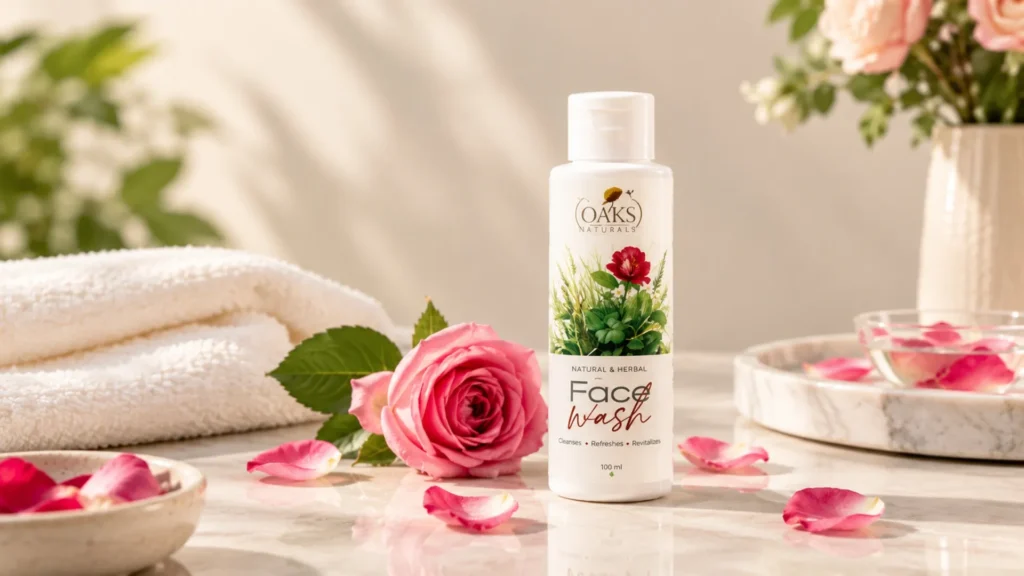
For people who prefer plant-based and herbal skincare, Oak Tree Naturals Acne Face Wash (100 ml) offers a different approach. The product is formulated with Neem and Tulsi, two botanicals traditionally associated with Indian herbal skincare.
The important point is to understand what it can realistically do and how it fits into a complete skincare routine.
Table of Contents
What Does an Acne Face Wash Actually Do?
The first job of a face wash is cleansing.
Throughout the day, your skin comes into contact with sweat, excess oil, dust, pollution, sunscreen, makeup, and other substances. If these are not removed properly, they can contribute to an uncomfortable or greasy feeling and may make clogged pores more noticeable.
A suitable cleanser can help remove this surface buildup without requiring aggressive scrubbing.
However, acne is not simply caused by “dirty skin.” Blackheads, for example, are not dirt trapped inside the skin. Dermatologists specifically advise against scrubbing acne because irritation can make breakouts worse.
This is why the goal should be gentle and consistent cleansing, rather than trying to wash acne away by repeatedly scrubbing the face.
Can Face Wash Remove Pimples?
An acne face wash can support acne-prone skin, but whether it can clear pimples depends on the formulation and the type of acne.
Some cleansers contain established acne-treatment ingredients. For example, salicylic acid helps unclog pores, while benzoyl peroxide can help reduce acne-causing bacteria. These ingredients are recognized in dermatological acne care.
A cleanser without these specific active acne-treatment ingredients should not automatically be presented as an acne treatment.
Instead, its role may be primarily to provide gentle cleansing and support a consistent skincare routine.
This distinction is especially important when choosing a herbal face wash. Plant-based ingredients can be appealing, but “herbal” does not automatically mean that a product will treat every type of acne.
Oak Tree Naturals Acne Face Wash: A Plant-Based Approach
For people who prefer botanical skincare, Oak Tree Naturals Acne Face Wash (100 ml) is formulated with Neem and Tulsi.
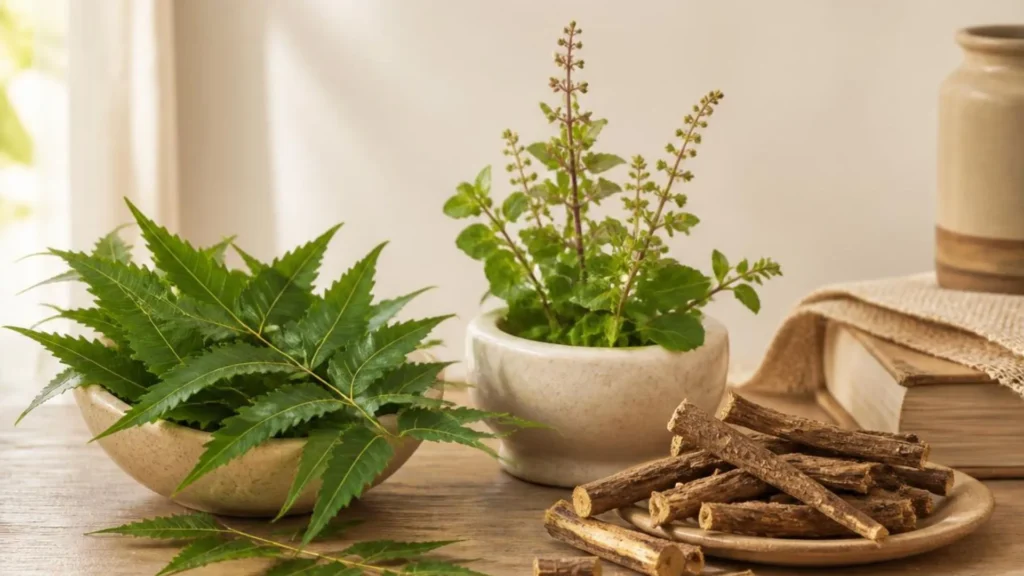
Neem and Tulsi have a long association with traditional Indian herbal and personal-care practices, making them familiar ingredients for people who prefer plant-based skincare.
The product can therefore be considered by consumers looking for a Neem and Tulsi face wash as part of their regular cleansing routine.
However, it is useful to keep expectations realistic.
The presence of Neem and Tulsi does not mean the product should be described as a guaranteed cure for acne. Individual skin can respond differently to cosmetic products, and persistent or severe acne may require treatment beyond a cleanser.
The best way to evaluate the product is to consider its formulation, directions for use, your skin type, and how your skin responds over time.
Why Neem and Tulsi Are Popular in Herbal Skincare
Neem
Neem is a well-known botanical in traditional Indian personal care. It is frequently included in herbal and plant-based skincare products.
For consumers who enjoy traditional botanical formulations, Neem can make it particularly appealing.
However, traditional use should not automatically be interpreted as proof that Neem alone will eliminate acne. A cosmetic product should be evaluated according to its complete formulation and intended use.
Tulsi
Tulsi, also known as holy basil, is another plant strongly associated with traditional Indian practices.
Its inclusion in a face wash gives the product a distinctly herbal skincare profile and may appeal to people who prefer plant-based personal-care products.
Again, the presence of Tulsi should not be treated as a guarantee of acne clearance.
How to Use Acne Face Wash Correctly
Even a well-formulated cleanser needs to be used correctly.
Step 1: Wet Your Face
Use lukewarm water to wet your face.
Step 2: Apply the Face Wash
Take an appropriate amount of the cleanser and apply it gently using your fingertips.
Step 3: Massage Gently
Use light circular movements. Do not scrub aggressively or use rough sponges to try to remove pimples.
Step 4: Rinse
Rinse thoroughly with lukewarm water.
Step 5: Pat Dry
Use a clean, soft towel and gently pat your face dry.
Step 6: Moisturize
If your skin feels dry after cleansing, apply a suitable moisturizer.
Dermatologists recommend gentle, non-abrasive cleansing and generally advise limiting face washing to twice daily and after heavy sweating.
How Often Should You Use an Acne Face Wash?
There is no benefit in repeatedly washing your face throughout the day simply because you have acne.
Over-cleansing can irritate the skin. The American Academy of Dermatology recommends washing the face gently up to twice a day and after sweating.
For an Oak Tree Naturals Acne Face Wash, follow the product’s current directions for use.
If your skin begins to feel excessively dry, tight, itchy, or irritated, reconsider how frequently you are cleansing and review the product instructions.
Common Mistakes People Make When Washing Acne-Prone Skin
Scrubbing Too Hard
One of the most common misconceptions is that acne needs to be scrubbed away.
It doesn’t.
Aggressive scrubbing can irritate the skin and potentially make breakouts appear worse.
Washing Too Many Times
Washing repeatedly throughout the day can interfere with the skin’s comfort and increase irritation.
Using Very Hot Water
Very hot water can leave skin feeling dry and uncomfortable. Lukewarm water is generally preferable for routine cleansing.
Picking Pimples
It can be tempting to squeeze a pimple after washing your face, but picking or squeezing can increase inflammation and the risk of marks and scarring.
Changing Products Too Quickly
Trying a different acne product every few days makes it difficult to understand what is helping or irritating your skin.
Dermatologists note that acne treatments can take several weeks before improvement becomes noticeable.
Can a Herbal Face Wash Be Used for Oily Skin?
A plant-based or herbal face wash can be considered as part of an oily-skin routine, but the important factor is how the complete formulation behaves on your skin.
Oily skin still needs gentle care. Trying to remove every trace of oil with a harsh cleanser can be irritating.
The American Academy of Dermatology recommends gentle cleansing for oily skin and advises against harsh scrubbing.
If your face feels comfortable and clean without excessive tightness after cleansing, that is generally a more useful sign than simply how “strong” it feels.
What Else Should You Do for Acne-Prone Skin?
A face wash is only one part of skincare.
A simple routine can include:
Morning
- Gentle cleansing
- Suitable moisturizer
- Broad-spectrum sunscreen
Evening
- Cleanse the face
- Apply an appropriate acne treatment if needed
- Moisturize
If you use makeup, choose products labelled oil-free or non-comedogenic where appropriate. These labels indicate that the product is designed not to clog pores.
The exact routine should depend on your skin and the type of acne you experience.
Is Herbal Face Wash Better Than Regular Face Wash?
There is no universal answer.
“Herbal,” “natural,” and “plant-based” describe aspects of a product’s ingredients or positioning, but they do not automatically determine how effective or suitable the product will be for a particular person.
When comparing them , consider:
Factor What to Check
Ingredients Read the complete ingredient list
Skin type Consider oily, dry, combination, or sensitive skin
Cleansing Look for a comfortable cleansing experience
Fragrance Consider your individual tolerance
Acne severity Mild breakouts and severe acne may require different approaches.
Directions Follow the manufacturer’s instructions
Skin response Stop if persistent irritation develops
This approach is more useful than choosing a product solely because it is labelled herbal or natural.
When Is Face Wash Not Enough?
A cleanser may be suitable for routine skincare, but some forms of acne require more comprehensive treatment.
Consider speaking with a dermatologist if you experience:
- Large or painful pimples
- Deep nodules or cysts
- Acne that leaves scars
- Persistent breakouts
- Acne that does not improve with appropriate skincare
- Significant inflammation or irritation
The American Academy of Dermatology notes that deep, painful acne and acne that causes scarring may require professional treatment.
Also remember that some skin conditions can resemble acne. A dermatologist can help determine whether the condition is actually acne and recommend an appropriate treatment plan.
Can Face Wash Prevent Future Breakouts?
A suitable cleansing routine can help remove excess oil and surface buildup, but it alone should not be presented as a guaranteed way to prevent every future breakout.
Acne management often requires addressing more than cleansing.
The American Academy of Dermatology emphasizes that acne treatment aims to clear existing acne, prevent new breakouts, and reduce the risk of scarring. Different types of acne may require different treatments.
This is why consistency and realistic expectations matter.
A Simple Routine With Oak Tree Naturals Acne Face Wash
If you prefer plant-based skincare, you can keep your routine straightforward.
Step 1: Wet your face with lukewarm water.
Step 2: Use Oak Tree Naturals Acne Face Wash according to the product directions.
Step 3: Massage gently rather than scrubbing.
Step 4: Rinse thoroughly.
Step 5: Pat your face dry.
Step 6: Apply a suitable moisturizer.
Step 7: During the daytime, finish with sunscreen.
The aim is not to make your skin feel extremely dry or “squeaky clean.” Comfortable, gentle cleansing is a more sensible goal for acne-prone skin.
Final Thoughts
So, can face wash remove acne?
A face wash can play an important role in caring for acne-prone skin, but it should not be viewed as a guaranteed cure for acne. A cleanser can remove sweat, excess oil, dirt, and surface buildup, while certain acne washes contain ingredients that can specifically help with clogged pores or breakouts.
For people interested in plant-based skincare, Oak Tree Naturals Acne Face Wash (100 ml) offers a herbal formulation featuring Neem and Tulsi. It can be considered part of a simple cleansing routine for people who prefer botanical ingredients.
The most important thing is to use any face wash gently and consistently, understand what its formulation is designed to do, and avoid unrealistic promises about acne.
If acne is painful, persistent, severe, or leaving scars, a dermatologist can provide a more appropriate treatment plan.
FAQ: Can Face Wash Remove Acne?
Can face wash remove acne completely?
A face wash can support acne-prone skin and help with cleansing, but it cannot guarantee complete removal of acne. Persistent or severe acne may require additional treatment.
Is Neem face wash good for acne?
Neem is a traditional botanical ingredient commonly used in herbal skincare. A Neem-based face wash can be part of a cleansing routine, but the presence of Neem alone does not guarantee that acne will clear.
Is Tulsi good for acne-prone skin?
Tulsi is widely used in traditional Indian herbal skincare. Whether a Tulsi-containing cosmetic suits your skin depends on the complete formulation and your individual skin response.
How often should I wash my face if I have acne?
Dermatologists generally recommend gentle cleansing up to twice a day and after sweating rather than repeatedly washing throughout the day.
Should I scrub my face to remove acne?
No. Scrubbing can irritate acne-prone skin and potentially make breakouts worse. Use your fingertips and gentle movements instead.
Can herbal face wash cure pimples?
A herbal face wash should not be described as a guaranteed cure for pimples. Its usefulness depends on its formulation, your skin, and the type of acne you have.
Can I use moisturizer after an acne face wash?
Yes. If cleansing leaves your skin feeling dry or uncomfortable, a suitable moisturizer can be incorporated into your routine.
When should I see a dermatologist for acne?
Seek professional advice for deep or painful acne, scarring, persistent breakouts, or acne that does not improve with appropriate skincare.