When to Apply Under-Eye Cream: Avoid These Bad Skincare Habits


Skincare routines can become confusing when you start adding targeted products. Cleanser, toner, serum, moisturizer, sunscreen—and then an under-eye cream. Where does it actually belong?
If you have ever wondered when to apply under-eye cream, the answer is simpler than it may seem.
An under-eye cream is generally applied after cleansing and before heavier moisturizing products, although the exact order can depend on the rest of your routine and the instructions for the specific product.
The bigger issue is often not the timing itself. It is how the product is applied.
The skin around the eyes is delicate, and aggressive rubbing, applying too much product, getting cream directly into the eyes, or using products that are not intended for the eye area can create unnecessary problems.
Oaktree Naturals Under Eye Cream is a 50 g lightweight formula positioned for daily use. The brand describes it as helping reduce the appearance of dark circles and puffiness while supporting hydration, skin elasticity, and a smoother, refreshed-looking under-eye area.
That makes understanding proper application particularly useful.
So, when should you apply an under-eye cream? Should you use it before or after moisturizer? Can you use it in the morning and at night? And what habits should you avoid?
Let’s break down the routine step by step.
Table of Contents
When to Apply Under-Eye Cream in Your Skincare Routine
For a simple skincare routine, under-eye cream generally fits after cleansing and before your heavier moisturizer.
A basic order can look like this:
Morning:
- Cleanser
- Toner or facial mist, if used
- Serum, if used
- Under-eye cream
- Moisturizer
- Sunscreen
Evening:
- Cleanser
- Toner or facial mist, if used
- Serum or treatment, if appropriate
- Under-eye cream
- Moisturizer
This order is not an absolute rule for every skincare product. Formulations differ, and product-specific directions should take priority.
Cleveland Clinic similarly recommends applying eye cream after cleansing and before moisturizer, using a gentle touch around the eye area.
The important principle is to avoid burying a lightweight eye product underneath several layers of heavier skincare.
Should You Apply Under Eye Cream in the Morning or at Night?
You can include an under-eye cream in either your morning routine, evening routine, or both, depending on the product directions and your skin’s tolerance.
Oaktree Naturals specifically recommends applying its Under Eye Cream morning and night as part of the final treatment step before makeup or bedtime.
Morning application
Morning use can fit naturally into a routine when your goal is to keep the under-eye area feeling hydrated and looking refreshed throughout the day.
A simple morning sequence is:
Cleanse → Under-eye cream → Moisturizer → Sunscreen
If you use other lightweight products such as a serum, apply those according to their intended order before the eye cream.
Night application
Nighttime is also a convenient opportunity to include an eye cream because you do not need to apply makeup afterward.
A simple evening routine can be:
Cleanse → Treatment/serum → Under-eye cream → Moisturizer
The exact order may change if you use a prescription product or a strong active ingredient around the eye area. In that situation, follow the relevant product instructions or professional guidance.
Why Does the Timing of Under-Eye Cream Matter?
The timing matters less than using the product correctly and consistently.
Under-eye products are usually designed for a small, specific area. Applying them at the right point in your routine helps you avoid unnecessary layering and makes it easier to control how much product reaches the delicate skin around your eyes.
There is also a practical reason to apply it before heavier moisturizer.
A lightweight eye cream can be placed precisely around the orbital area without having to work through a thick layer of another cream first.
However, don’t interpret skincare order as a guarantee that ingredients will penetrate better simply because one product is applied before another. Product formulation, ingredients, skin condition, and individual tolerance all matter.
The goal is a comfortable, manageable routine, not a complicated sequence of ten products.
How to Apply Under-Eye Cream Correctly
Knowing when to apply under-eye cream is only half the process. The technique matters as much.
Step 1: Start with clean skin
Wash your face using your usual gentle cleanser.
Pat the skin dry rather than rubbing aggressively.
Step 2: Use a small amount
You do not need a large quantity of eye cream.
The under-eye area is small, so begin with a modest amount.
Using too much can make the area feel heavy and may increase the chance of product migrating toward the eyes.
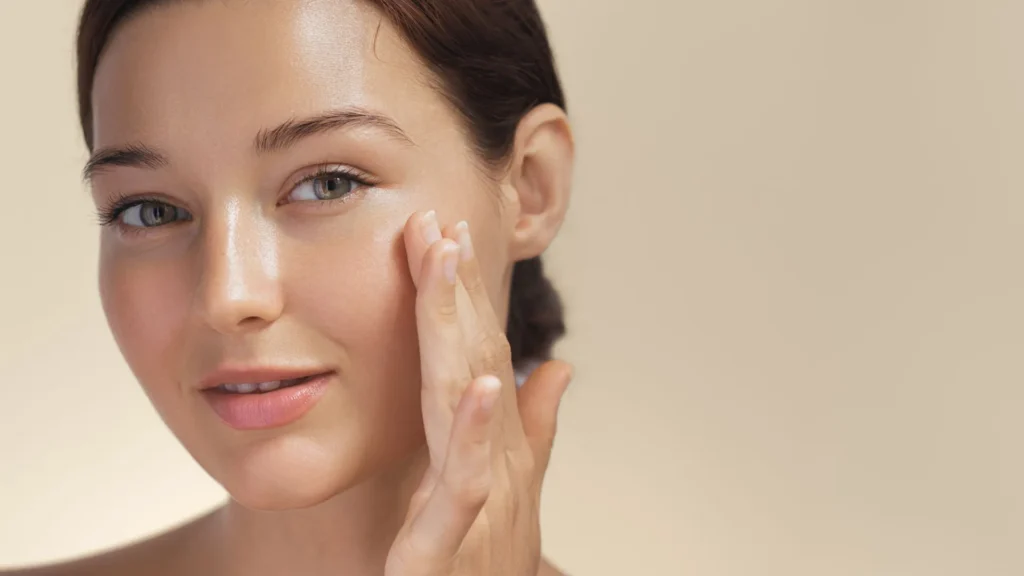
Step 3: Use your ring finger
The ring finger is commonly suggested because it encourages a light touch.
Place small dots of product around the orbital bone rather than spreading a thick layer directly underneath the eye.
Step 4: Pat gently
Use light tapping or patting motions.
Avoid pulling, stretching, or aggressively rubbing the skin.
Step 5: Keep it away from direct eye contact
An under-eye cream is designed for the skin around the eye, not for the eyeball itself.
Oaktree Naturals specifically instructs users to apply the cream around the orbital bone while avoiding direct contact with the eyes.
Step 6: Allow it to absorb
Give the product a little time to settle before applying makeup or moving on to another heavier product.
Where Exactly Should You Apply Under-Eye Cream?
This is another common source of confusion.
Under-eye cream does not need to be applied right up against the lower eyelid or directly along the lash line.
Instead, apply a small amount around the orbital bone, following the product’s directions.
The area around the eyes is delicate, and getting skincare products too close to the eye itself can cause watering or irritation.
A useful rule is:
Apply near the eye, not inside the eye.
If the product accidentally enters your eye, rinse according to appropriate first-aid guidance and discontinue use if irritation continues.
FDA guidance also recommends using cosmetics around the eyes only when they are specifically intended for that area and stopping use if irritation occurs.
Under Eye Cream Before or After Moisturizer?
For most simple routines, apply your under-eye cream before your regular moisturizer.
For example:
Cleanser → Serum → Under Eye Cream → Moisturizer → Sunscreen
Why?
The under-eye cream is specifically intended for the delicate eye area, so applying it before a general moisturizer makes it easier to target that area precisely.
However, there is no need to create a complicated layering system.
If your moisturizer is very lightweight and your eye cream has a heavier texture, you may find that the opposite order feels more comfortable. Product instructions should take priority.
The most useful approach is to observe how your skin responds.
What Are the Worst Under-Eye Skincare Habits?
Your skincare routine does not have to be complicated to go wrong.
Sometimes the biggest problems come from small habits.
1. Rubbing the under-eye area
The skin around the eyes is delicate.
Repeated rubbing can contribute to irritation and can also worsen the appearance of swelling or discoloration in some people.
If you have itchy eyes or allergies, address the underlying issue rather than repeatedly rubbing the area.
Cleveland Clinic notes that rubbing or scratching the eyes can contribute to swelling and can affect the appearance of dark circles.
2. Applying too much cream
More product does not automatically mean better results.
A small amount is usually enough for the limited surface area around both eyes.
Too much can feel heavy and may migrate toward the eyes.
3. Applying the cream directly to the eyelid or eyeball
Under-eye cream is meant for the surrounding skin.
It should not be applied inside the eye or directly onto the eyeball.
Always follow the product’s instructions.
4. Using facial products that are not intended for the eye area
Not every skincare product is appropriate for use near the eyes.
The FDA specifically advises consumers not to use cosmetics near the eyes unless they are intended for that use.
This is particularly relevant when experimenting with DIY skincare or using products intended for another part of the face or body.
5. Expecting an eye cream to erase every dark circle
Dark circles have many possible causes.
Genetics, aging, lack of sleep, allergies, dehydration, pigmentation, and the structure of the area beneath the eyes can all contribute to their appearance.
An eye cream may support hydration or improve the appearance of the skin, but it cannot guarantee that every cause of dark circles will disappear.
6. Ignoring sunscreen
Sun exposure can contribute to pigmentation and visible skin aging.
Your daytime skincare routine should therefore include appropriate sun protection.
Be careful when applying sunscreen near the eyes, and avoid getting it directly into the eyes.
Can You Apply Under Eye Cream Every Day?
Yes, an under-eye cream can be part of a daily skincare routine if the formulation is intended for regular use and your skin tolerates it.
Oaktree Naturals describes its Under Eye Cream as suitable for daily use and recommends morning and evening application.
However, daily use does not mean you should ignore irritation.
If the skin becomes:
- Red
- Burning
- Itchy
- Swollen
- Unusually dry
- Persistently uncomfortable
Stop using the product and assess what may be causing the reaction.
FDA guidance recommends stopping an eye cosmetic if it causes irritation and seeking medical attention if the irritation persists.
How Long Does Under Eye Cream Take to Work?
This depends heavily on what you expect the product to do.
Hydration and skin feel can change relatively quickly.
Other visible concerns, such as the appearance of fine lines, puffiness, or discoloration, may take longer and may not respond completely to a cosmetic cream.
Oaktree Naturals states that its Under Eye Cream can help the under-eye area appear brighter and more refreshed with consistent use.
That is different from promising permanent removal of dark circles.
The distinction is important because dark circles are not caused by one universal problem.
If the primary cause is genetic pigmentation, facial structure, allergies, or another underlying factor, changing the appearance may require a different approach.
Can Under Eye Cream Remove Dark Circles?
An under-eye cream may help improve the appearance of the under-eye area, particularly when dryness or tired-looking skin contributes to the way it looks.
But “remove dark circles” is too broad a promise.
Dark circles can have several causes, including genetics, aging, pigmentation, allergies, lack of sleep, and changes in the skin and underlying structures.
That means a cosmetic cream should be viewed as one part of under-eye care rather than a universal solution.
A sensible routine can combine:
- Appropriate under-eye skincare
- Daily sun protection
- Adequate sleep
- Avoiding unnecessary eye rubbing
- Managing allergies when relevant
- Consistent skincare
If discoloration or swelling is persistent, sudden, or accompanied by other symptoms, professional medical advice is more appropriate than simply changing eye creams.
Oaktree Naturals Under Eye Cream: What Does It Claim to Do?
The brand describes Oaktree Naturals’ Under Eye Cream 50g as a lightweight, hydrating formula for the delicate under-eye area.
According to the official product page, the product is positioned to:
- Help reduce the appearance of dark circles
- Help reduce the appearance of puffiness
- Support skin elasticity
- Hydrate the under-eye area
- Leave the skin looking smoother and refreshed
- Suit daily use and all skin types
The product page also states that the formula contains natural oak tree extracts and recommends applying a small amount around the orbital bone with the ring finger, morning and night.
These are cosmetic positioning claims, not a guarantee that every user will experience the same result.
Individual results can vary depending on skin type, age, genetics, lifestyle, and the underlying reason for an under-eye concern.
When to Apply Under-Eye Cream: A Simple Routine
If you want to keep your skincare routine straightforward, use this as a basic framework.
Morning
Step 1: Cleanse your face
↓
Step 2: Apply serum if you use one
↓
Step 3: Apply under-eye cream
↓
Step 4: Apply moisturizer
↓
Step 5: Apply sunscreen
Night
Step 1: Cleanse
↓
Step 2: Apply appropriate treatment or serum
↓
Step 3: Apply under-eye cream
↓
Step 4: Apply moisturizer
You don’t necessarily need every step.
A simple routine that you can follow consistently is often easier to maintain than a complicated routine filled with products you don’t need.
Under-Eye Skincare Checklist
Before adding an under-eye cream to your routine, check these points:
Product
- Is it specifically formulated for the eye area?
- Does the packaging provide clear usage instructions?
- Have you checked the ingredient list?
Application
- Are your hands clean?
- Are you using a small amount?
- Are you applying around the orbital area rather than directly into the eye?
- Are you avoiding rubbing and tugging?
Routine
- Are you applying it consistently?
- Are you using appropriate sun protection during the day?
- Are you getting enough rest?
- Are you avoiding unnecessary eye rubbing?
Skin response
- Does the product feel comfortable?
- Is there any burning or persistent irritation?
- Does swelling occur after application?
If something feels wrong, don’t assume that discomfort means the product is “working.”
Comfort and tolerance matter.
The Bottom Line on Under Eye Cream
Knowing when to apply under-eye cream does not require a complicated skincare routine.
For most simple routines, apply it after cleansing and lighter skincare products, then follow with moisturizer. Oaktree Naturals recommends morning and evening application of its Under Eye Cream around the orbital bone using a gentle patting motion.
The bigger priority is technique.
Use a small amount. Avoid direct contact with the eyes. Do not rub the delicate skin aggressively. Choose products specifically intended for the eye area, and pay attention to how your skin responds.
Most importantly, keep expectations realistic.
An under-eye cream can support hydration and improve the appearance of tired-looking skin, puffiness, or dark circles, but dark circles have many possible causes. No single cosmetic product can guarantee the same result for everyone.
A simple, consistent routine is a much more practical approach to caring for the delicate skin around your eyes.

FAQ Section
1. When should I apply under-eye cream?
Under-eye cream is generally applied after cleansing and lighter skincare products and before a heavier moisturizer. Follow the specific instructions provided with your product.
2. Should under-eye cream be applied before or after moisturizer?
In a typical routine, apply under-eye cream before your regular moisturizer. This allows you to target the delicate eye area separately before applying a general facial moisturizer.
3. Can I use under-eye cream twice a day?
Yes, if the product is intended for daily use and your skin tolerates it. Oaktree Naturals recommends using its Under Eye Cream morning and night.
4. How much under-eye cream should I use?
A small amount is generally sufficient because the under-eye area is relatively small. Using more product does not necessarily produce better results.
5. Can I apply under-eye cream directly under my eyes?
Apply it around the orbital bone according to the product instructions rather than getting it directly into the eye or too close to the lash line.
6. Can under-eye cream remove dark circles?
An under-eye cream may help improve the appearance of the area, but dark circles can have different causes, including genetics, aging, pigmentation, allergies, and lack of sleep. A cosmetic cream cannot guarantee that all dark circles will disappear.
7. Should I apply sunscreen around my eyes?
Appropriate sun protection is an important part of protecting exposed facial skin. Choose a sunscreen intended for use around the face and follow its directions carefully, avoiding direct contact with the eyes.
8. What should I do if under-eye cream irritates my skin?
Stop using the product if it causes irritation. If the irritation persists or is significant, seek medical advice. FDA guidance recommends stopping eye cosmetics when they irritate.