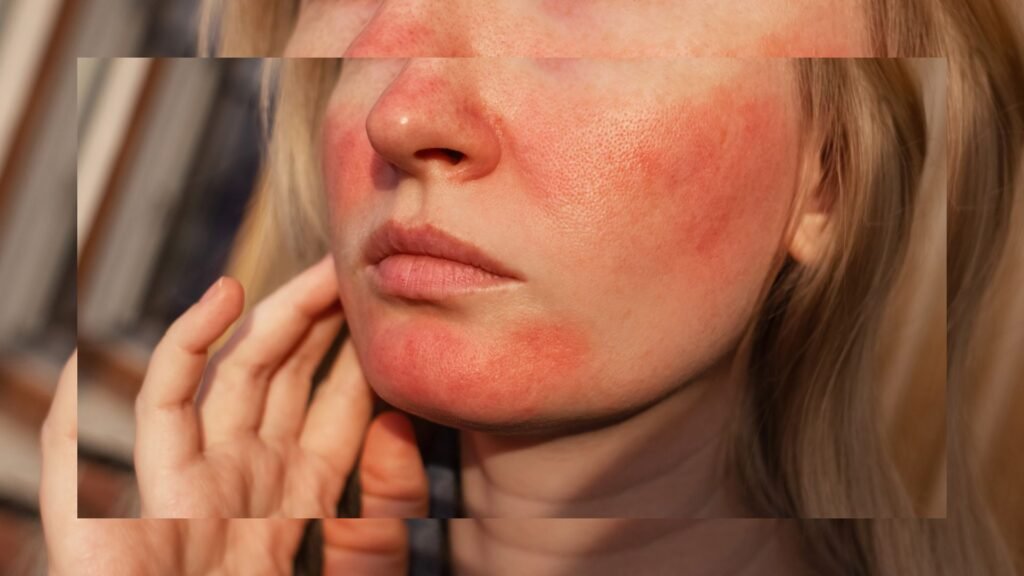
Dark, Rough Elbows and Knees? 7 Winter Skincare Tips for Smoother, More Even-Looking Skin

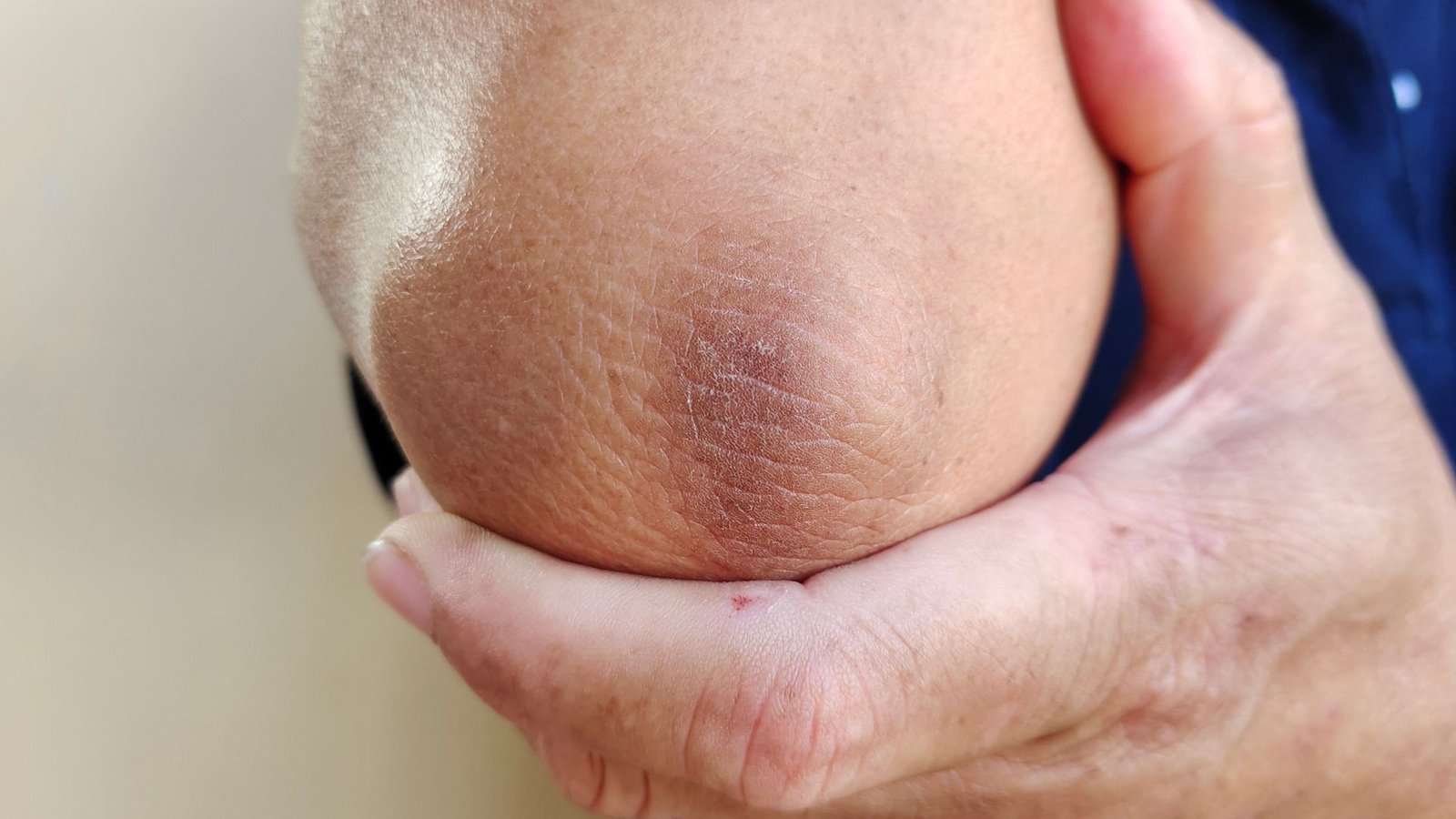
Have you ever noticed that your elbows and knees look noticeably darker, drier or rougher than the rest of your skin? Perhaps your elbows feel coarse when you touch them, your knees look dull, or the skin around these areas appears slightly flaky when winter arrives.
You are not alone. Dark elbows and knees are a common skincare concern, and winter can make their appearance more noticeable.
Unlike the skin on many other parts of your body, your elbows and knees experience frequent bending, pressure and friction. Their outer skin can also be naturally thicker. Add cold weather, low humidity, hot showers and inconsistent moisturising, and these areas may become even drier and rougher.
But here is something important: darker elbows and knees are not necessarily a sign of poor hygiene. Their colour can be a normal variation in your natural skin tone. Sometimes, dryness, friction or irritation can also contribute to uneven-looking pigmentation.
The good news? A gentle and consistent skincare routine can help improve skin comfort, soften rough patches and support a smoother-looking appearance.
Let’s understand why these areas become darker and explore seven practical winter skincare tips that can help.
Table of Contents
Why Are Your Elbows and Knees Darker Than the Rest of Your Skin?
Before trying to improve their appearance, it helps to understand what may be causing the difference.
Here are some common reasons:
- Natural skin variation: Elbows and knees can naturally appear darker because of differences in skin thickness, texture and pigmentation.
- Friction and pressure: Repeated rubbing against clothing, desks, floors and other surfaces can irritate the skin.
- Dryness: A lack of moisture can make the skin look rough, dull, flaky or ashy.
- Dead skin build-up: Dry, thickened surface skin can make these areas feel coarse and look less smooth.
- Irritation: Harsh soaps, aggressive scrubbing and unsuitable skincare products may trigger inflammation. In some people, inflammation can leave darker marks.
- Underlying skin conditions: Eczema, psoriasis and certain other conditions can cause thickened, discoloured or scaly patches.
It is important to distinguish between dryness and hyperpigmentation. Moisturising can improve dryness and rough texture, but it will not necessarily remove pigmentation caused by other factors.
7 Winter Skincare Tips for Dark, Rough Elbows and Knees
1. Moisturise Immediately After Bathing
One of the simplest ways to care for dry elbows and knees is to moisturise consistently.
During winter, cold air and low humidity can contribute to moisture loss. Hot showers and harsh cleansers may make the problem worse, leaving the skin feeling tight and rough.
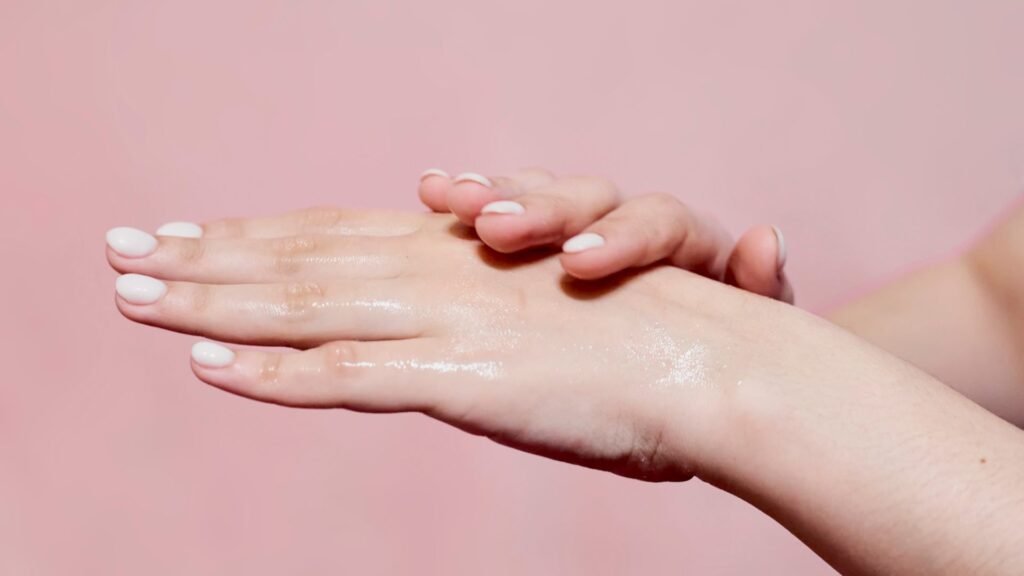
Applying moisturiser shortly after bathing helps support the skin’s moisture barrier.
What should you do?
- Take a short shower using lukewarm water.
- Gently pat your skin with a soft towel.
- Leave your elbows and knees slightly damp.
- Apply a suitable moisturiser to these areas.
- Reapply whenever your skin feels dry.
For particularly dry or rough skin, a richer cream or ointment may be more suitable than a lightweight lotion.
Consistency matters more than applying a large amount of product only once in a while.
2. Stop Scrubbing Your Elbows and Knees Too Aggressively
When your elbows and knees look dark, rough or uneven, your first instinct might be to scrub them harder.
However, aggressive exfoliation can do more harm than good.
Rough loofahs, hard brushes, abrasive body scrubs and repeated rubbing may irritate the skin. In people prone to post-inflammatory hyperpigmentation, irritation can make dark marks more noticeable.
This is particularly important for people with deeper skin tones, who may develop persistent dark marks following inflammation or skin injury.
Try this instead:
- Clean these areas gently with your hands.
- Avoid scrubbing with rough towels or harsh brushes.
- Do not exfoliate skin that is cracked, inflamed or irritated.
- Follow any exfoliation with a suitable moisturiser.
If you want to use an exfoliating product, choose one appropriate for your skin and introduce it gradually. Avoid combining several strong exfoliating products without professional guidance.
Remember, smoother-looking skin does not require harsh treatment.
3. Choose a Gentle Body Cleanser
Your bathing routine can influence how comfortable your skin feels throughout winter.
Some cleansing products may leave dry skin feeling tight, especially when combined with frequent hot showers and aggressive washing.
Instead of choosing a soap only because it promises brighter-looking skin, pay attention to how your skin feels after using it.
A cleanser that leaves your skin excessively dry, itchy or uncomfortable may not be the right choice.
An option to explore from Oak Tree Naturals
If you are looking for a body-cleansing product with a skincare-focused formulation, you can explore Oak Tree Naturals Kumkumadi Body Soap.
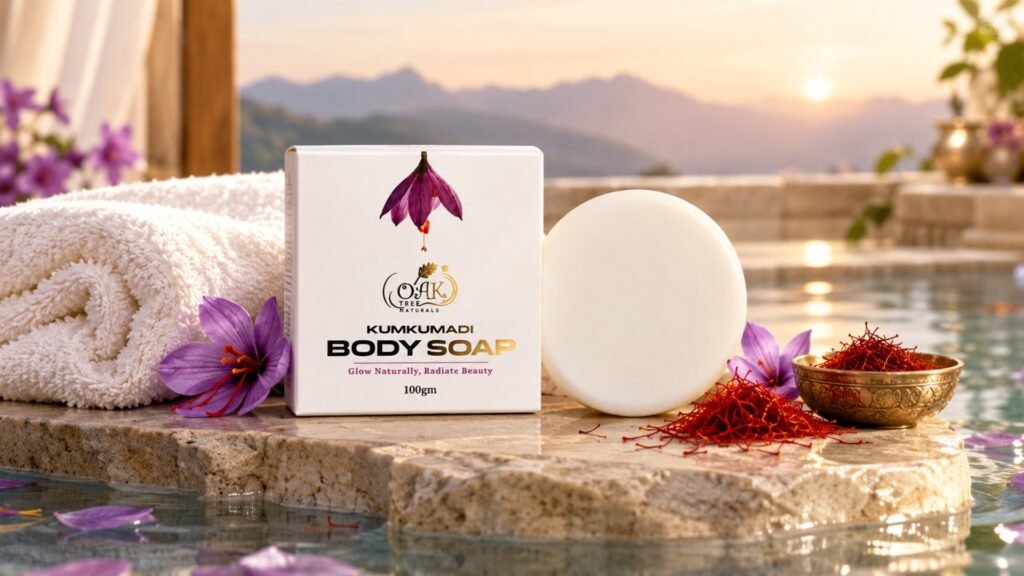
The brand describes it as a cleansing and nourishing soap that helps maintain soft, smooth-looking skin and supports a more radiant appearance.
It can be considered as part of your bathing routine, provided it suits your skin.
However, it is important to understand that a rinse-off soap should not be treated as a proven treatment for hyperpigmentation. If your main concern is persistent dark patches, the underlying cause matters more than the soap you choose.
Always check the product label and discontinue use if irritation develops.
4. Protect Your Elbows and Knees from Repeated Friction
Have you ever noticed that your elbows become rough after repeatedly resting them on a desk? Or that your knees experience friction from tight trousers?
Everyday habits can contribute to irritation.
Repeated rubbing and pressure may affect the skin, particularly when it is already dry. In some people, ongoing irritation can contribute to darker-looking patches.
Simple changes that may help:
- Avoid resting your elbows on hard surfaces for long periods.
- Choose comfortable clothing that does not repeatedly rub your knees.
- Avoid kneeling on rough surfaces whenever possible.
- Use suitable cushioning when activities require frequent kneeling.
- Keep the skin moisturised to reduce the feeling of roughness.
You do not need to eliminate every form of friction. The aim is to reduce unnecessary rubbing and protect skin that is already irritated.
5. Choose Moisturising Ingredients That Support Dry Skin
Not all moisturisers work in the same way.
Some ingredients attract water to the skin, while others help soften the skin or reduce moisture loss. Choosing a suitable formulation can make your winter routine more effective.
Here are some commonly used moisturising ingredients:
| Ingredient | How It Helps |
| Glycerin | Attracts water and helps hydrate the skin |
| Petrolatum | Forms a protective layer that reduces moisture loss |
| Ceramides | Help support the skin’s natural barrier |
| Urea | Helps moisturise; higher concentrations can also soften thickened skin |
| Shea butter | Helps soften and condition dry skin |
| Dimethicone | Helps form a protective layer on the skin |
If your elbows and knees are very dry, a cream or ointment containing suitable moisturising ingredients may provide more lasting comfort than a lightweight gel.
Where does Oak Tree Naturals Aloe Vera Gel fit in?
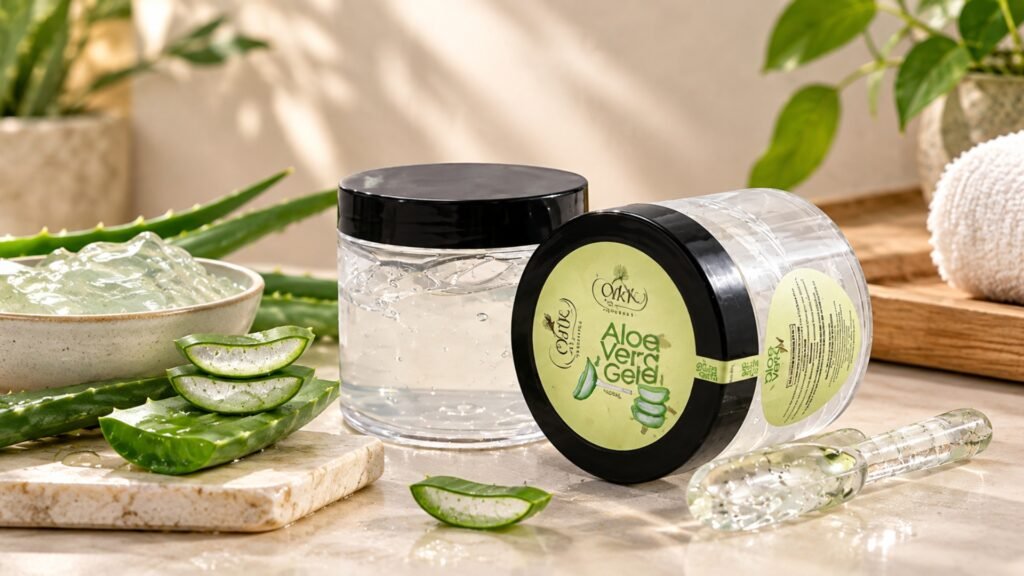
Oak Tree Naturals Aloe Vera Gel is described by the brand as a lightweight, fast-absorbing product for face and body use. It is designed to moisturise and refresh the skin without a greasy feel.
It may suit people who prefer lightweight hydration as part of their everyday body-care routine.
However, if your elbows and knees are particularly rough or very dry, you may need a richer cream or ointment as well. Aloe vera gel should not be presented as a proven pigmentation treatment or a replacement for a more substantial moisturiser when your skin needs one.
Choose products according to your skin’s condition rather than relying on ingredient names alone.
6. Do Not Forget Sunscreen on Exposed Elbows and Knees
Winter does not mean that your skin is completely protected from sunlight.
If your elbows or knees are exposed outdoors, ultraviolet radiation can still affect them. Sun exposure may contribute to tanning and can make some pigmentation concerns more noticeable.
For exposed skin, use a broad-spectrum sunscreen with SPF 30 or higher. Reapply according to the product directions, particularly after sweating or washing.
This is especially important if you are using exfoliating products or other skincare ingredients that may increase sensitivity.
Remember, body lotion and moisturising soap are not substitutes for sunscreen.
7. Give Your Skin Time Instead of Expecting Overnight Results
One of the most common skincare mistakes is expecting dark elbows and knees to look completely different after a few applications.
Skin texture and pigmentation concerns do not necessarily improve at the same speed.
Dryness may become more comfortable with consistent moisturising, but pigmentation can take considerably longer to fade. The time required depends on its cause, depth and your individual skin characteristics.
For some people, dark patches may remain even after dryness improves.
A few habits worth maintaining:
- Moisturise regularly.
- Avoid harsh scrubbing.
- Protect exposed skin from sunlight.
- Reduce unnecessary friction.
- Introduce new products gradually.
- Avoid constantly switching between different treatments.
If discolouration persists or becomes more noticeable, consult a dermatologist to understand its cause.
A Simple Winter Routine for Smoother-Looking Elbows and Knees
You do not need an elaborate skincare routine to care for these areas. A few consistent steps can be enough to improve dryness and maintain skin comfort.
| Time | Skincare Step | Purpose |
| Morning | Apply a suitable moisturiser | Helps maintain hydration |
| During the day | Reduce friction and protect exposed skin with sunscreen | Helps prevent irritation and sun-related darkening |
| After bathing | Apply moisturiser while skin is slightly damp | Helps reduce moisture loss |
| Evening | Apply a richer cream or ointment to very dry areas | Provides additional moisturising care |
| Weekly | Review your skin’s condition and avoid unnecessary exfoliation | Helps prevent over-treatment |
Your routine should be adjusted according to how your skin responds. If a product causes burning, itching or redness, stop using it.
When Should You Be Concerned About Dark Elbows and Knees?
Although darker elbows and knees are often harmless, certain changes deserve attention.
Consult a dermatologist if you notice:
- Sudden or rapidly developing dark patches.
- Thickened, velvety skin, especially around the neck, armpits, groin or other body folds.
- Persistent itching, redness, scaling or inflammation.
- Painful cracks, bleeding or skin that does not heal.
- Discolouration that continues to spread or change.
- Darkening accompanied by other unexplained symptoms.
For example, a condition called acanthosis nigricans can cause darker, thicker and velvety-looking skin, commonly around body folds. It can sometimes be associated with insulin resistance or other health conditions.
Do not assume every dark patch is caused by dryness or friction. A medical assessment can help identify the right approach.
Final Thoughts: Give Your Elbows and Knees a Little Extra Winter Care
Dark, rough elbows and knees can become more noticeable during winter, especially when cold weather, low humidity, friction and inconsistent moisturising affect your skin.
But remember: darker elbows and knees are not automatically unhealthy, unhygienic or something that needs to be removed.
The best approach is to understand what is causing the change and build a gentle routine around your skin’s needs. Moisturise regularly, avoid aggressive scrubbing, choose suitable cleansing products and protect exposed areas from sunlight.
If you prefer lightweight everyday hydration, Oak Tree Naturals Aloe Vera Gel is one option to explore. You can also consider the brand’s Kumkumadi Body Soap as part of your cleansing routine, while remembering that neither product should be treated as a guaranteed solution for pigmentation.
Healthy-looking skin is not about making every part of your body the same shade. It is about keeping your skin comfortable, cared for and protected.
Frequently Asked Questions
1. Why are my elbows and knees darker than the rest of my body?
Elbows and knees naturally have thicker skin and experience more friction and pressure. Genetics, natural pigmentation, dryness and repeated irritation can also contribute to darker-looking skin.
2. Does winter make dark elbows and knees worse?
Winter can make dryness and roughness more noticeable because of low humidity, cold air, hot showers and reduced moisturising. Dry skin may make existing unevenness appear more pronounced.
3. How can I soften rough elbows and knees naturally?
Use lukewarm water, cleanse gently and apply a suitable moisturiser after bathing. Reduce friction and avoid harsh scrubbing. A richer cream or ointment may be helpful when the skin is particularly dry.
4. Does scrubbing remove dark elbows and knees?
Aggressive scrubbing is not a reliable way to treat pigmentation. It can irritate the skin and potentially make dark marks worse. Gentle cleansing and appropriate moisturising are safer starting points.
5. Can aloe vera gel help with rough elbows and knees?
Aloe vera gel can provide lightweight moisturising care and may suit people who prefer a non-greasy texture. However, very dry or thickened skin may need a richer cream or ointment. Aloe vera gel is not a proven treatment for hyperpigmentation.
6. How long does it take for dark elbows and knees to become lighter?
There is no fixed timeline. Dryness and rough texture may improve with consistent care, but pigmentation can take months or longer depending on its cause and depth. Some natural skin-colour differences may remain.
7. Should I use lemon juice or baking soda on dark elbows and knees?
No. Lemon juice and baking soda can irritate the skin and disrupt its natural balance. Irritation may worsen dryness and contribute to darker marks. Gentle, well-formulated skincare is a better approach.
8. When should I see a dermatologist about dark knees or elbows?
Seek professional advice if the darkening develops suddenly, spreads, becomes thick or velvety, or occurs with persistent itching, redness, pain or scaling. A dermatologist can help identify whether it is ordinary dryness, friction-related pigmentation or an underlying skin condition.