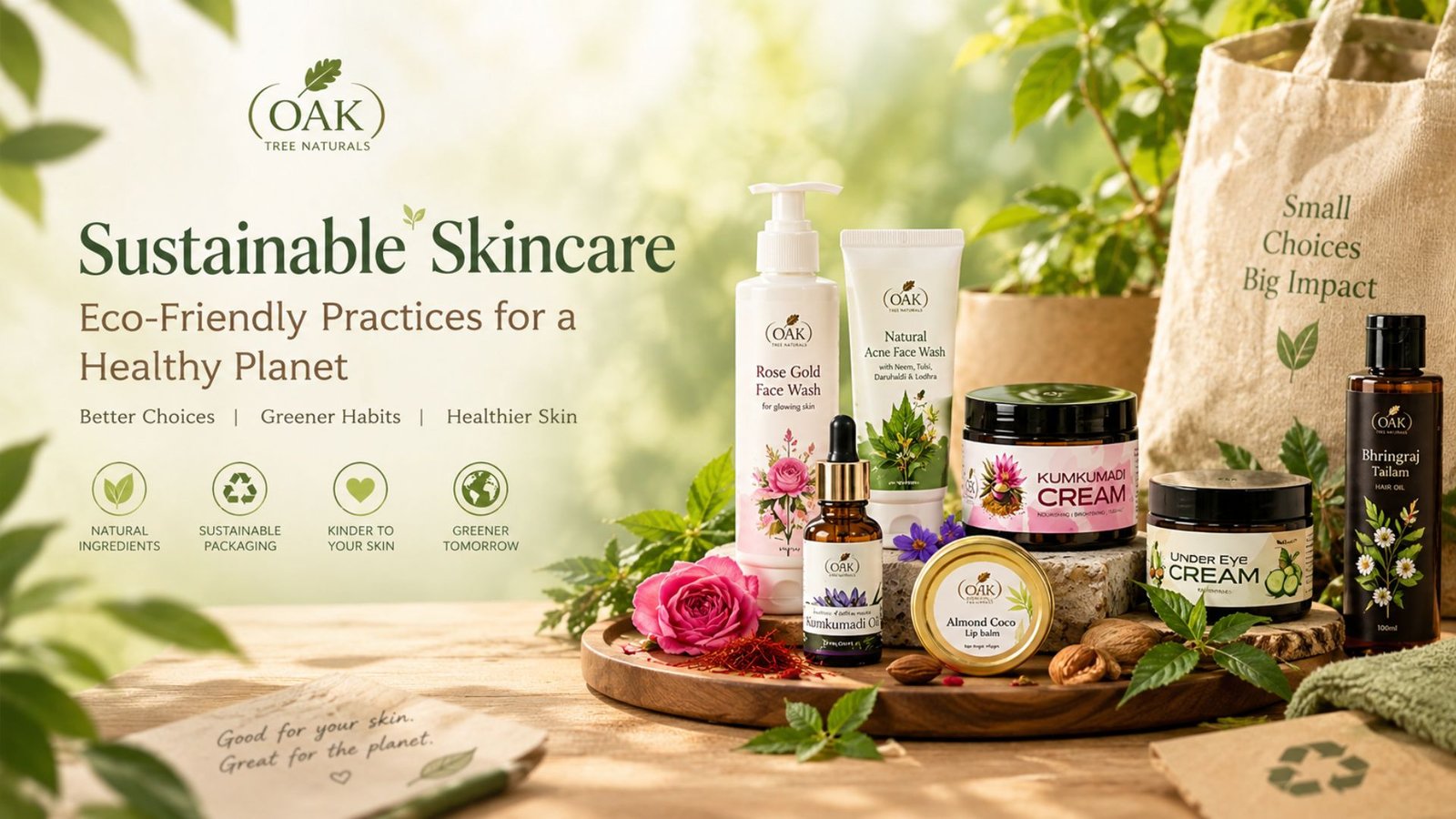
Sustainable Skincare: Eco-Friendly Practices for a Healthy Planet

Sustainable Skincare: Can Your Beauty Routine Be Kinder to the Planet?
Picture your bathroom shelf for a moment. The face wash you use every morning, the cream you reach for before bed, the lip balm tucked into your bag, and those half-empty bottles you keep meaning to finish.
Now imagine making that routine a little more thoughtful—not by throwing everything away and starting over, but by making better choices one product at a time.
That is the beauty of sustainable skincare. It is not about having a perfect, plastic-free bathroom overnight. It’s about knowing what you buy, how you use it, and what happens to the packaging when you’re done.
And the best part? You do not have to choose between caring for your skin and being more mindful of the planet.
For anyone interested in botanical-inspired beauty, Oak Tree Naturals offers a range of skincare and personal-care products that can become part of a thoughtful daily routine. The key is to pair your product choices with habits that reduce unnecessary waste.
Let’s explore seven simple ways to make your beauty routine more thoughtful, practical, and planet-conscious.
Table of Contents
What Is Sustainable Skincare?
Sustainable skincare means considering the environmental impact of your skincare habits and the products you choose—from ingredients and sourcing to packaging, transportation, and disposal.
It is a broader idea than simply choosing a product labelled “natural.”
A product containing botanical ingredients is not automatically environmentally sustainable. Its overall impact can also depend on how ingredients are grown and sourced, how much packaging is used, whether that packaging can actually be recycled locally, and how the product is manufactured.
A more mindful approach asks a few useful questions:
– Do I genuinely need this product?
– Can I finish what I already own before buying more?
– Is the packaging recyclable or reusable where I live?
– Does the brand provide clear, verifiable information about its ingredients and practices?
– Can I simplify my routine without compromising my skin’s needs?
You do not need perfect answers to every question. Even small changes can help you make more considered choices.
7 Easy Sustainable Skincare Habits to Start Today
1. Choose a Routine You Can Actually Finish
New serums, trending face masks, and creams promising a radiant complexion can easily tempt you.
But how many products do you truly use until the very last drop?
One of the simplest ways to practice sustainable skincare is to buy thoughtfully and avoid accumulating products you do not need. A basic routine might include a suitable cleanser, moisturizer, and daytime sunscreen, with additional products chosen for specific needs.
Using what you already own can help reduce unnecessary purchases, packaging waste, and the likelihood of products expiring unused.
Try this: Before buying something new, check your existing shelf. Finish suitable products first, and replace only what you need.
A thoughtful routine can be better for your bathroom shelf, your budget, and your everyday habits.
2. Explore Botanical-Inspired Skincare Thoughtfully
Neem, Tulsi, saffron, aloe vera, and other botanical ingredients have long featured in traditional beauty practices and modern personal-care products.
For people who enjoy plant-inspired formulations, they can be an appealing part of a daily routine. However, natural ingredients do not automatically make a product environmentally friendly, and they can still irritate some skin types.
The more useful question is how the finished product is formulated, sourced, packaged, and used.
Oak Tree Naturals draws inspiration from botanical ingredients and Ayurvedic traditions across its skincare range. You can explore its [official product collection](https://oaktreenaturals.in/) to discover options for different skincare needs.
A mindful shopping tip: Look beyond the front label. Check the ingredient list, product directions, and any available information about sourcing or environmental practices before making a decision.
3. Give Your Existing Products a Second Look
A greener routine does not always require a new purchase.
Sometimes the most useful change is to make better use of the products you already have.
For example, if you own a suitable face cream, lip balm, and cleanser, build a consistent routine around them rather than adding several overlapping products. Store products according to their labels and avoid using items beyond their recommended period.
This is a practical part of sustainable skincare because it encourages mindful consumption rather than endless product replacement.
One important distinction: do not keep using a product that has changed in smell, color, texture, or condition. Follow its packaging instructions and dispose of it appropriately.
4. Pay Attention to Packaging
Packaging is an important part of the environmental footprint of skincare products.
Small containers, pumps, caps, tubes, outer cartons, and protective wrapping can all add up over time. Yet packaging is not as simple as choosing the smallest bottle: the material, product protection, transport, and local recycling options also matter.
When shopping, consider:
– Whether unnecessary outer packaging can be avoided.
– Whether the material is accepted by your local recycling program.
– Whether the brand provides clear packaging information.
– Whether a refill option is genuinely available and practical.
Do not assume that a package is recyclable just because it carries a recycling symbol. Local collection systems and material combinations affect what can actually be processed.
If you are exploring eco-friendly skincare, packaging transparency is a useful thing to look for.
5. Use Every Product as Directed—Without Overdoing It
More product does not necessarily mean better results.
Applying excessive amounts of a cream or face wash can lead to unnecessary consumption without improving its performance. Using products as directed helps you understand how much you need and may help a product last longer.
For example, use the recommended amount of face wash to cleanse gently, and apply moisturizer according to its instructions. Sunscreen is an important exception to the idea of simply using less: apply enough to achieve the protection stated on the label and reapply as directed.
The goal of sustainable skincare is not to compromise on effective care. It is to avoid waste where you reasonably can.
6. Build a Routine Around Your Real Needs
Your skin does not need every product that appears in your social media feed.
If your main concern is dryness, a suitable moisturizer may be more useful than buying multiple overlapping serums. If you have acne-prone skin, a cleanser and an appropriate treatment recommended for your needs may be a better starting point than an elaborate routine.
Oak Tree Naturals offers products across several categories, including its Natural Acne Face Wash, Kumkumadi Cream, Saffron Face Serum, and Almond Coco Lip Balm.
Explore the products that match your needs rather than buying the entire collection simply because it is available.
This is where sustainable skincare meets personal care: a routine should work for your skin, fit your budget, and avoid unnecessary purchases.
7. Make Responsible Disposal Part of Your Routine
Finishing a product is only part of the process. What happens to the container afterwards matters, too.
Before throwing packaging away, check whether its components can be separated and recycled locally. Empty containers where practical, follow local waste guidelines, and avoid putting mixed-material packaging into recycling if your local programme does not accept it.
Do not rinse leftover skincare products into drains in ways that conflict with local disposal guidance. For products that cannot be recycled, follow the appropriate local waste instructions.
You can make this easier by keeping a small area for empty containers and checking the packaging before disposal.
Over time, these simple habits can make sustainable skincare feel like a normal part of your routine rather than another task to remember.
Can Natural Skincare Products Be Sustainable?
They can be part of a more mindful routine, but the answer depends on the complete product and its lifecycle.
A botanical ingredient may come from a renewable source, yet its environmental impact still depends on factors such as farming practices, water use, processing, transportation, and sourcing.
Likewise, a recyclable package does not guarantee that it will be recycled in your area.
When considering a brand, look for specific information rather than relying on broad words such as “green,” “clean,” or “eco-friendly.”
Useful signs of transparency include
– Clear ingredient lists.
– Honest product descriptions.
– Verifiable information about sourcing and manufacturing.
– Specific packaging and recycling instructions.
– Environmental claims that explain what they mean and how they are supported.
Oak Tree Naturals describes its approach as inspired by Himalayan botanicals, small-batch craftsmanship, and Ayurvedic traditions. These are useful parts of its brand story, but they should not automatically be interpreted as proof that every product has a lower environmental impact.
The best approach is to enjoy botanical-inspired skincare while making purchasing decisions based on the information available.
Meet Oak Tree Naturals: Thoughtful Care for Your Daily Routine
A more mindful beauty routine does not need to be complicated. It can begin with choosing products you genuinely enjoy and will use consistently.
Oak Tree Naturals offers options for different parts of everyday skincare and personal care.
For cleansing: Oak Tree Naturals Natural Acne Face Wash is an option for those looking for a cleanser formulated for acne-prone skin.
For moisturizing: Oak Tree Naturals Kumkumadi Cream can be considered as part of a routine focused on moisturizing and the appearance of radiant skin.
For lips: Oak Tree Naturals Almond Coco Lip Balm is a simple addition for people who want to keep their lips moisturized.
These products serve different purposes, so choose according to your needs rather than purchasing more than you will use.
If sustainability is a priority for you, you can also contact the brand to ask about packaging materials, recycling guidance, ingredient sourcing, and any verified environmental initiatives.
Thoughtful product choices become even more meaningful when paired with thoughtful habits.
Your 5-Minute Sustainable Skincare Checklist
Want to start today? You do not need a complete bathroom makeover.
Check your shelf and identify products you already own.
Finish suitable products before buying replacements.
Keep your everyday routine simple and consistent.
Read product labels and ingredient lists before purchasing.
Check packaging materials and local recycling rules.
Buy according to your needs, not every new trend.
Look for specific, verifiable environmental claims from brands.
Choose just two or three habits to begin with. Once they become second nature, you can build from there.
Small Choices, More Thoughtful Skincare
Caring for your skin and being mindful of the planet do not have to compete.
A thoughtful routine can start with something as ordinary as finishing your moisturizer, resisting an unnecessary purchase, or checking whether a container can be recycled.
Sustainable skincare is not about perfection or guilt. It is about making informed choices, using products responsibly, and looking for brands that communicate clearly about what they offer.
Oak Tree Naturals brings botanical-inspired skincare and personal-care products into everyday routines. Explore the range, choose what genuinely suits your needs, and pair those choices with habits that help you waste less.
Ready to make your routine more intentional? Visit Oak Tree Naturals to explore the collection and find the essentials that fit your skincare routine.
Because sometimes, the most meaningful change is not adding another product to your shelf. It is choosing more thoughtfully the next time you do.
FAQ: Sustainable Skincare
1. What is sustainable skincare?
Sustainable skincare means considering the environmental impact of skincare products and habits, including ingredients, sourcing, packaging, transportation, product use, and disposal.
2. Is natural skincare always eco-friendly?
No. Natural ingredients can still have environmental impacts, depending on how they are grown, processed, sourced, and transported. The complete product matters.
3. How can I make my skincare routine more sustainable?
Start by buying only what you need, finishing suitable products, avoiding unnecessary purchases, checking packaging, and following local recycling guidance.
4. Is Ayurvedic skincare sustainable?
Ayurvedic-inspired skincare can be part of a mindful routine, but sustainability depends on the specific ingredients, sourcing, manufacturing, packaging, and disposal practices.
5. Is recyclable skincare packaging always better?
Not necessarily. Its environmental value depends on the material, how well it protects the product, local recycling facilities, and whether the packaging is actually collected and processed.
6. How can I choose an eco-friendly skincare brand?
Look for transparent ingredient information, specific sourcing and packaging details, verifiable environmental claims, and practical instructions for responsible disposal.
7. Can I practice sustainable skincare on a budget?
Absolutely. Using products you already own, avoiding unnecessary purchases, and maintaining a simple routine are practical starting points that do not require buying a new set of products.