Are Natural Acne Washes Safe for Sensitive Skin?


When Your Skin Needs Help, Not Another Harsh Product
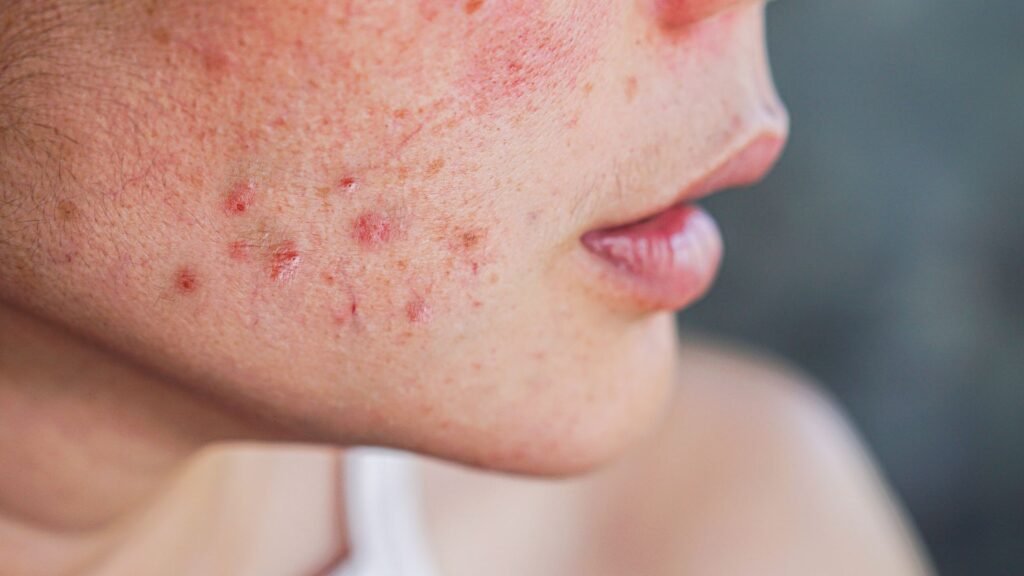
Imagine waking up, looking in the mirror, and noticing a new pimple on your forehead. You decide to try a face wash that promises clearer-looking skin. But after using it, your face feels tight, dry, or slightly uncomfortable. Now you have two concerns instead of one: the breakout and the irritation.
If this sounds familiar, choosing skincare can feel confusing. You want a cleanser that helps remove excess oil and everyday impurities, but you do not want to leave your skin feeling stripped.
This is why many people start exploring natural skincare products. A botanical-inspired acne face wash may seem like a gentler option, particularly if you have sensitive, oily, or breakout-prone skin. But does the word natural automatically mean a product is safe for sensitive skin?
Not necessarily.
The right cleanser depends on its complete formulation, your skin’s individual sensitivities, and how you use it. A natural acne face wash may suit your routine, but even plant-derived ingredients can irritate some people.
In this guide, we will explore how to choose a suitable cleanser, common mistakes that can aggravate sensitive skin, and how Oak Tree Naturals Natural Acne Face Wash may fit into a simple daily routine.
Table of Contents
Are Natural Acne Washes Safe for Sensitive Skin?
Natural acne washes can be suitable for some people with sensitive skin, provided their formulations are well tolerated. However, natural ingredients are not automatically gentler than synthetic ones.
Sensitive skin may react to fragrance, essential oils, exfoliating ingredients, or other components in a skincare formula. The same product can feel comfortable for one person and irritating for another.
When choosing an acne face wash, consider these three factors:
- The formulation: Look at the complete ingredient list rather than relying only on claims such as natural, herbal, or botanical.
- Your skin’s needs: Sensitive skin can also be oily or acne-prone, so the goal is to cleanse without creating unnecessary dryness or irritation.
- How you use it: Scrubbing, washing too frequently, and combining too many active products can make irritation more likely.
The American Academy of Dermatology recommends gentle, non-abrasive cleansing for acne-prone skin and advises against scrubbing.
The takeaway is simple: choose a cleanser for how it performs on your skin, not just for the ingredients highlighted on the label.
What Does an Acne Face Wash Actually Do?
Before choosing a product, it helps to understand what a cleanser can realistically achieve.
Throughout the day, your face collects sweat, excess oil, sunscreen, makeup, and environmental residue. A suitable acne face wash helps remove this surface buildup so your skin feels clean and refreshed.
Some cleansers also contain active ingredients designed to address acne. For example, salicylic acid can help unclog pores, while benzoyl peroxide is used in acne treatment. Their suitability depends on the product, concentration, and individual skin tolerance.
Other cleansers primarily focus on everyday cleansing. They may support a skincare routine without necessarily treating the underlying causes of acne.
This distinction matters because washing your face cannot guarantee that every pimple will disappear. Acne can involve clogged pores, excess sebum, inflammation, and hormonal factors.
A good acne face wash should therefore be viewed as one part of a broader routine—not an overnight solution to every skin concern.

5 Signs Your Cleanser May Be Too Harsh for Sensitive Skin
How can you tell whether your current product is working comfortably with your skin? Pay attention to what happens during and after cleansing.
1. Your face feels tight after washing
A clean face should not necessarily feel stretched or uncomfortable. Persistent tightness can indicate that your cleanser or washing habits are too drying for your skin.
2. You experience burning or stinging
Mild, persistent burning is not something you need to tolerate to achieve clearer skin. Stop using a product that causes a reaction, particularly if the discomfort continues after rinsing.
3. Your skin becomes unusually flaky
Flaking may develop when the skin becomes excessively dry or irritated. If this happens after introducing an acne face wash, review the product and your overall routine.
4. Redness becomes more noticeable
Redness, itching, or swelling may indicate irritation or an allergic reaction. Avoid continuing to use a product that repeatedly triggers these symptoms.
5. You keep adding more products to fix the problem
Sometimes, the issue is not a lack of skincare. It is an overloaded routine.
If your skin feels uncomfortable, simplifying your routine may be more helpful than adding another exfoliant, toner, or acne face wash.
Persistent or severe symptoms deserve professional advice, especially if your skin is painful,
5 Things to Look for When Choosing an Acne Face Wash
Once you understand how your skin reacts, the next step is choosing a cleanser that suits your needs.
1. A gentle cleansing formula
A suitable acne face wash should remove excess oil and everyday impurities without leaving your skin feeling excessively dry. Avoid assuming that a product is effective simply because it creates a lot of foam.
2. Clear ingredient information
Always check the ingredient list. If you know that fragrance, essential oils, or a particular botanical irritates your skin, look for a product that avoids that ingredient.
3. Compatibility with your existing routine
If you already use acne treatments, your cleanser should complement them rather than introduce unnecessary irritation. Combining several strong products at once can make it difficult to identify the cause of a reaction.
4. Appropriate cleansing instructions
Follow the directions on the packaging. A product intended for regular cleansing should be used as directed rather than left on your skin longer in the hope of getting faster results.
5. Realistic product claims
Look for clear information about the product’s purpose. A cleanser may help remove oil and impurities, but claims about treating acne, eliminating scars, or permanently preventing breakouts need appropriate evidence.
These considerations are more useful than choosing an acne face wash based on the words natural or herbal alone.
Can a Natural Acne Face Wash Help With Oily, Breakout-Prone Skin?
Yes, a suitable cleanser can help remove excess surface oil and keep your face feeling fresh. However, oily skin and sensitive skin can occur together, so aggressive cleansing is not necessarily the answer.
Imagine your skin becomes greasy by lunchtime. You might feel tempted to wash your face repeatedly or use a stronger cleanser. Yet frequent washing and harsh scrubbing can irritate the skin, potentially making breakouts harder to manage.
Instead, try a consistent approach:
- Wash your face gently in the morning and evening, and after heavy sweating when needed.
- Use lukewarm water rather than very hot water.
- Apply your cleanser with your fingertips.
- Rinse thoroughly and pat your face dry.
- Follow with a moisturiser that suits acne-prone skin.
The American Academy of Dermatology recommends gentle cleansing and advises people with acne to avoid scrubbing and overly irritating skincare habits.
An acne face wash can support these habits, but persistent acne may need additional treatment recommended by a dermatologist.
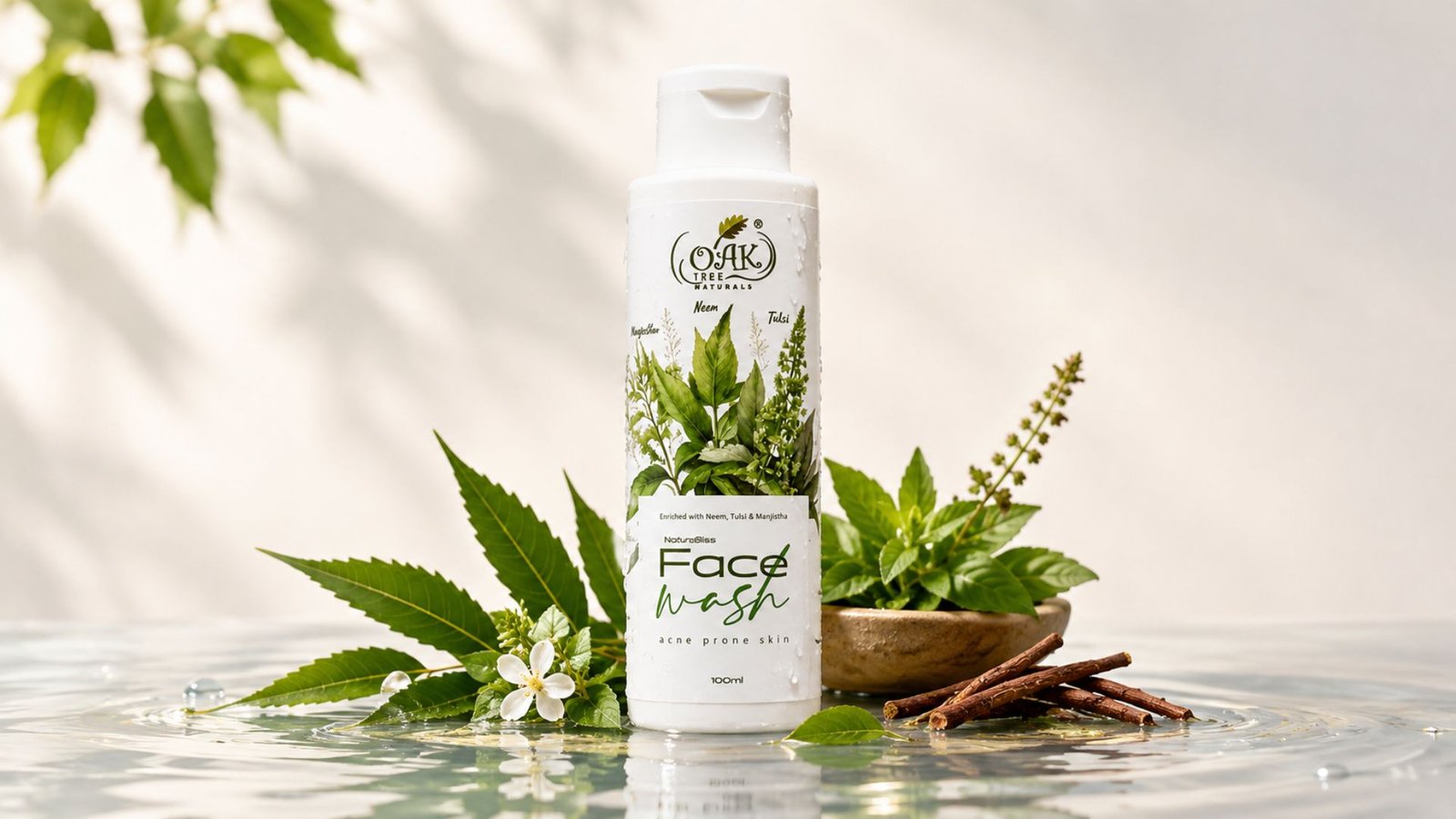
Introducing Oak Tree Naturals Natural Acne Face Wash
For people who prefer botanical-inspired skincare, Oak Tree Naturals offers its Natural Acne Face Wash in a 100 ml bottle.
According to the brand’s product page, the cleanser is designed to remove excess oil, dirt, and impurities while helping maintain the skin’s moisture balance. The brand describes the formula as gentle and soap-free, with a focus on cleansing acne-prone skin.
These features may appeal to people who want a straightforward cleansing step rather than an unnecessarily complicated routine.
However, there is an important consideration for sensitive skin: the available product description does not establish that every sensitive skin type will tolerate the formula. Review the complete ingredient list before buying, particularly if you have known sensitivities.
It is also worth distinguishing everyday cleansing from acne treatment. The product should not be assumed to cure acne or replace prescribed medication.
If you are looking for an acne face wash to complement your routine, the Oak Tree Naturals product is worth reviewing against your personal skin needs.
Explore Oak Tree Naturals Natural Acne Face Wash – 100 ml
How to Use an Acne Face Wash Without Irritating Your Skin
Even a suitable cleanser can become uncomfortable if you use it too aggressively. Keep your routine simple and follow the manufacturer’s instructions.
Step 1: Wet your face. Use lukewarm water to prepare your skin for cleansing.
Step 2: Apply a small amount. Follow the product directions and gently spread the cleanser over your face with your fingertips.
Step 3: Avoid scrubbing. Use light movements instead of rough rubbing, facial brushes, or abrasive cloths.
Step 4: Rinse thoroughly. Remove the cleanser completely and pat your face dry with a clean, soft towel.
Step 5: Moisturise. Apply a suitable moisturiser if needed. Look for products labelled non-comedogenic or “won’t clog pores” if you are concerned about breakouts.
Step 6: Protect your skin during the day. Use a broad-spectrum sunscreen with SPF 30 or higher when outdoors.
If you are trying a new acne face wash and have sensitive skin, consider testing it on a small area first. A patch test can help identify some reactions, although it cannot guarantee that the product will never irritate your skin.
Stop using the cleanser if you develop persistent burning, redness, itching, or swelling.
Common Mistakes That Can Make Acne-Prone Skin More Sensitive
Sometimes, the problem is not the cleanser alone. Other habits can make skin irritation more likely.
Washing too often
Repeated washing can leave skin dry and uncomfortable. Stick to a reasonable cleansing schedule instead of washing every time your face looks oily.
Scrubbing away pimples
Pimples are not dirt that can be scrubbed away. Aggressive exfoliation can worsen irritation and increase the risk of marks.
Combining too many active ingredients
Using several exfoliating acids, acne treatments, and strong cleansers together can overwhelm sensitive skin. Introduce new products gradually and follow professional guidance when using acne medication.
Skipping moisturiser
People with oily skin sometimes avoid moisturiser altogether. However, dryness can occur even when the skin produces excess oil. A suitable, non-comedogenic moisturiser can help support skin comfort.
Expecting immediate results
An acne face wash may improve cleansing, but acne treatment often takes time. Constantly switching products can make irritation more likely and make it harder to understand what works for your skin.
If breakouts are painful, leave scars, or do not improve with a sensible routine, consult a dermatologist.
Natural Acne Face Wash vs Regular Cleanser: Which Should You Choose?
The right option depends on your skin’s needs, not simply whether the ingredients are natural or synthetic.
| Consideration | Natural or botanical cleanser | Other facial cleanser |
| Main purpose | Depends on the formulation | Depends on the formulation |
| Ingredient source | May feature plant-derived ingredients | May use synthetic, natural, or combined ingredients |
| Sensitive skin suitability | Depends on the complete formula and individual tolerance | Depends on the complete formula and individual tolerance |
| Acne treatment | Requires appropriate ingredients and evidence | Requires appropriate ingredients and evidence |
| Best selection approach | Review ingredients and directions | Review ingredients and directions |
A natural acne face wash may be appealing if you enjoy botanical skincare, but natural ingredients can still cause irritation or allergies.
Likewise, a synthetic ingredient is not automatically harsh. The formulation, concentration, intended use, and your skin’s response all matter.
Choose a cleanser that leaves your skin feeling comfortable and supports the rest of your skincare routine.
Final Thoughts: Let Your Skin Guide Your Skincare Choices
Choosing skincare can feel overwhelming when every product promises a clearer complexion. But a good routine does not have to be complicated.
Start with gentle cleansing, appropriate moisturising, sun protection, and products that suit your individual skin. Pay attention to irritation rather than assuming that a strong tingling sensation means a cleanser is working.
A natural acne face wash may be a useful part of your routine if its formulation agrees with your skin. Oak Tree Naturals Natural Acne Face Wash offers an option for people interested in a botanical-inspired cleansing product.
Before purchasing, review the complete ingredients and usage instructions, especially if your skin is sensitive. Give your routine time, avoid excessive scrubbing, and seek professional advice if acne persists or becomes painful.
Ready to explore a simpler cleansing routine?
Discover Oak Tree Naturals Natural Acne Face Wash and review the product details to decide whether it fits your skincare needs.
Frequently Asked Questions
1. Are natural acne washes safe for sensitive skin?
They can be suitable for some people, but safety depends on the formulation and individual sensitivities. Check the ingredients, introduce new products cautiously, and stop using a cleanser that causes irritation.
2. Can I use an acne face wash every day?
That depends on the product’s directions and your skin’s tolerance. Many cleansers are intended for daily use, but sensitive skin may need a gentler approach. Follow the label instructions.
3. Does a natural acne face wash remove pimples?
A cleanser can remove excess oil and impurities, while some formulas contain ingredients used in acne treatment. However, cleansing alone cannot guarantee that pimples will disappear.
4. Should sensitive skin use a foaming face wash?
Not necessarily. Foam alone does not determine whether a cleanser is gentle. Consider the full formulation and how your skin feels after use.
5. Is moisturiser necessary after using an acne face wash?
Moisturiser can help reduce dryness and support skin comfort. Choose a formula that suits your skin, preferably one labelled non-comedogenic if you are prone to breakouts.
6. How long does an acne face wash take to work?
The answer depends on the cleanser and the concern being addressed. Basic cleansing can leave skin feeling fresher immediately, but acne improvement may take weeks and often requires appropriate acne treatment.
7. Where can I buy Oak Tree Naturals Natural Acne Face Wash?
You can review the product details and current purchasing options on the official Oak Tree Naturals product page.